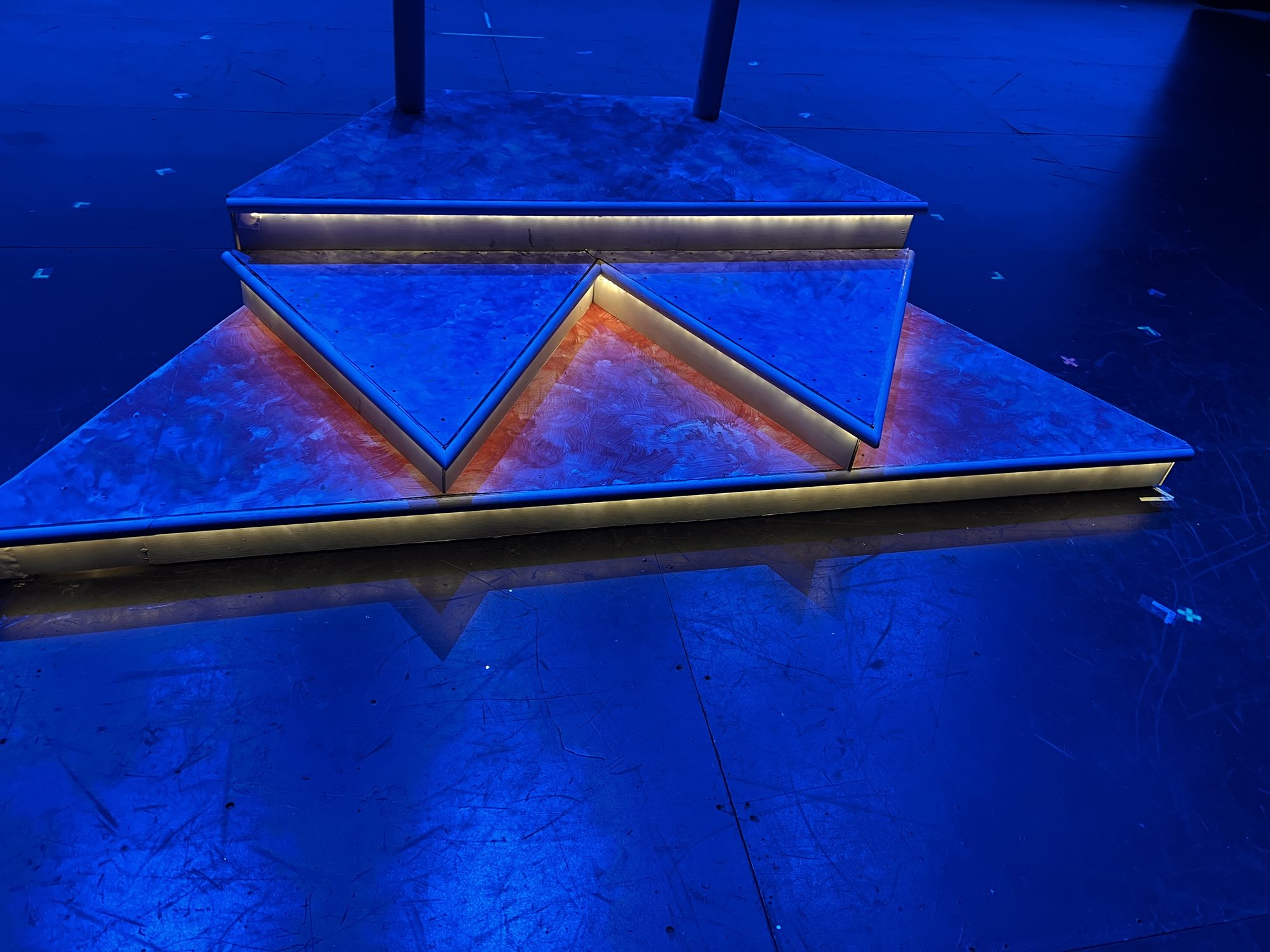
Lit stair unit built for Aisle Be Damned, onstage under blue light

Projects

Scenic Electrics  /  Infrastructure  /  Film & Installation

Venue
Theatre Intime, Hamilton Murray Theater
Timeline
Two years of planning, installed Dec 2025 to Jan 2026
Role
Systems Director and student project lead
Partners
Friends of Theatre Intime, Fisher Dachs Associates, McCarter Theatre Center, Princeton Engineering & Campus Energy

I led the conversion of Intime's entire lighting system from incandescent to networked ETC LED: about $500K of fixtures, control and power infrastructure, carried from the first budget meeting to the last focus over two years.

$500KFinal project
200+Fixtures struck in four nights
512 → 2,000Control channels needed
95.5 → 31 kWConnected lighting load
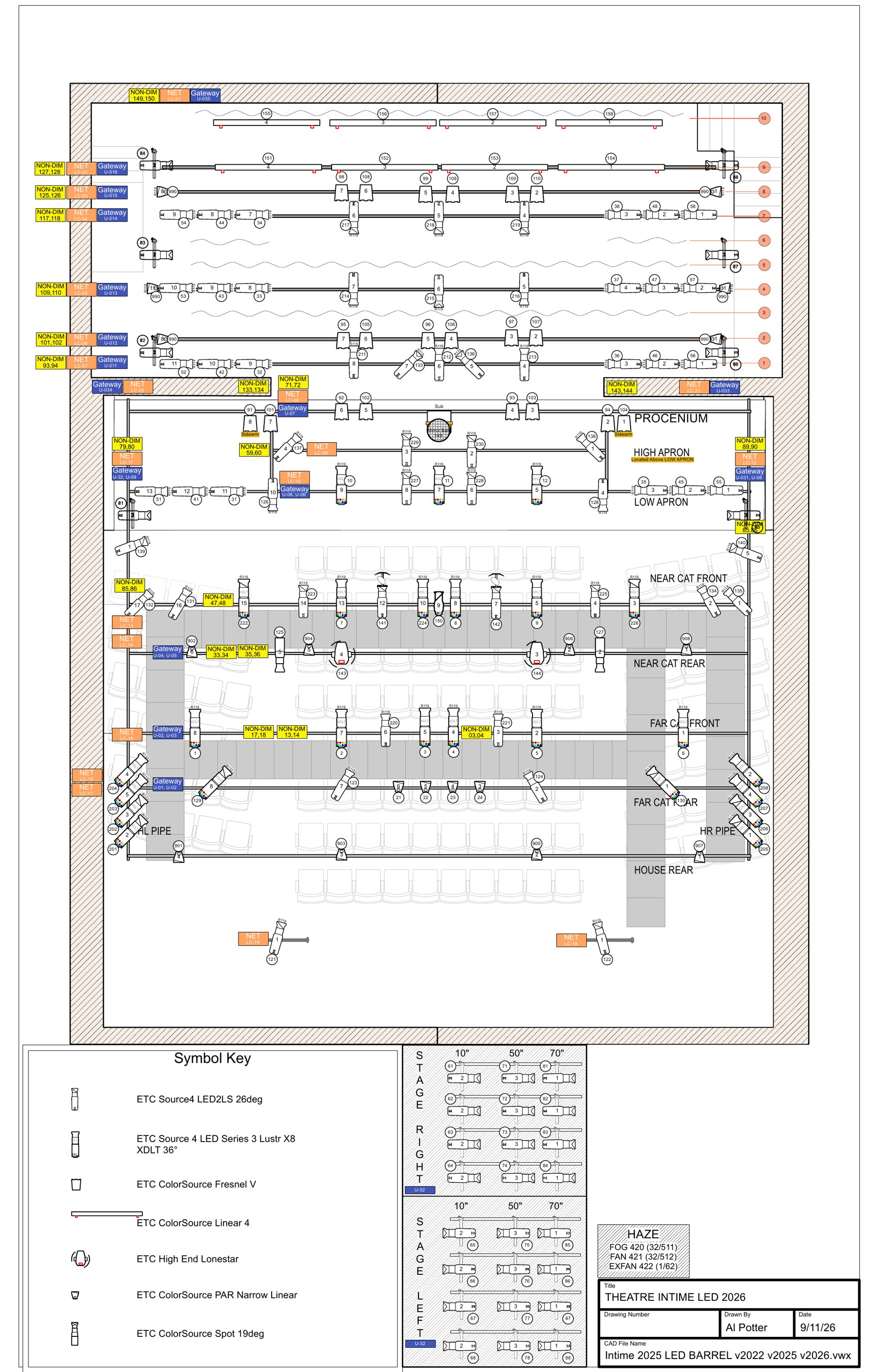
158Fixtures in the rep plot

Not a lamp swap

The University's Campus Energy program first budgeted the project in 2022 as a one-for-one fixture replacement at $280K. However, this was impractical given the outdated infrastructure in the building. Our first universe died in our four ETC Sensor racks, two of which were original and two Sensor2 racks added in 2000. We had a second universe powered by Show Babys. We required at least 2,000 addresses for a full LED rig. The Friends of Theatre Intime commissioned a design study from Fisher Dachs Associates, and the first quote built on it came back above $800K.
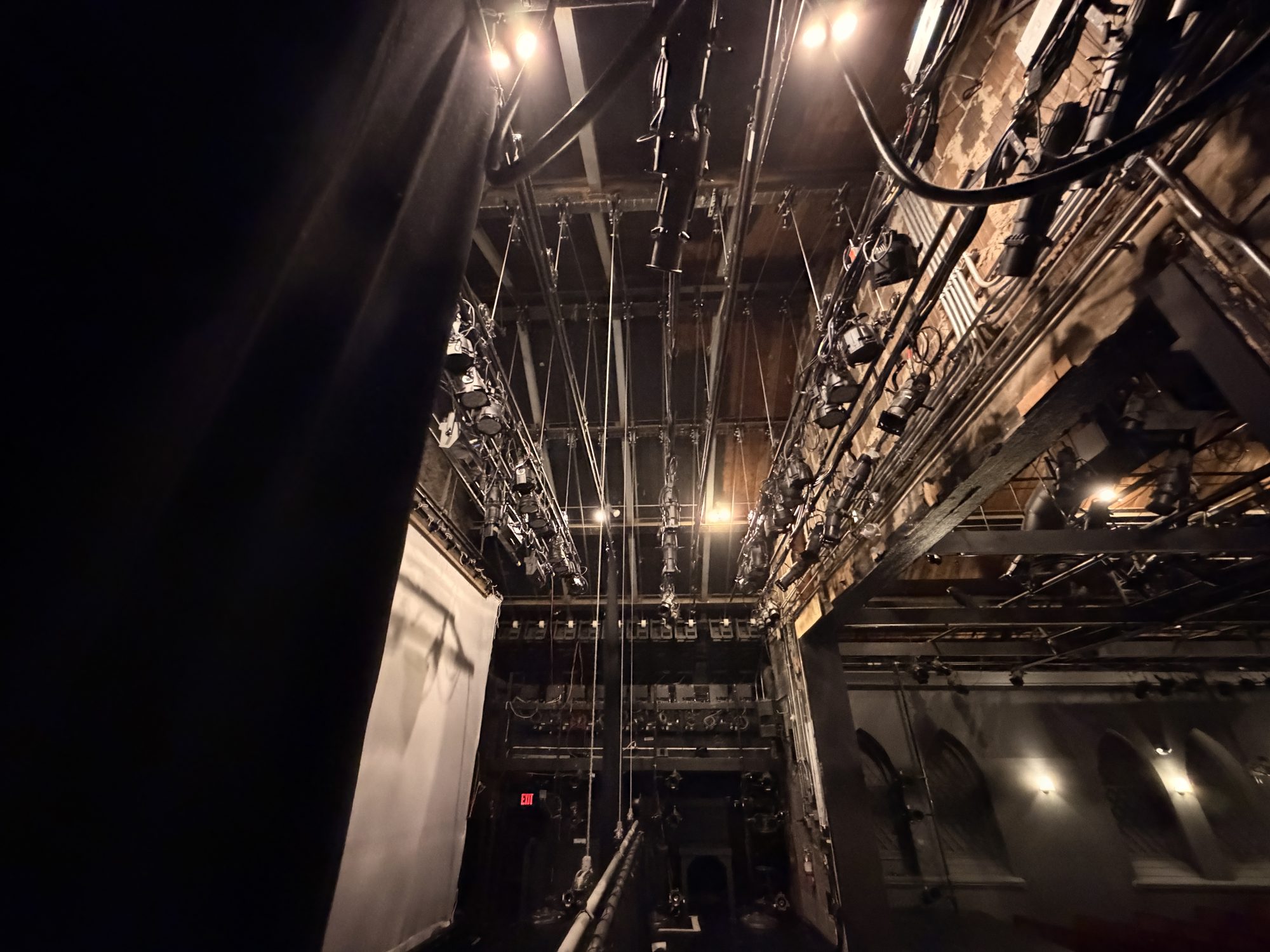
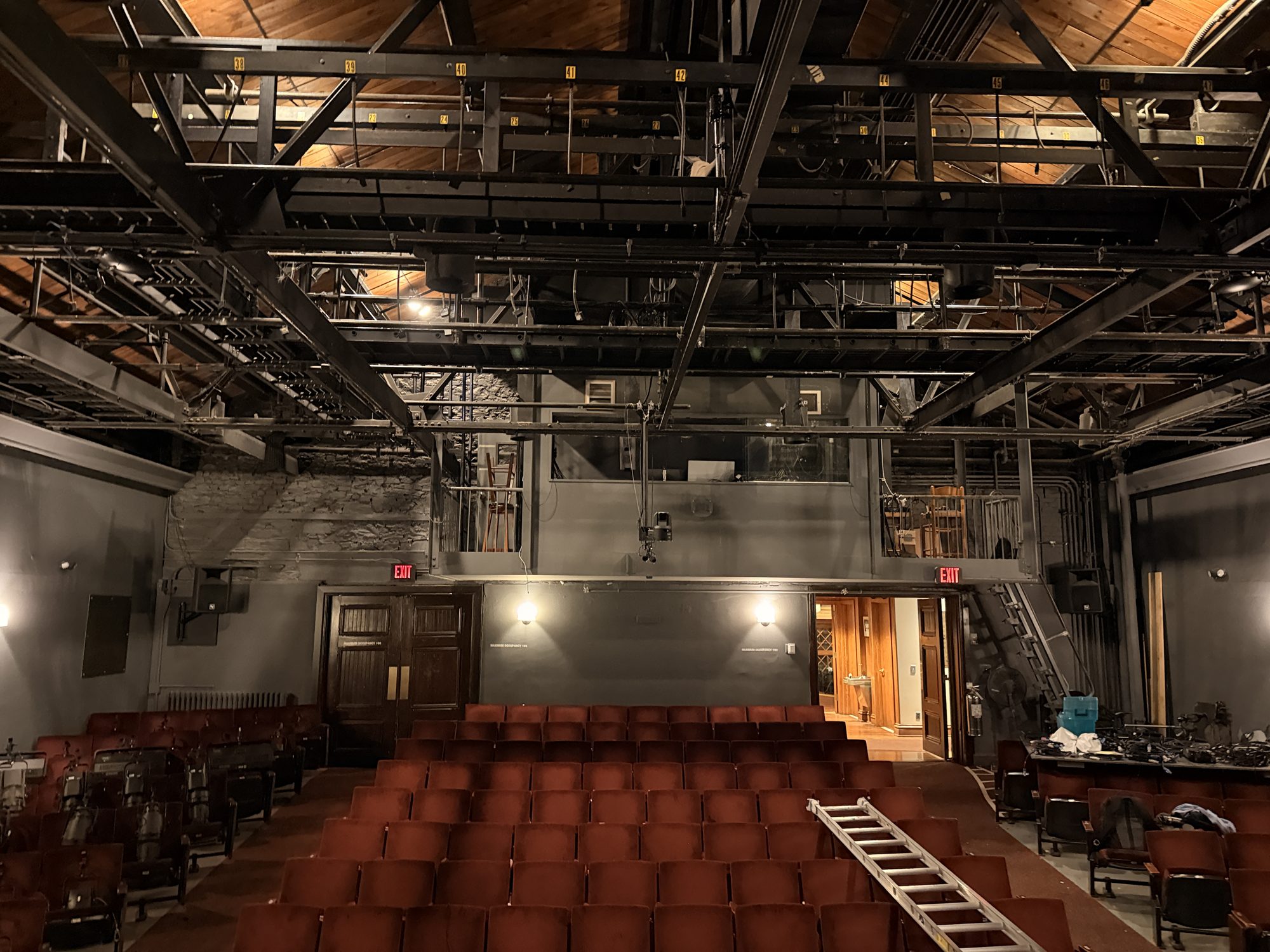
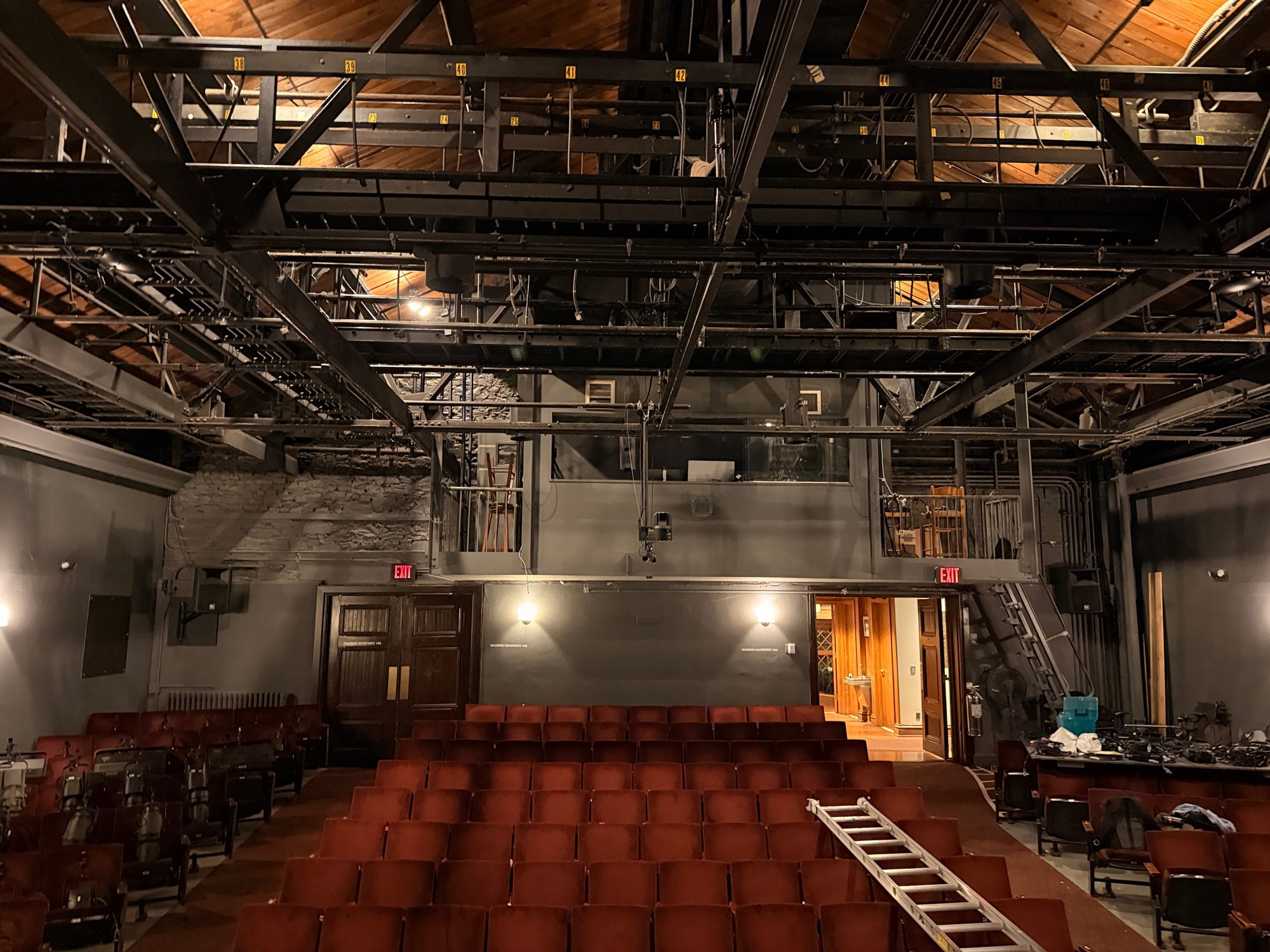
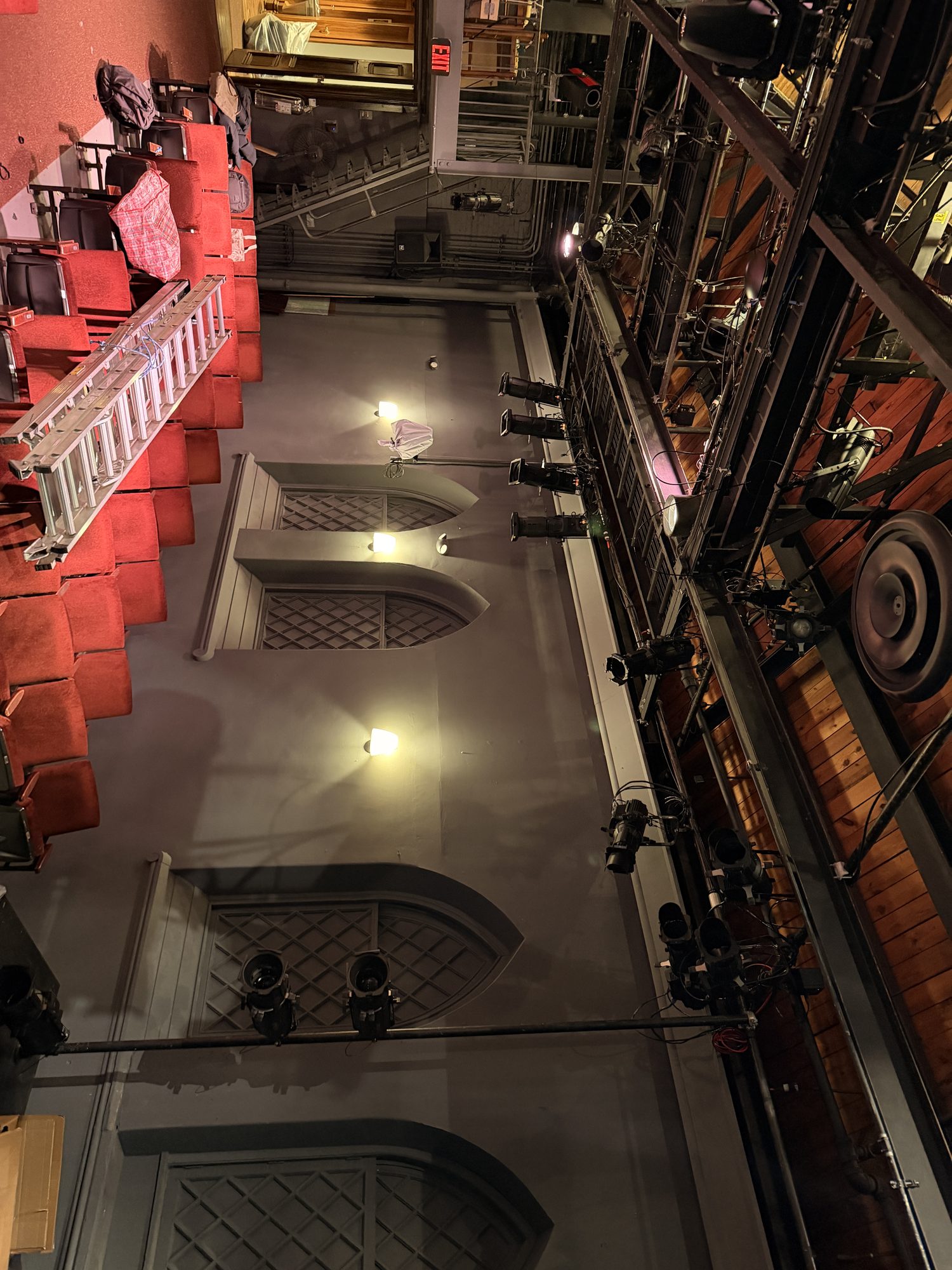
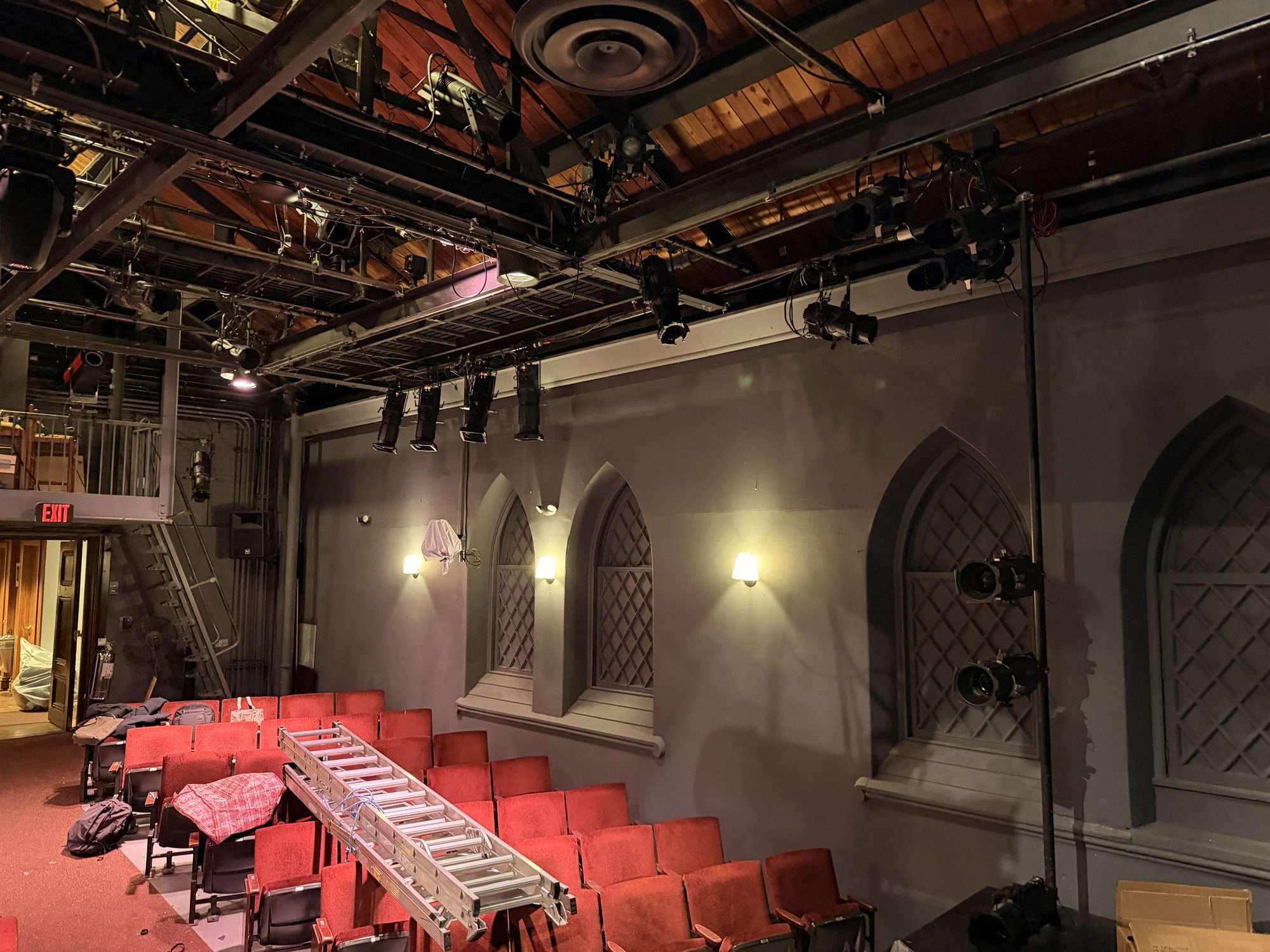
The incandescent rig before the rebuild

Rewriting the bill of materials

I rebuilt the bill of materials line by line with McCarter Theatre's technical staff, keeping the gear compatible with McCarter, Berlind and the Lewis Center so equipment and knowledge move between venues. The revised package came to $425K.
Source Four LED mix
Series 3 Lustr X8 only in fixed, critical positions; lighter Series 2 units everywhere fixtures move show to show
Strip lights
ColorSource Linear in place of Color Force II, matching what runs at the Matthews Theatre
Control
New Ion Xe 20 in the booth, with the old Ion kept as a networked programming station in the house
House lights
The existing 20 ColorSource PARs moved to house lighting, tripling its output and adding color and aisle control
Power
Dimmer modules converted to relays, with individual Edison outlets to each fixture

Keeping it alive

Weeks before the purchase deadline in May 2025, the University put the project on hold. Working with Friends of Theatre Intime alumni, I wrote the project cost and scope summaries that brought it back through University leadership. It restarted in August 2025 with the scope split between Campus Energy and the Friends. I managed the BOM between these two scopes.
Plot and paperwork

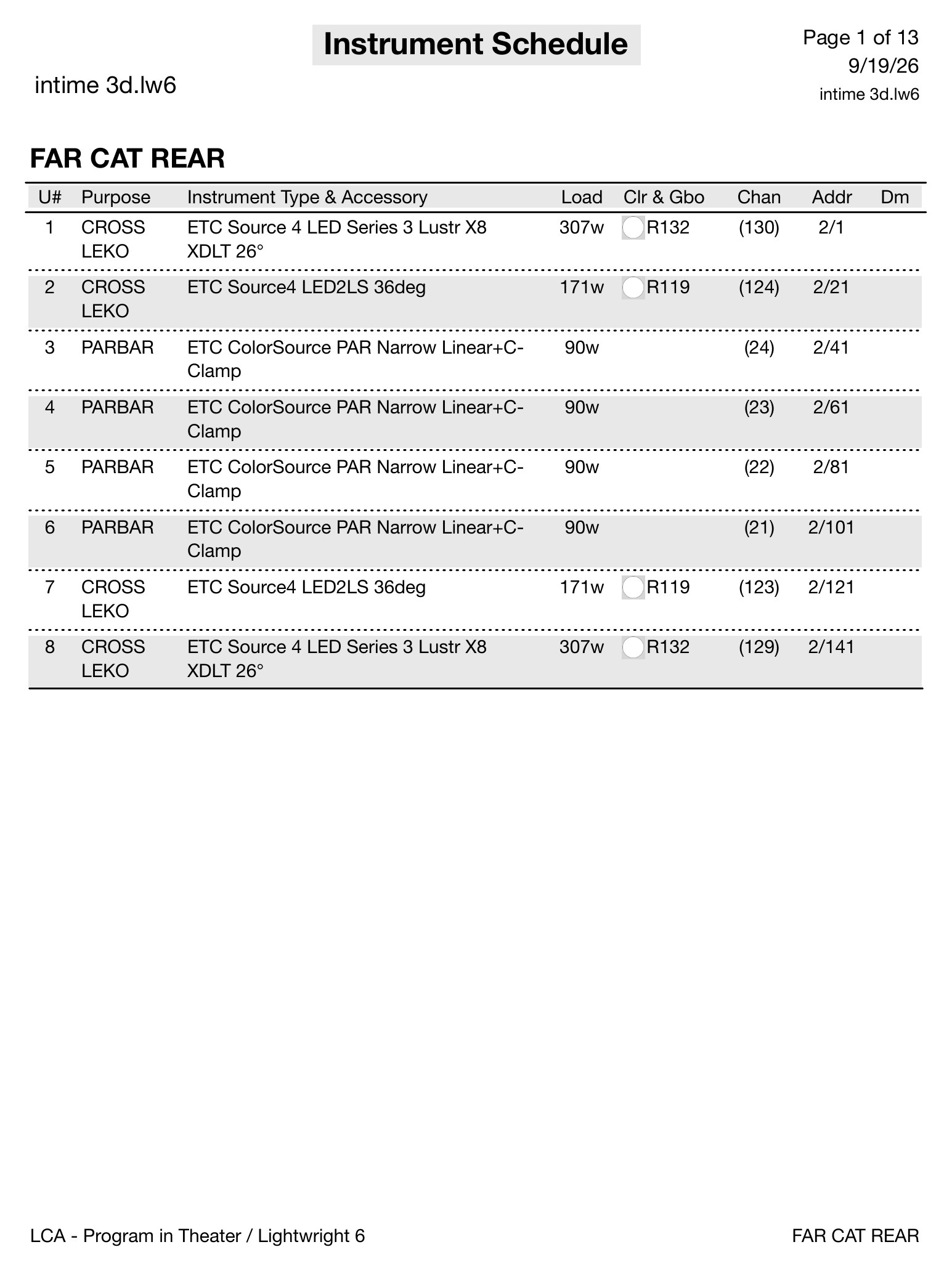
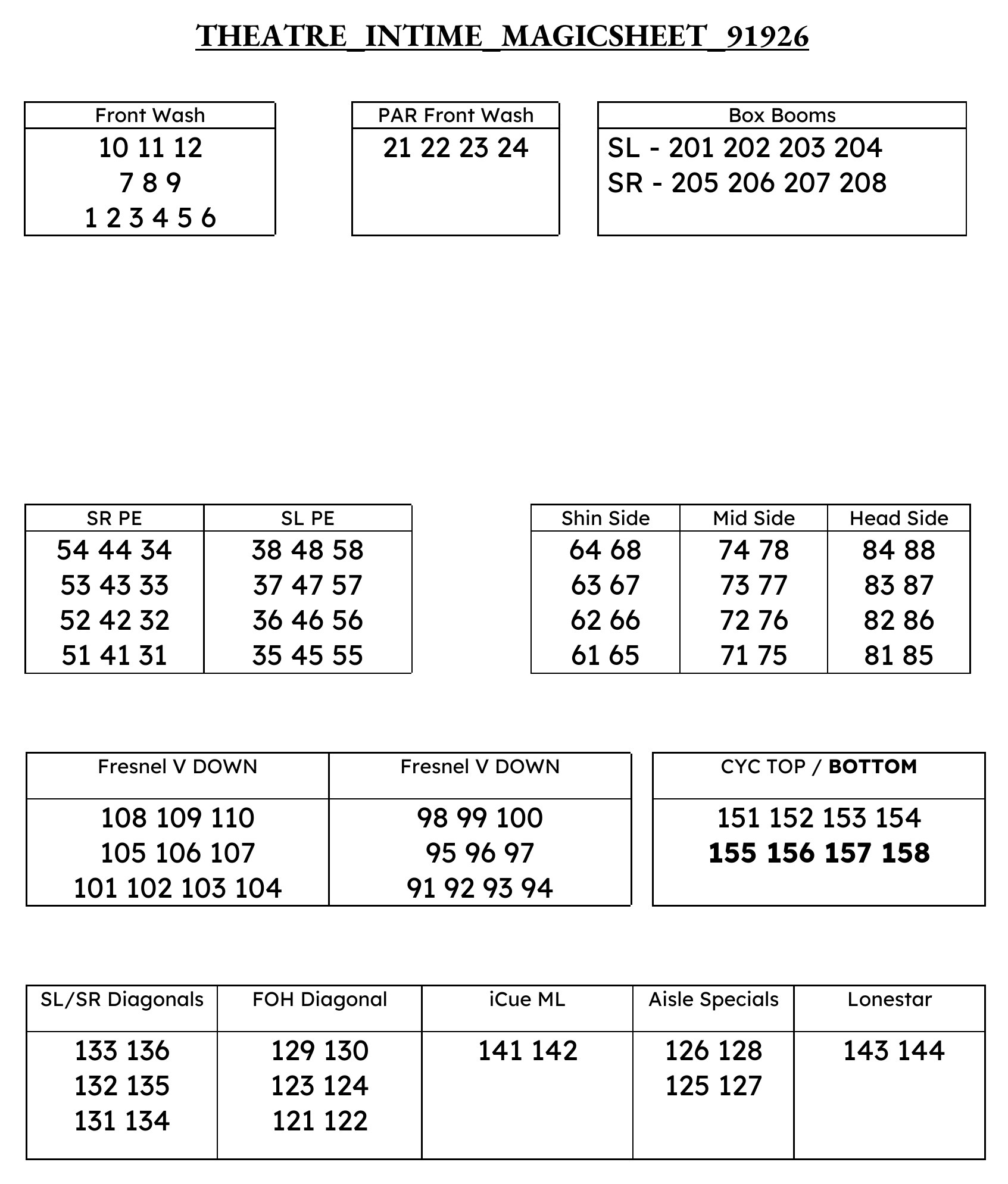
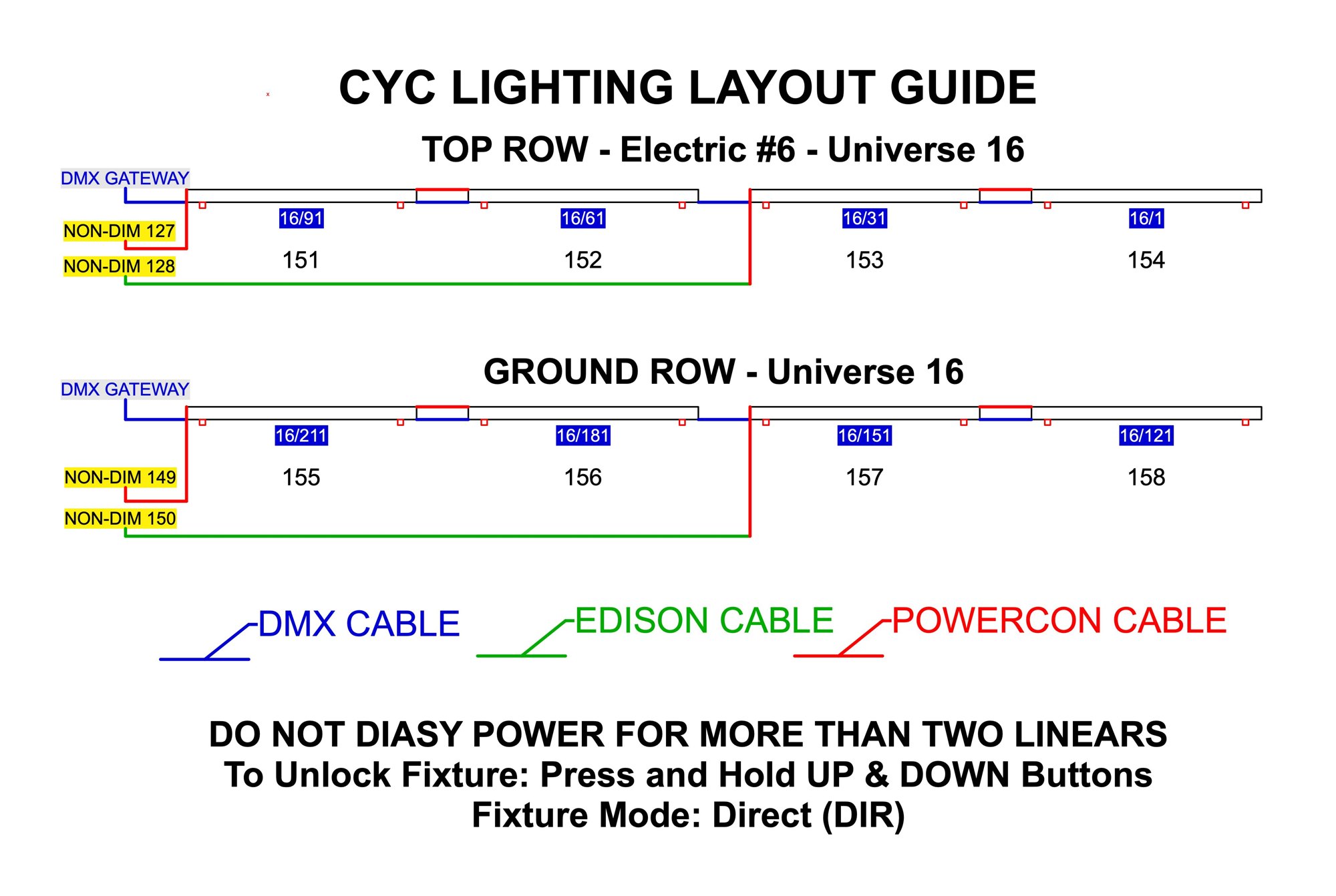
I updated our building drafting in Vectorworks and built the Lightwright instrument schedule.

Rep plot, Vectorworks
Lightwright instrument schedule
Rep plot magic sheet
Cyc layout guide for the 6th electric and ground row

Strike

When the theatre went dark on December 8, I recruited a student crew from Intime and Triangle and ran nightly shifts. In four nights we took down more than 200 fixtures and thousands of feet of cable, sorted everything for removal, and handed the electricians an empty grid on schedule.

Fixtures coming down into the house
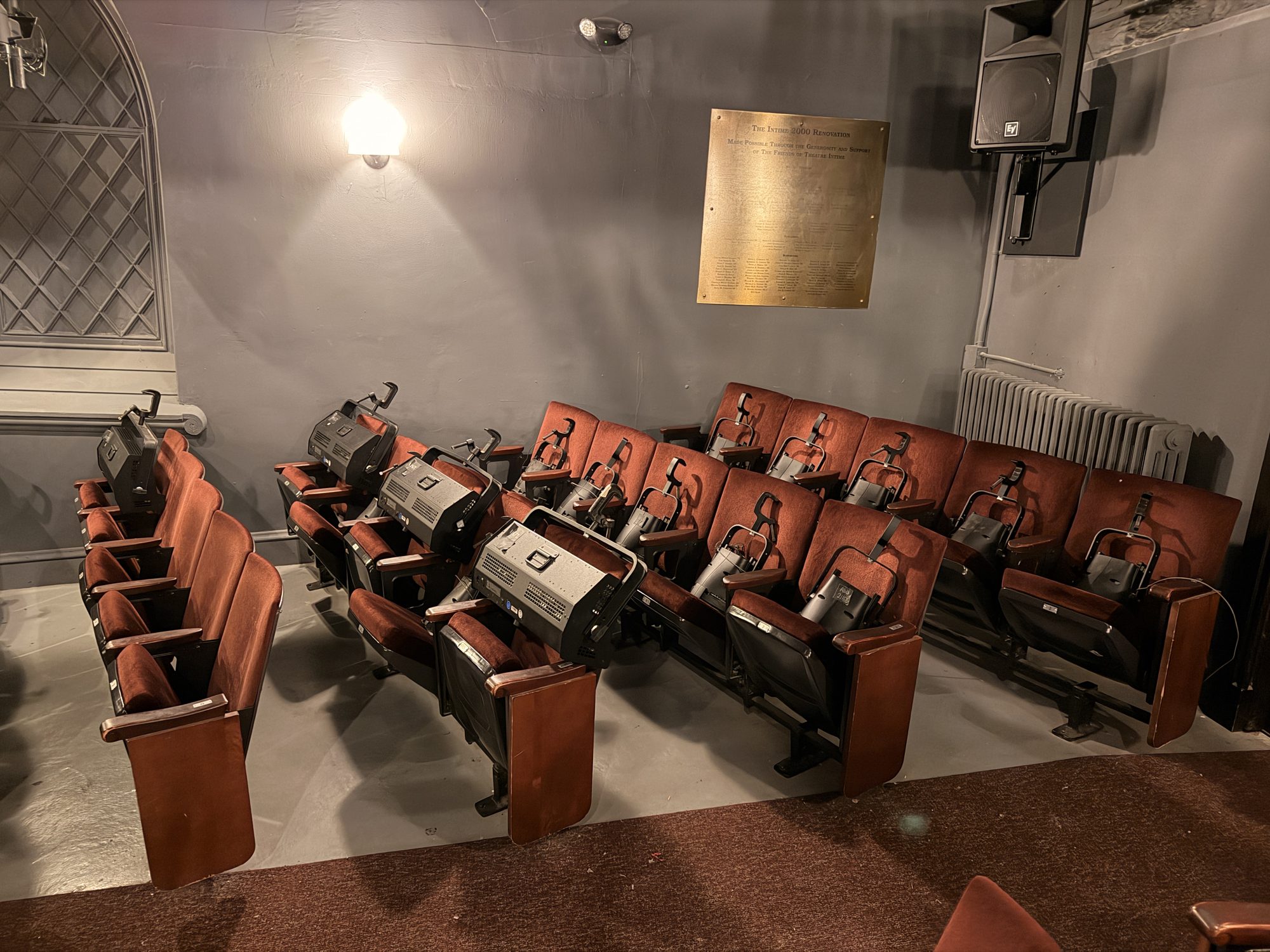
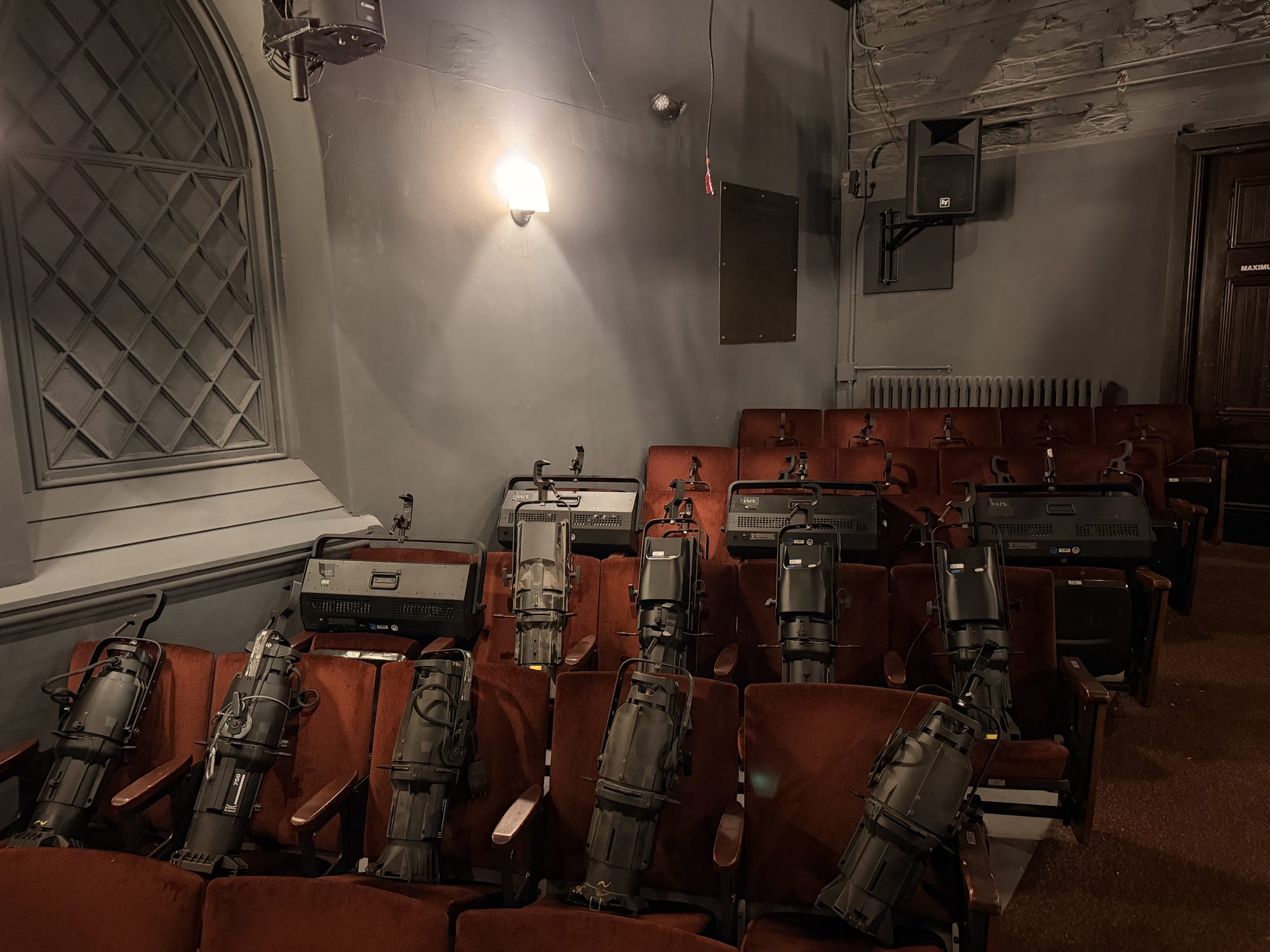
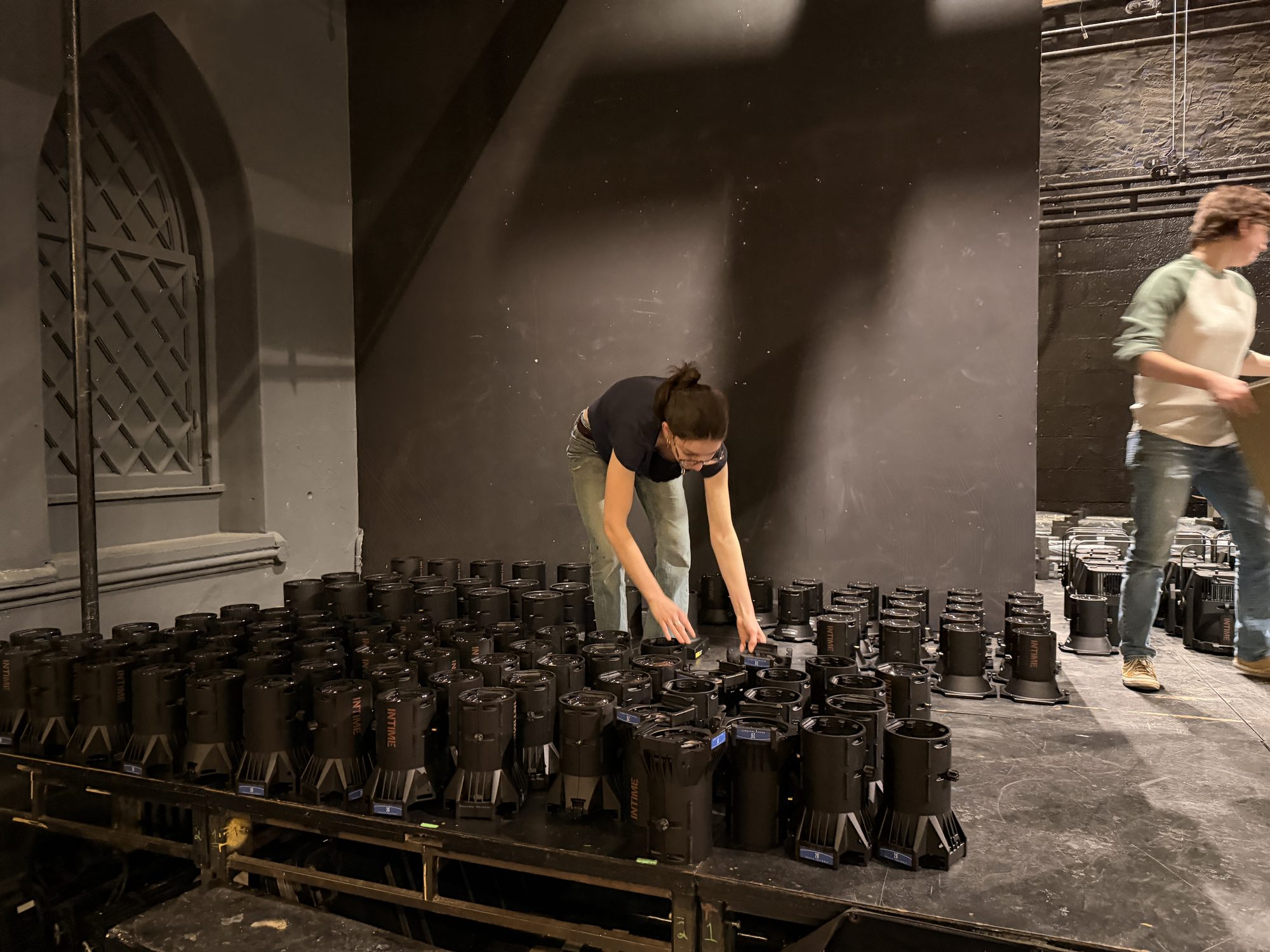
Staged across the house seats
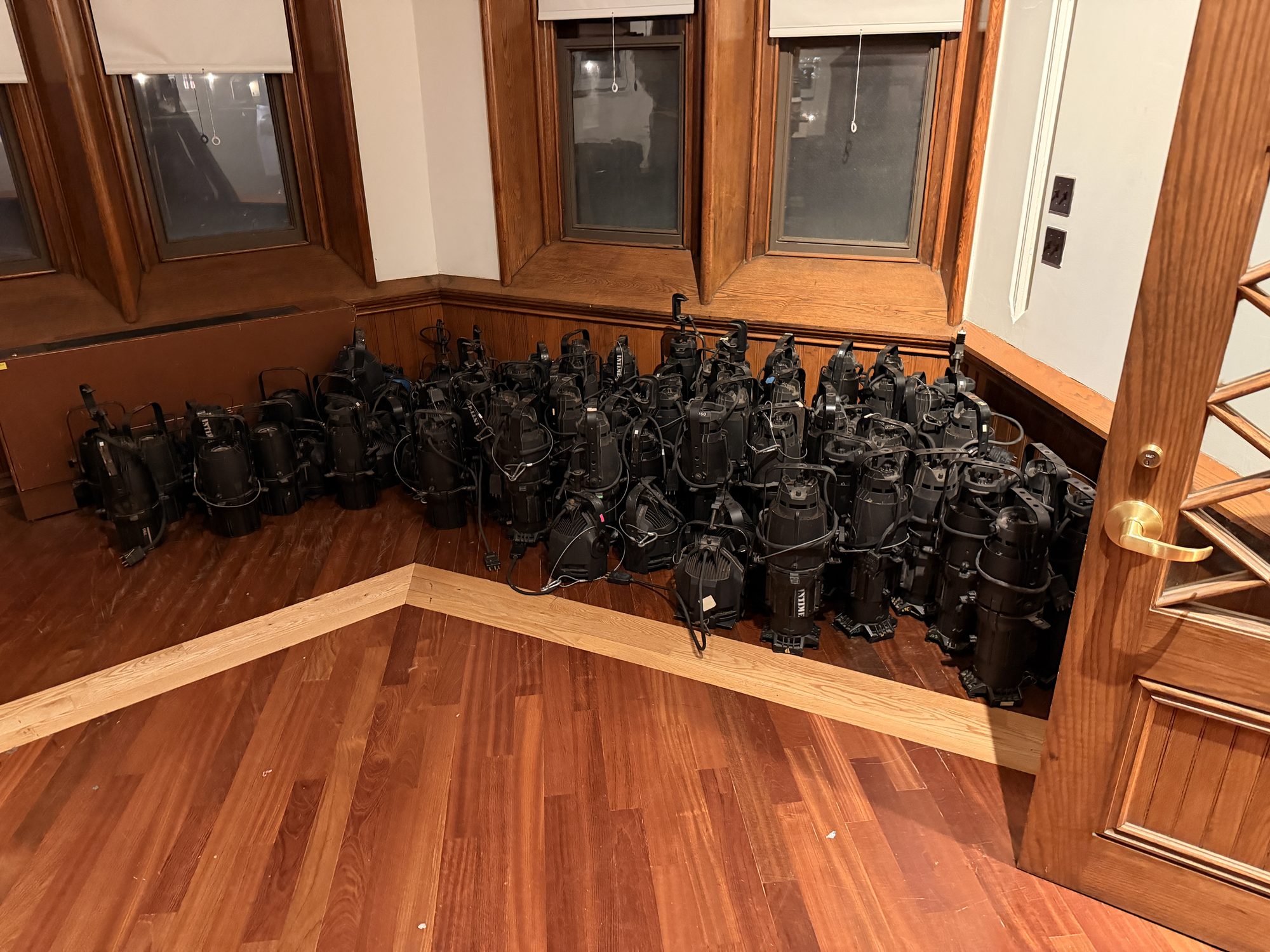
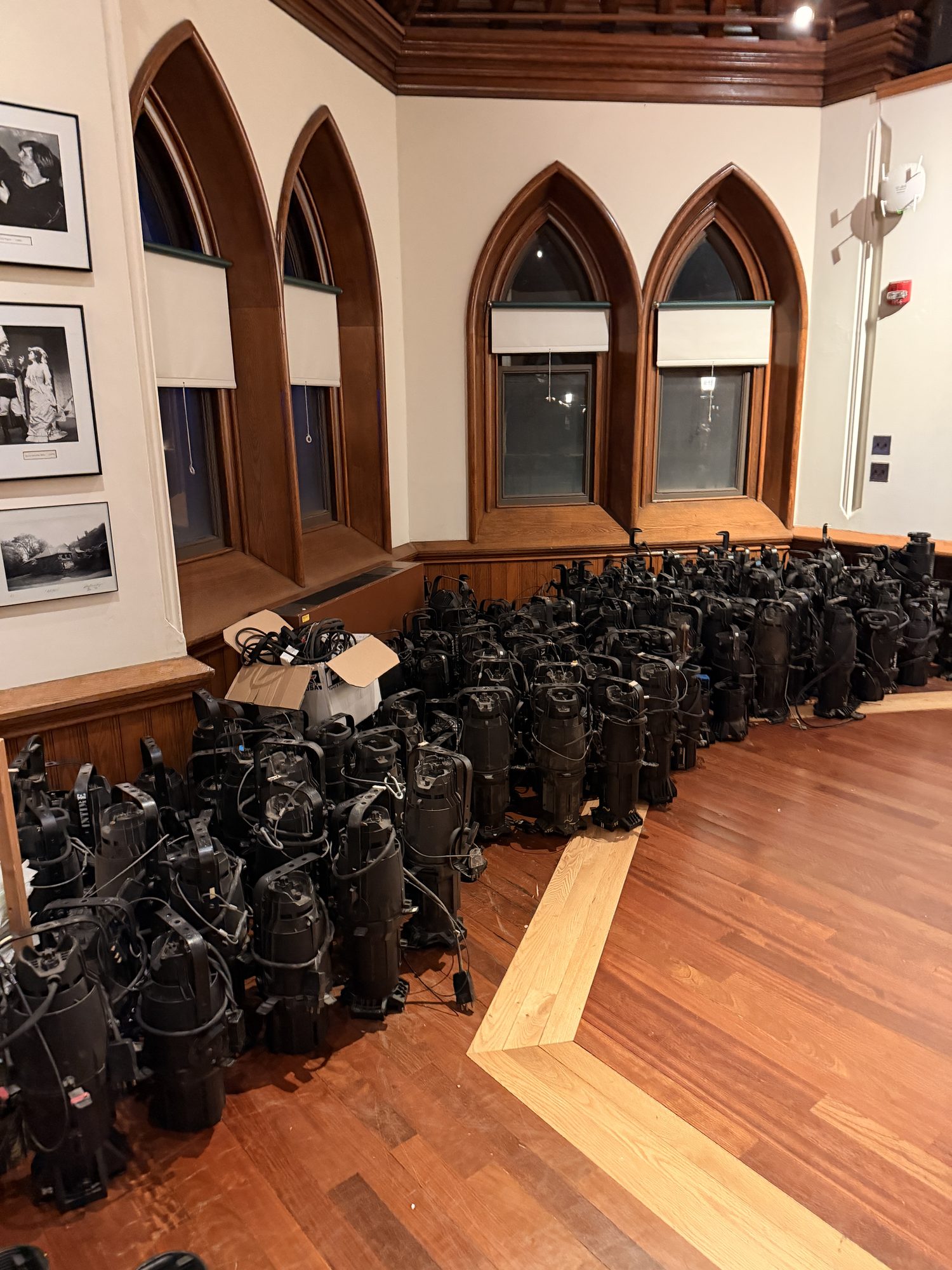
Sorted by type
Sorted by type
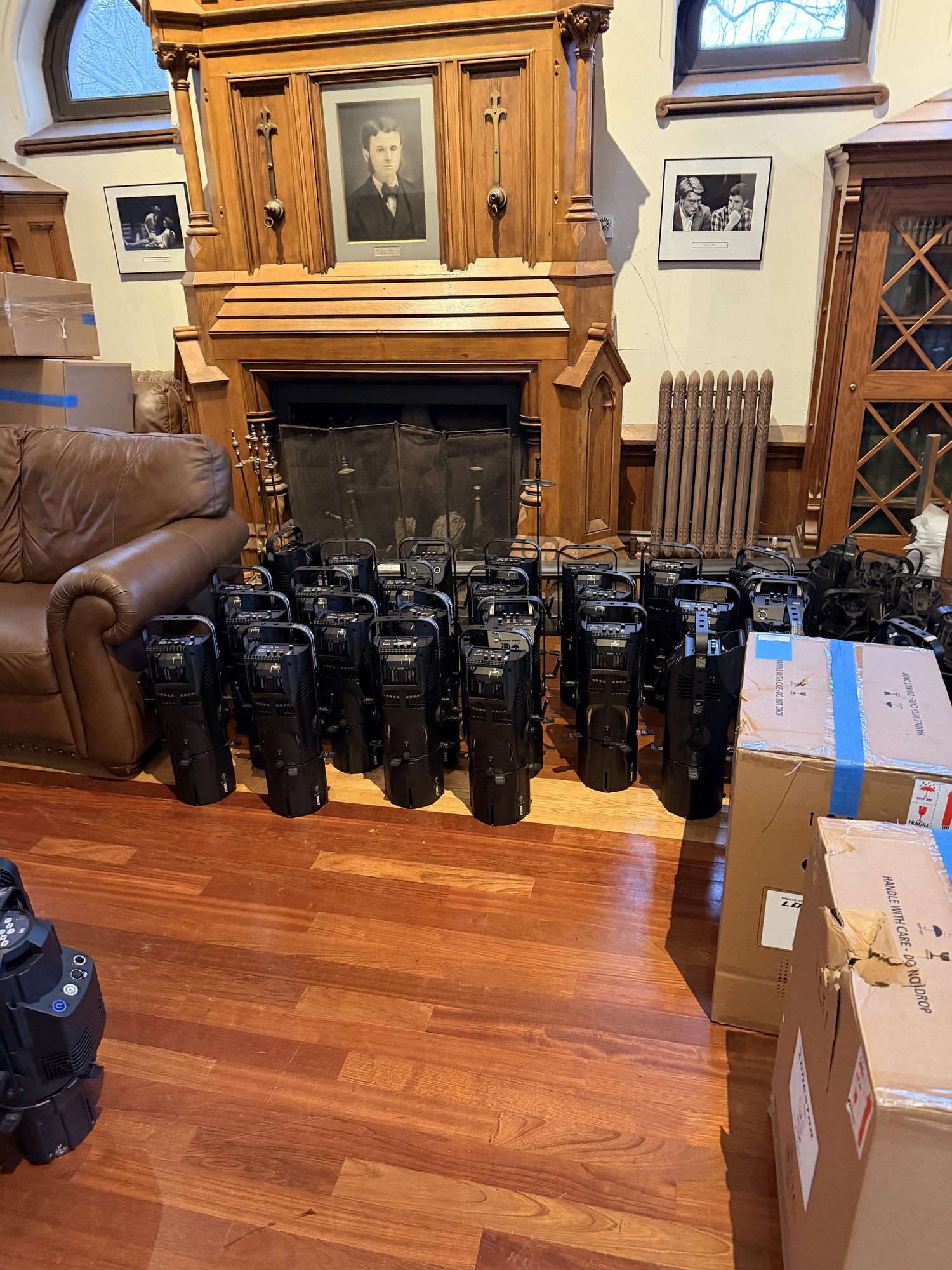
Lobby staging
Lobby staging
The old rig in the lobby
The grid cleared for electrical work

Infrastructure

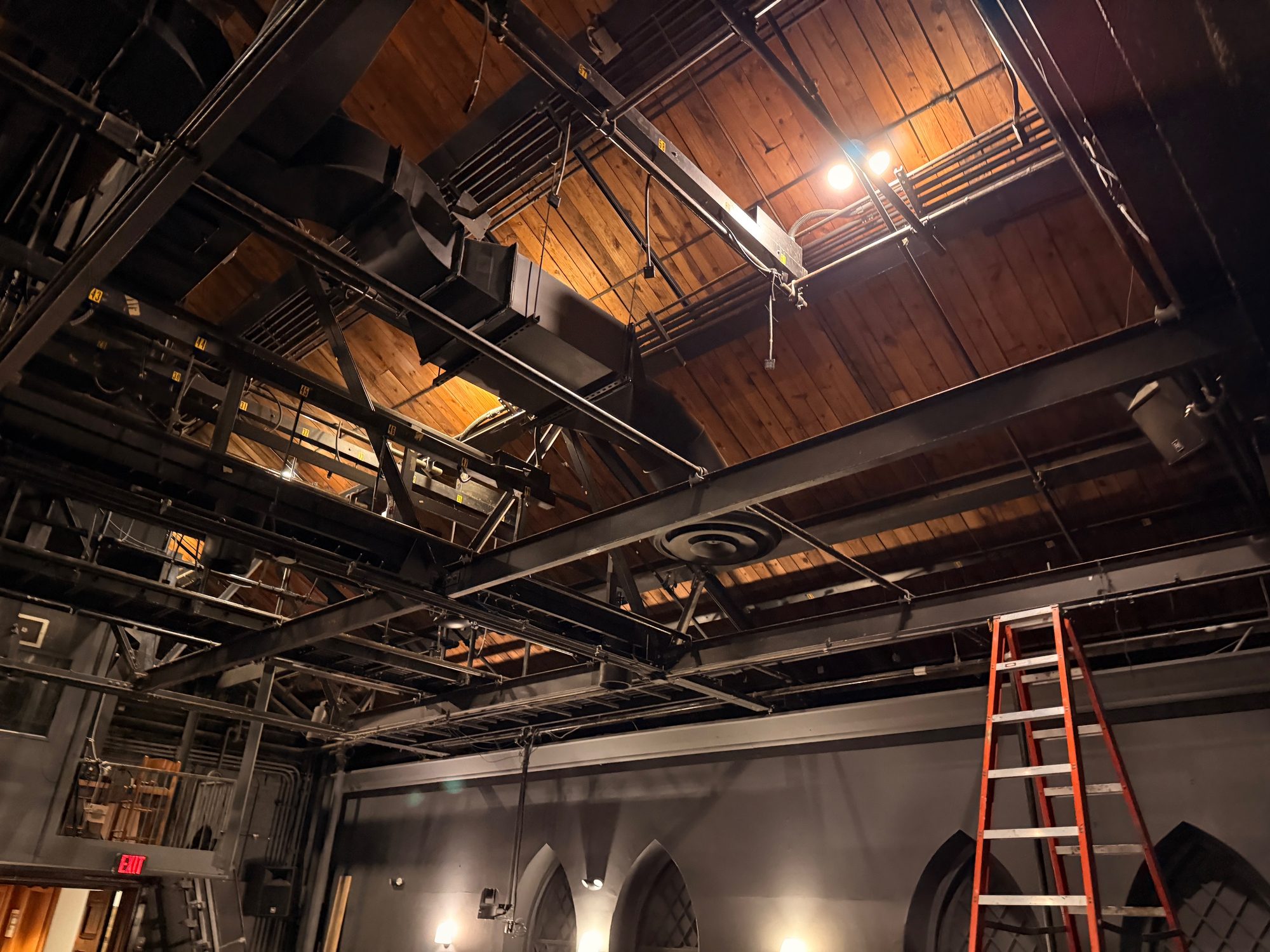
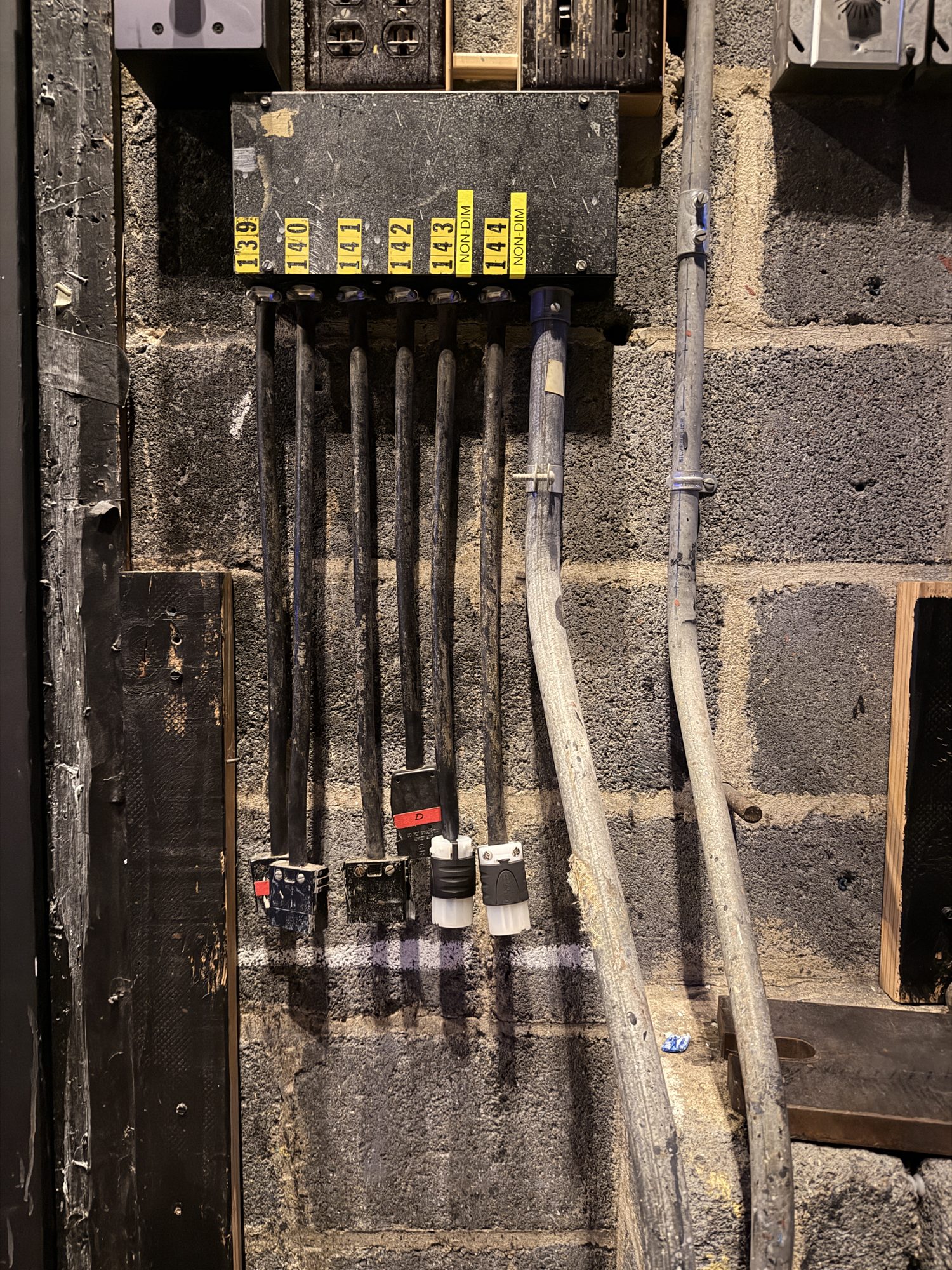
With the grid empty, electricians ran the new network and the racks were converted to Sensor3. Alongside that we refurbished lighting positions with new Schedule 40 pipe, beam clamps, rated splices, and LED work lights.

Empty grid over the stage
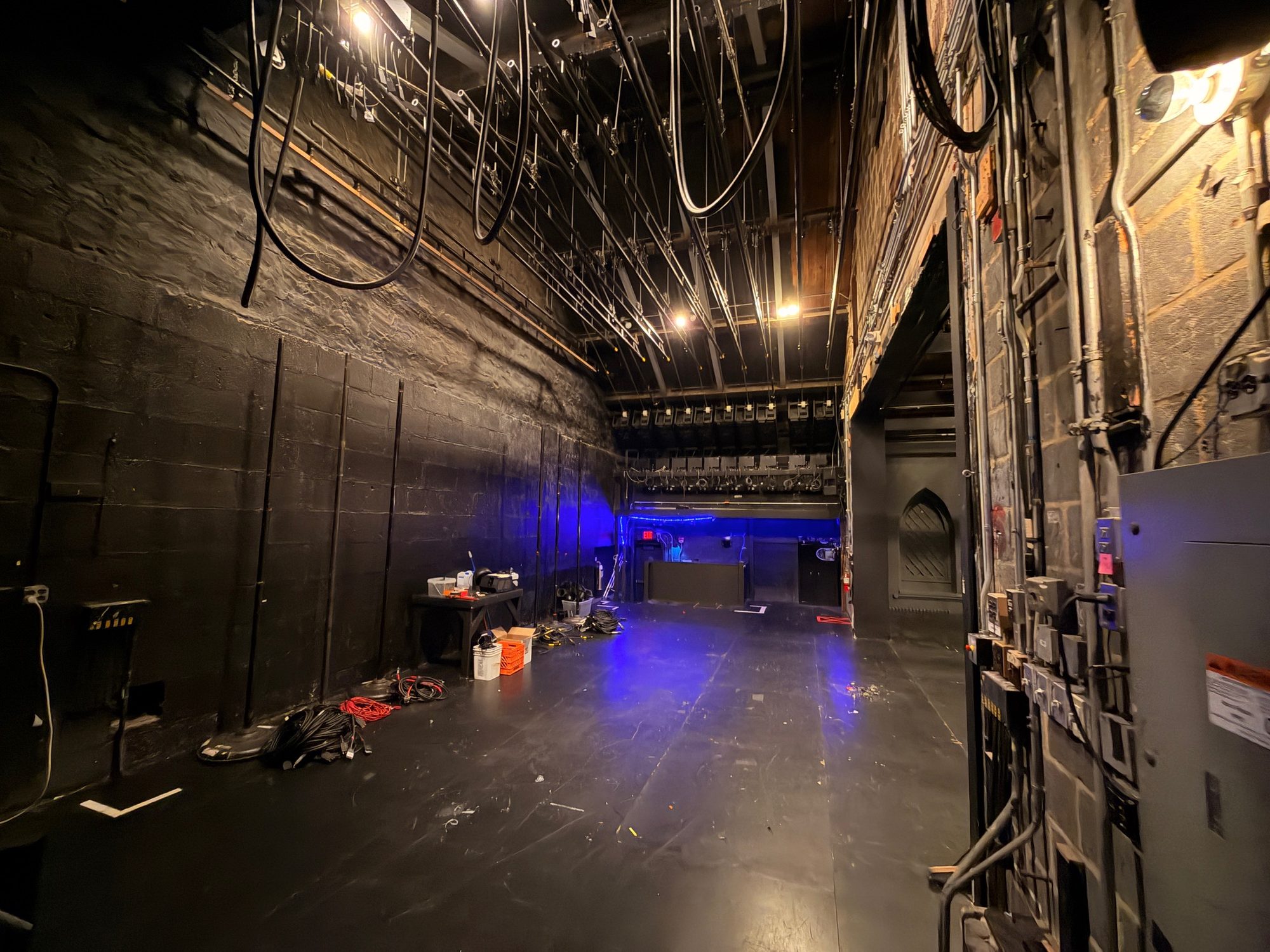
Stage clear for the install
Power and data distribution

Install

The new fixtures arrived in January. A combined crew of McCarter technicians and Intime students hung, cabled and labeled the rig in a week, then I spent the rest of January on programming, configuration and testing so the theatre was ready for its first tech week in February.

Prepping the new fixtures on stage
Lustr fixtures going up
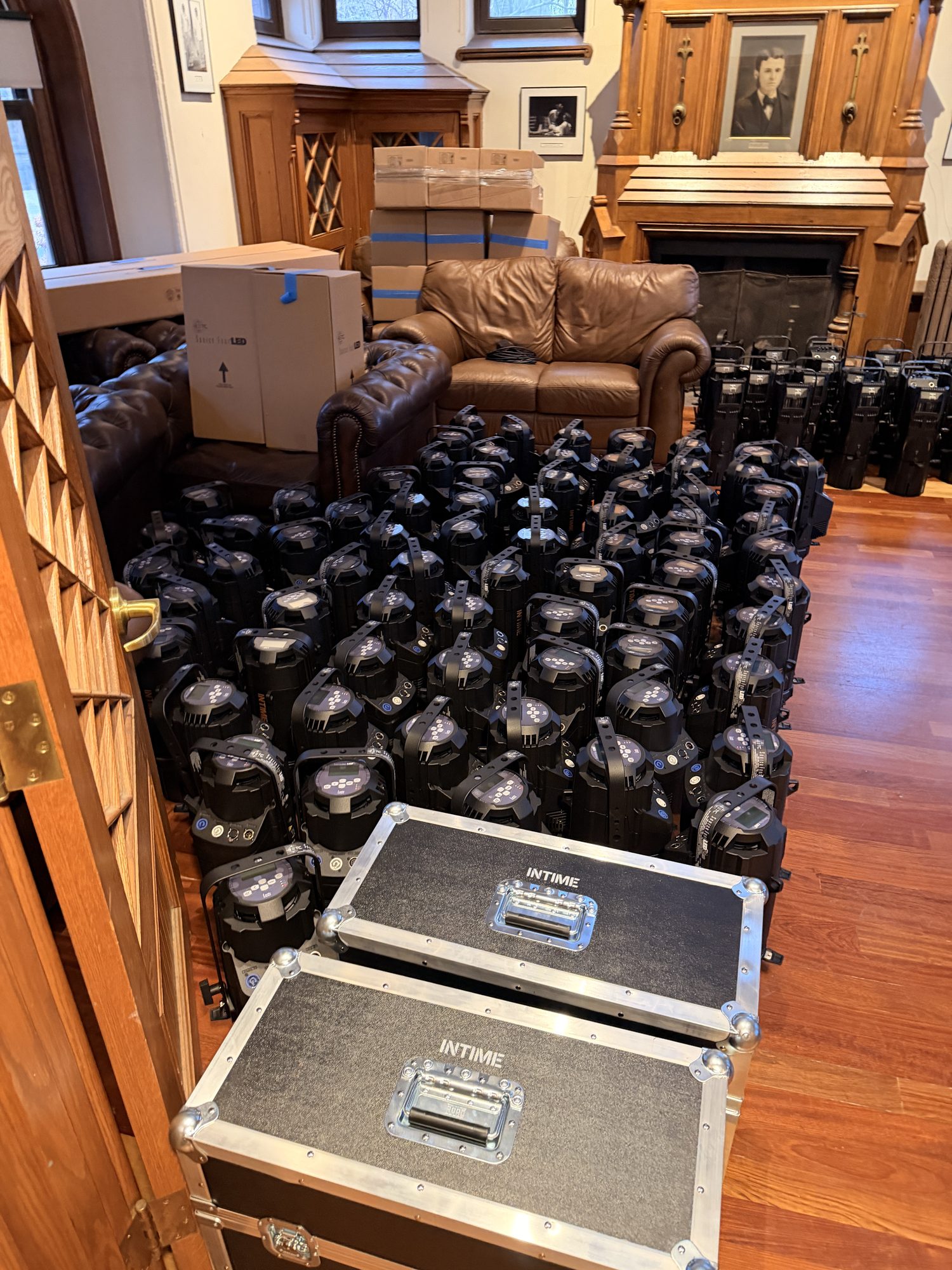
New fixtures and road cases in the lobby
Ready to hang
Ready to hang

Architectural control

An important part of the project for me was updating the infrastructure. This meant refurbishing the dimmer racks to Sensor3, and also the outdated architectural controls. All that existed was a panic button at the rear of house, and a few faders in the booth. I designed the architectural layer on ETC Echo Touch with an Echo Expansion bridge and a Snapback playback unit. This added a button panel backstage and back of house, and a touchscreen in the booth. Snapback was important as it allows us to drive multiple universes of control.

Presets
Five multi-space presets shared by the touchscreen and both wall stations: house only, rehearsal, work light, presentation and All Off
Snapback
Looks built on the Eos console are recorded as full-universe DMX snapshots and replayed with no console in the room
Relays
Stage LED power runs on non-dim relays; the house relay stays energized so house light comes up instantly
Movers
The Lonestars sit outside every touchscreen relay, so they never power up and spin with no operator present
Safety net
A scheduled All Off fires every night at midnight

Handing it off

I wrote an Operator's Guide for house managers, stage managers and run crew, and a System Architecture document for TDs covering the universe map, Concert, RDM re-addressing, Snapback recording and firmware upkeep. The tech table packs into three labeled cases, with the old Ion running as a client console.

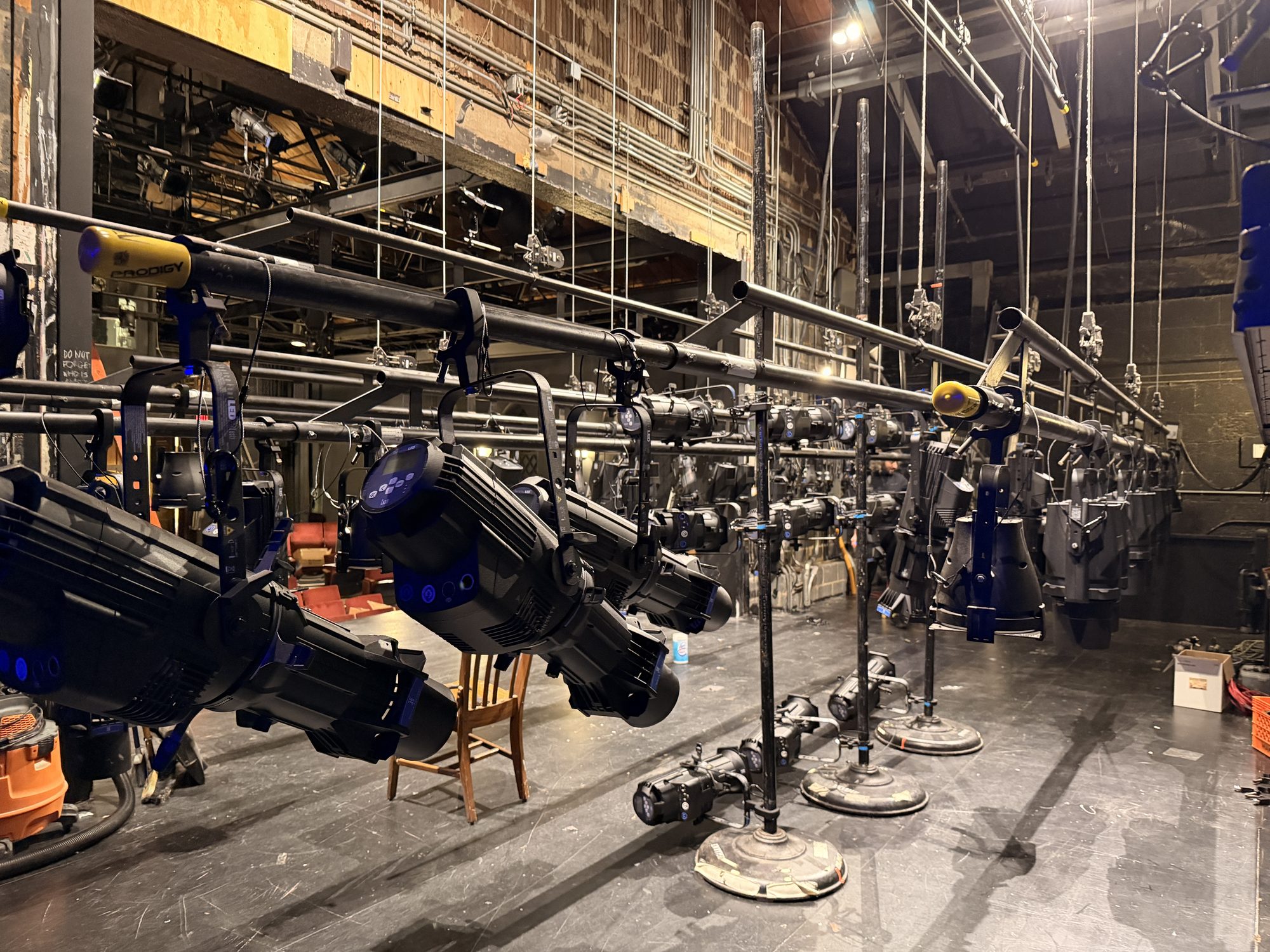
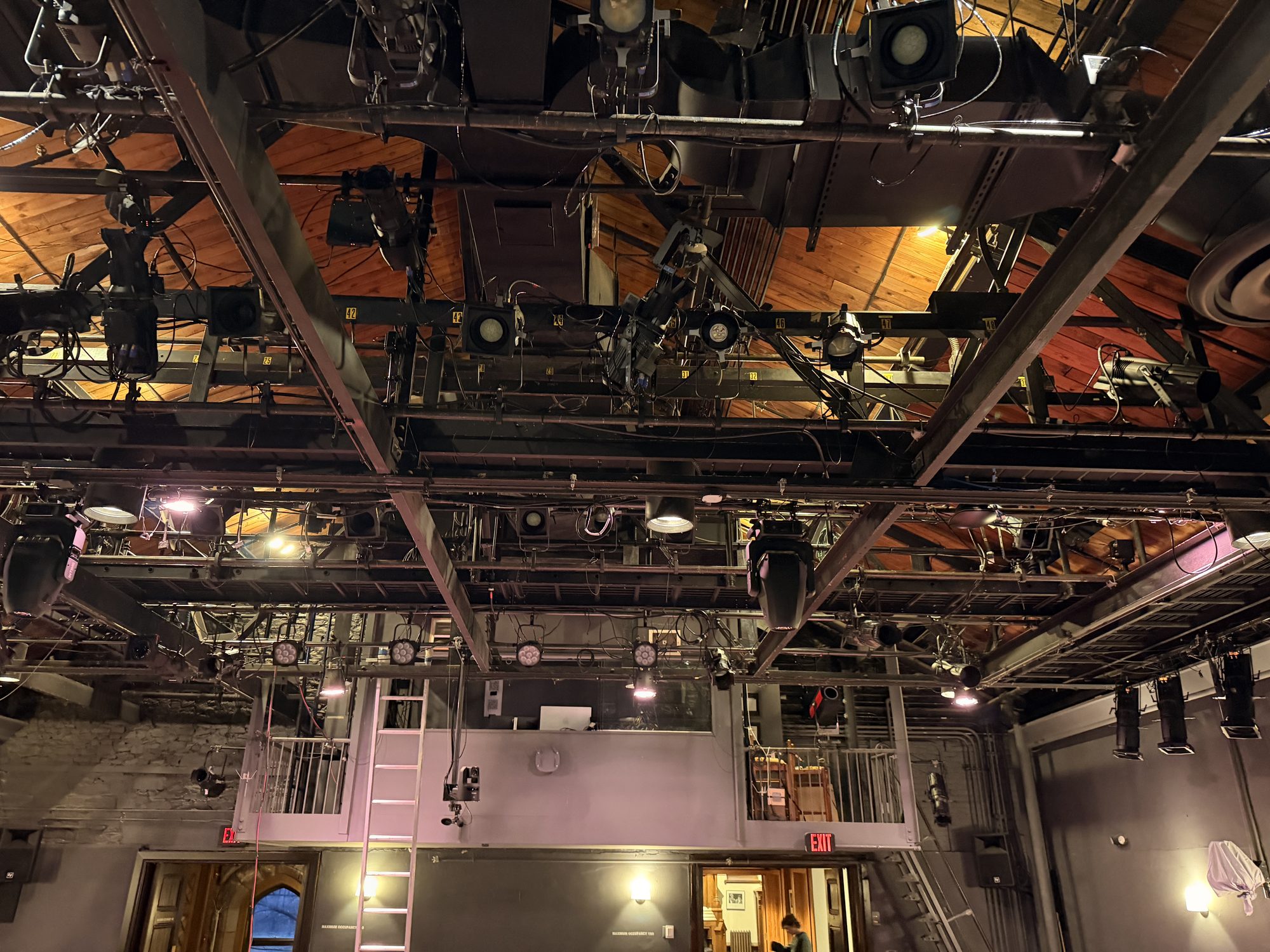
The finished grid

The connected lighting load dropped from 95.5 kW to 31 kW, an estimated cut from about 76,500 kWh to 34,000 kWh a year. More importantly, the only student-run theatre on campus now runs the same LED system as the professional houses that surround it.

Looking down from the grid
House and grid
House and grid
The completed rig over the stage
Work
Ambulant Architecture (2025), corridor video installation
Made with
Ben Goldston
Studio
Princeton Research Film Studio, University Center for Human Values
Shown
Palazzo Mora, Venice, during the 2025 Venice Architecture Biennale; University Art Biennial, Palma de Mallorca

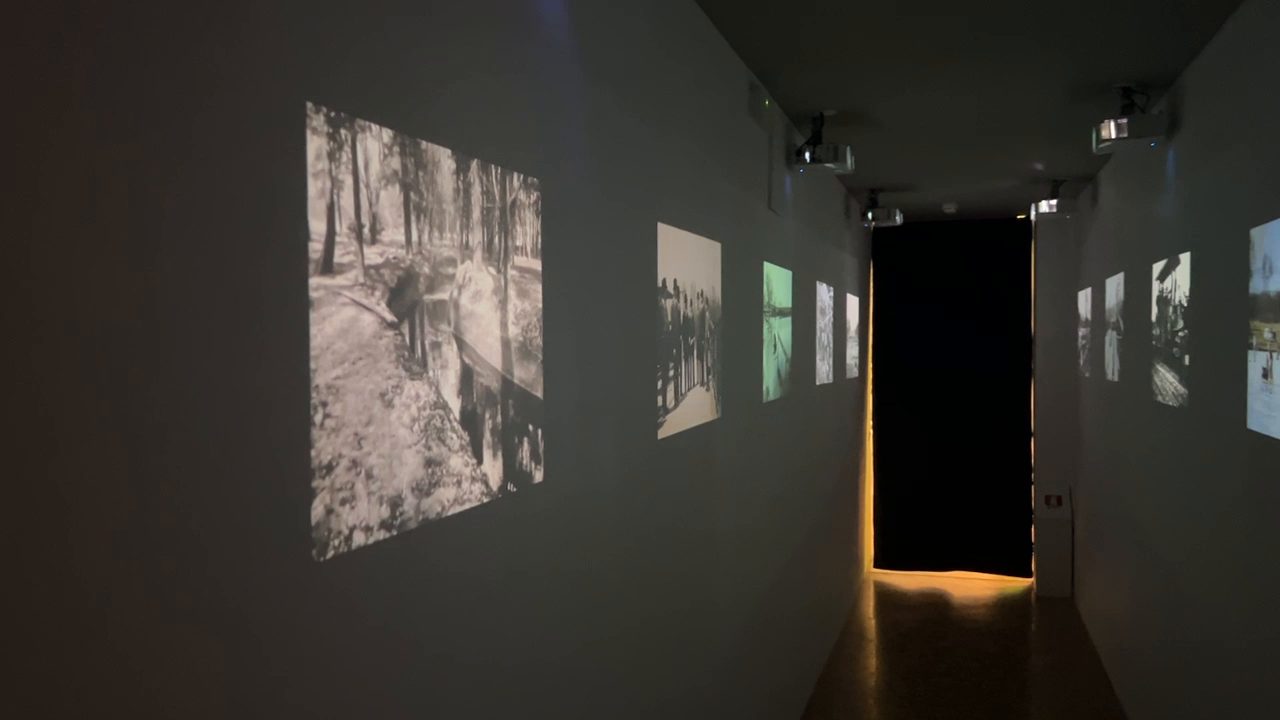
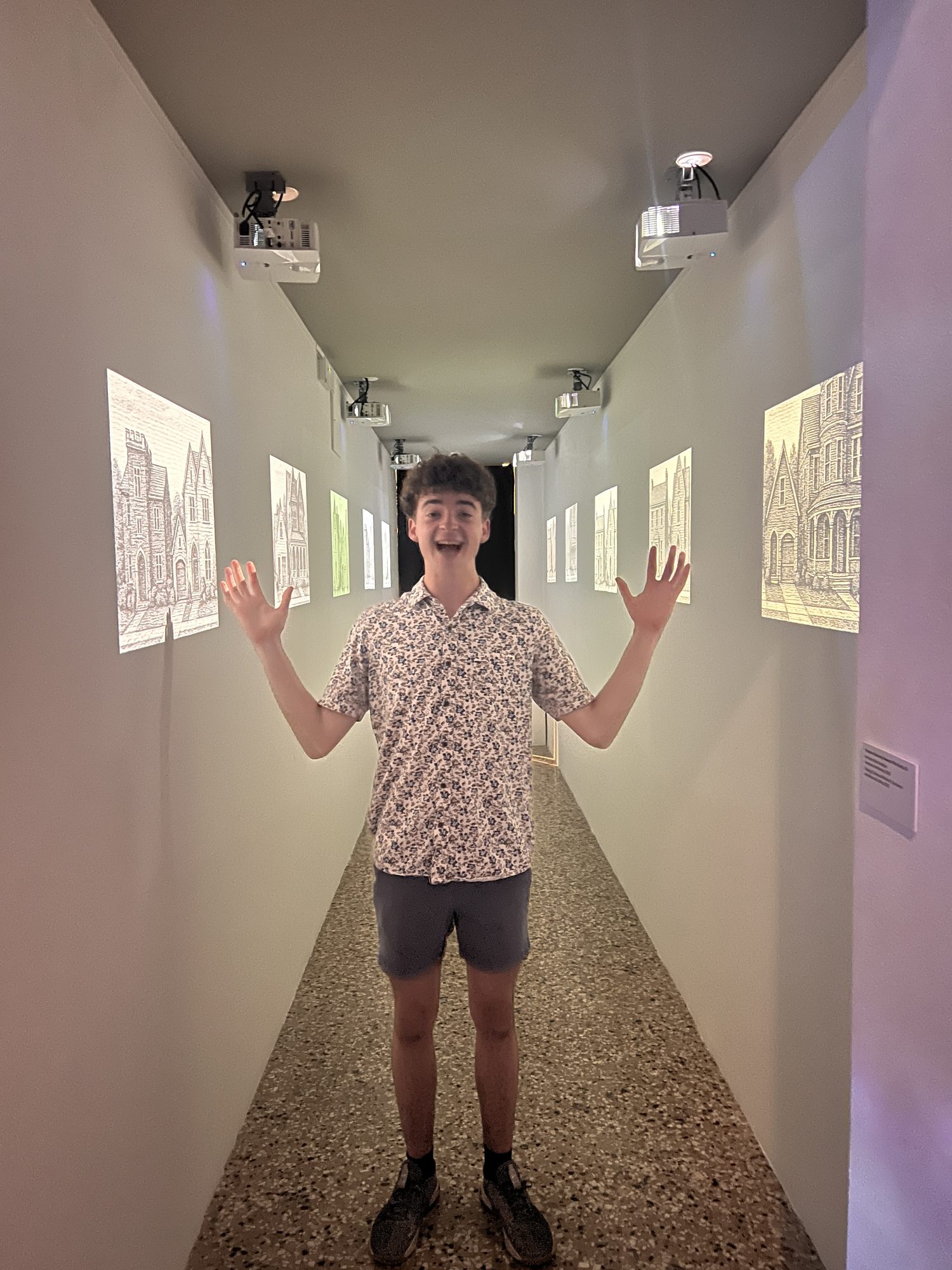
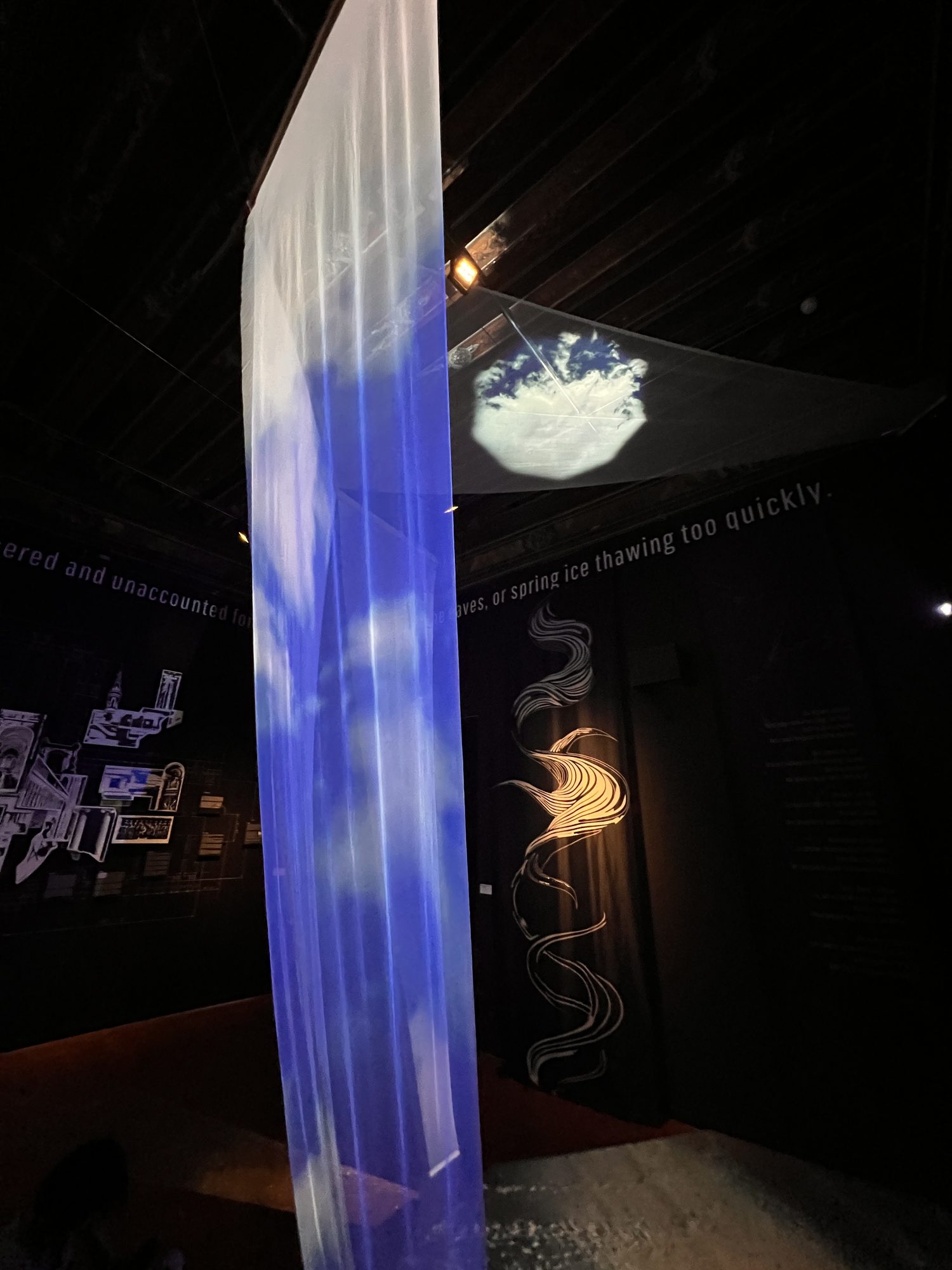
Princeton has a habit of moving its buildings. Ambulant Architecture, made with Ben Goldston for the Research Film Studio's Genius Loci exhibition, follows them down a ten-projector corridor at Palazzo Mora in Venice, one jump at a time.

10Projectors in the corridor
2Films
VeniceBiennale Architettura 2025

Buildings that walk

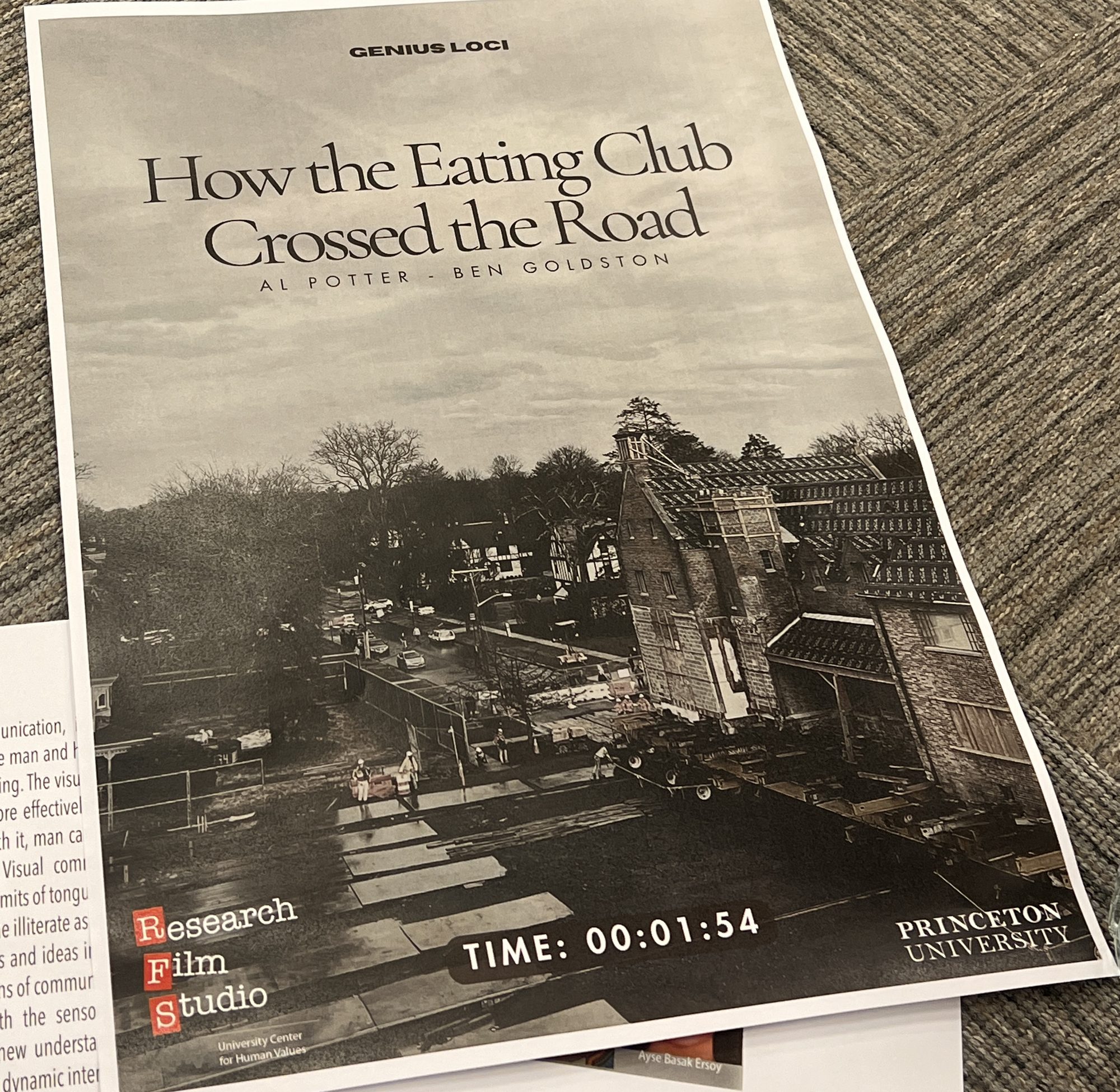
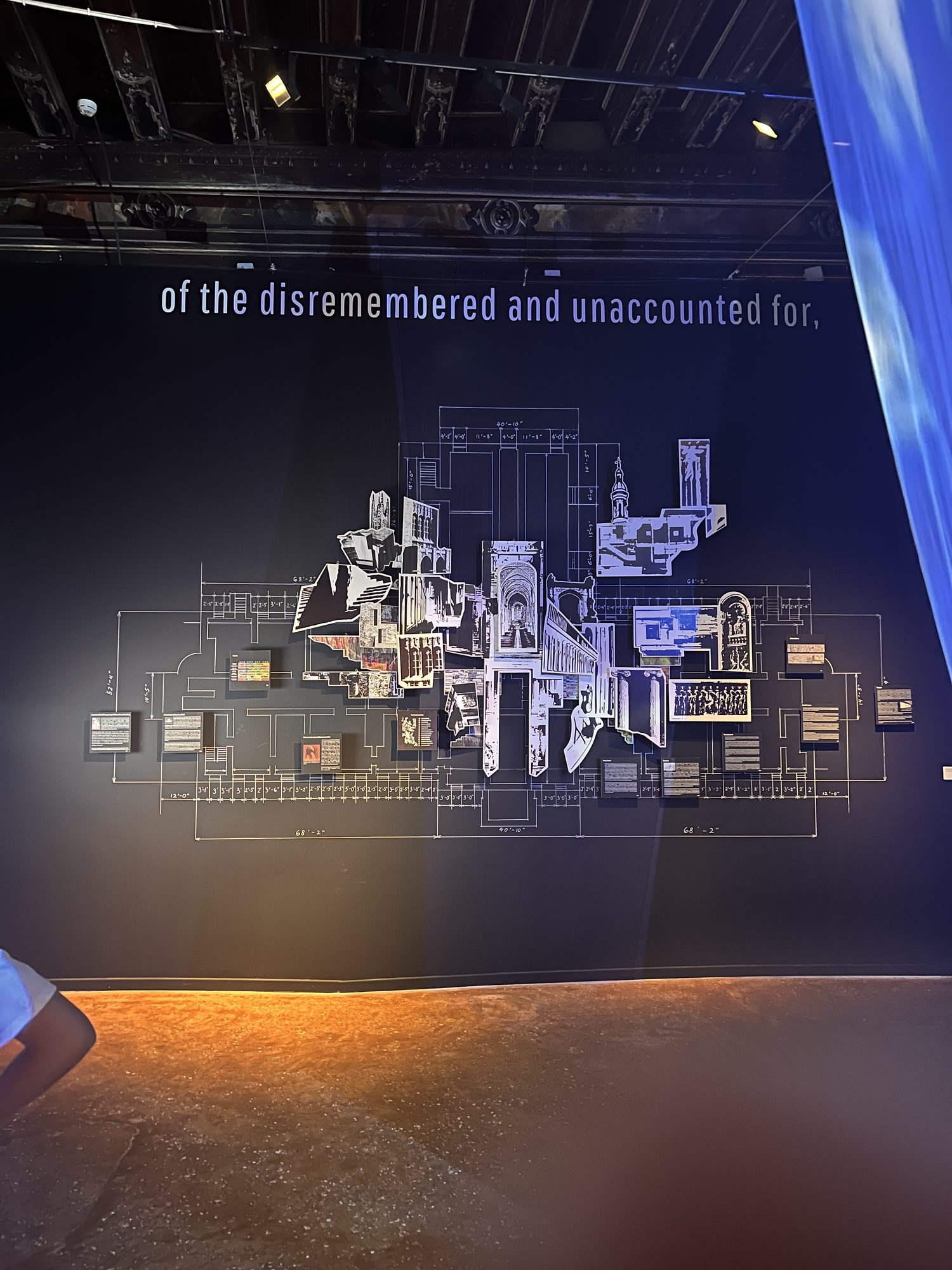
The film grew out of the studio's Environmental Film Studies course and its idea of an ambulant “anarchitecture.” Its subjects are real moves on campus: the former Court Club, lifted onto hydraulic dollies, turned 180 degrees and rolled across Prospect Avenue in 2023, and Corwin Hall, pushed a hundred feet along steel tracks in 1963 by, as the alumni weekly put it, thirty-eight men, nine hydraulic jacks and one whistle.

How the Eating Club Crossed the Road, Genius Loci program
Archival images moving down the corridor

Ten projectors, one corridor

The corridor is lined with ten ceiling projectors, five down each wall. We built the film as a collage of short rotations: line drawings of the buildings and archival photographs that leap from screen to screen down the hall, each jump landing on a sound cue. I cut it in Premiere and worked with Farkas Fülöp of Glowing Bulbs to map it onto the playback template, then spent the last nights before opening fixing screen order, title placement, audio levels and the rotation animation so it would sit alongside the corridor's second piece.

In the corridor at Palazzo Mora
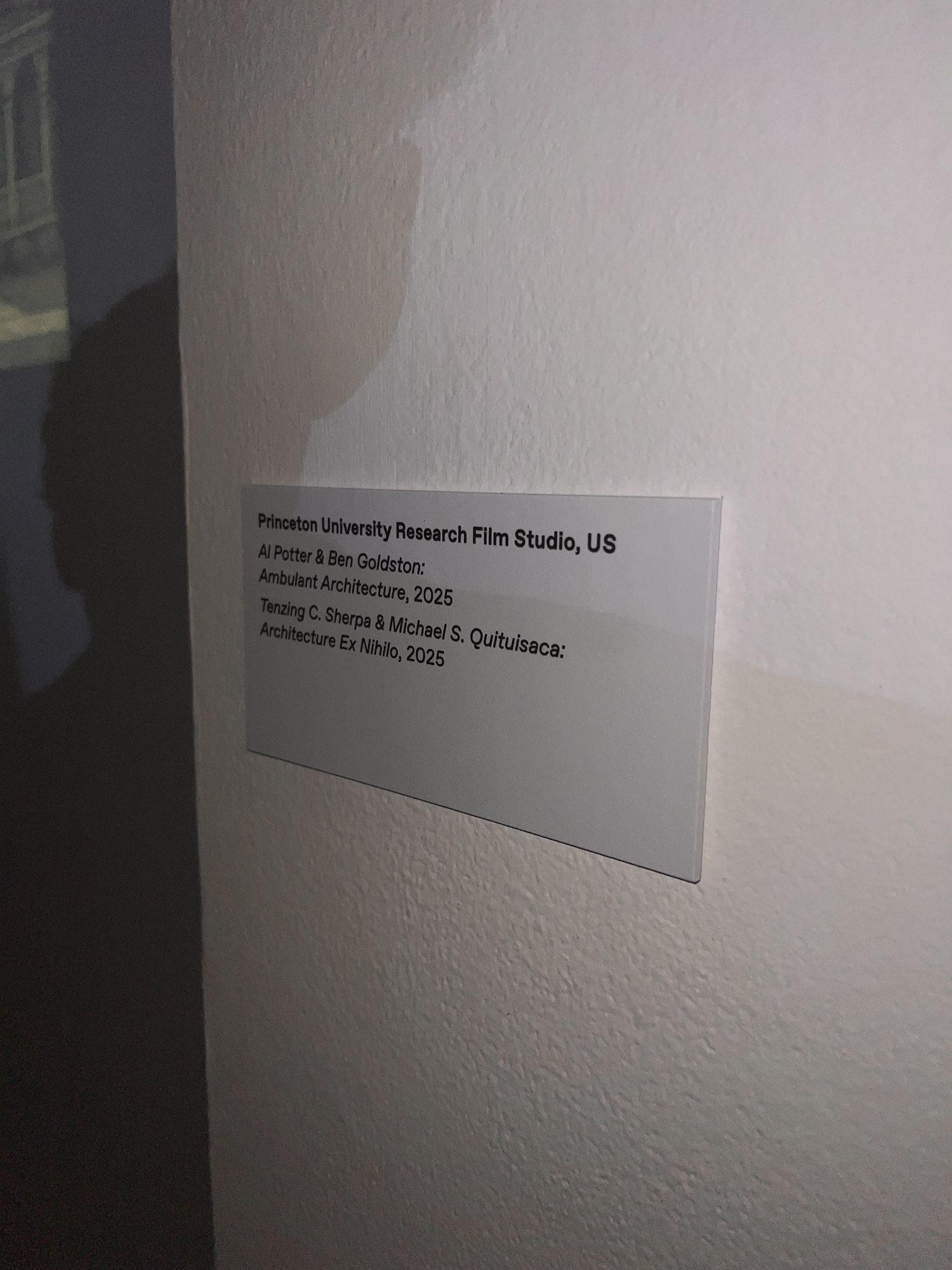
Wall label, Princeton University Research Film Studio

How the Eating Club Crossed the Road

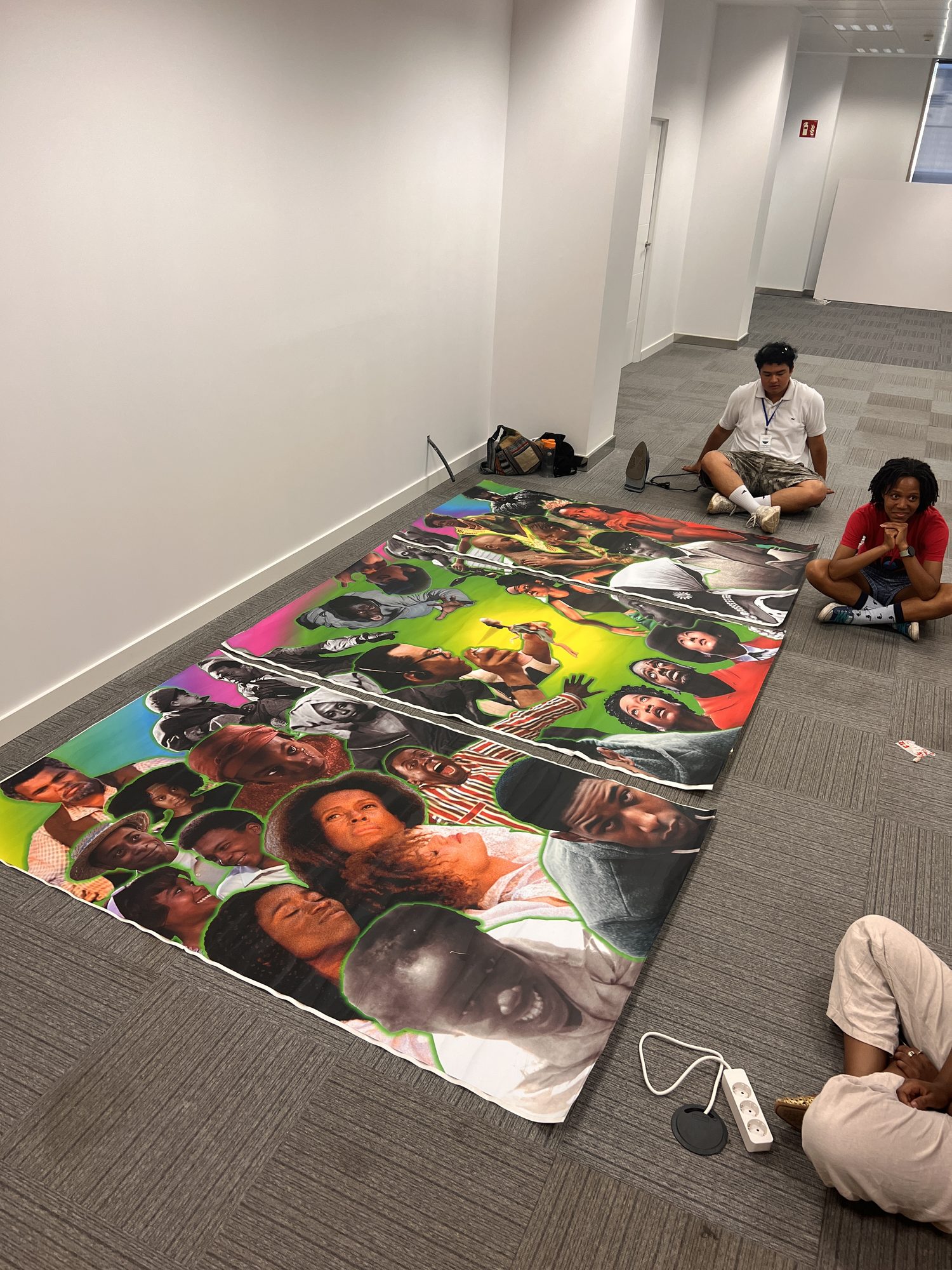
Alongside the installation we made a short companion film, a Buster Keaton style reenactment of the Court Club's trip across the road. It screened in the studio's program at the University Art Biennial in Palma de Mallorca, where we spent the first week of June installing the exhibition with the rest of the studio before traveling on to Venice.

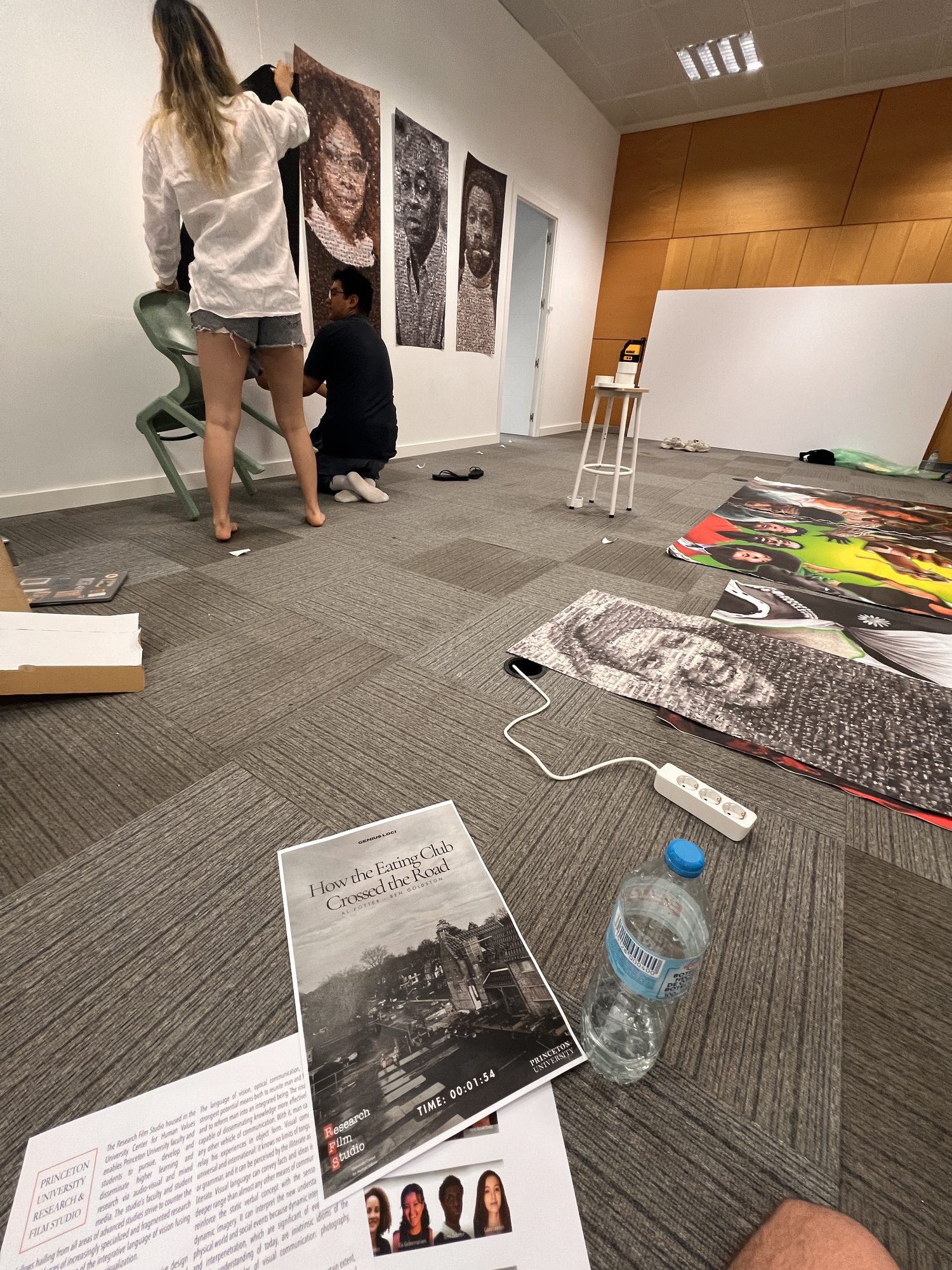
Laying out prints, Palma
Installing the Mallorca show
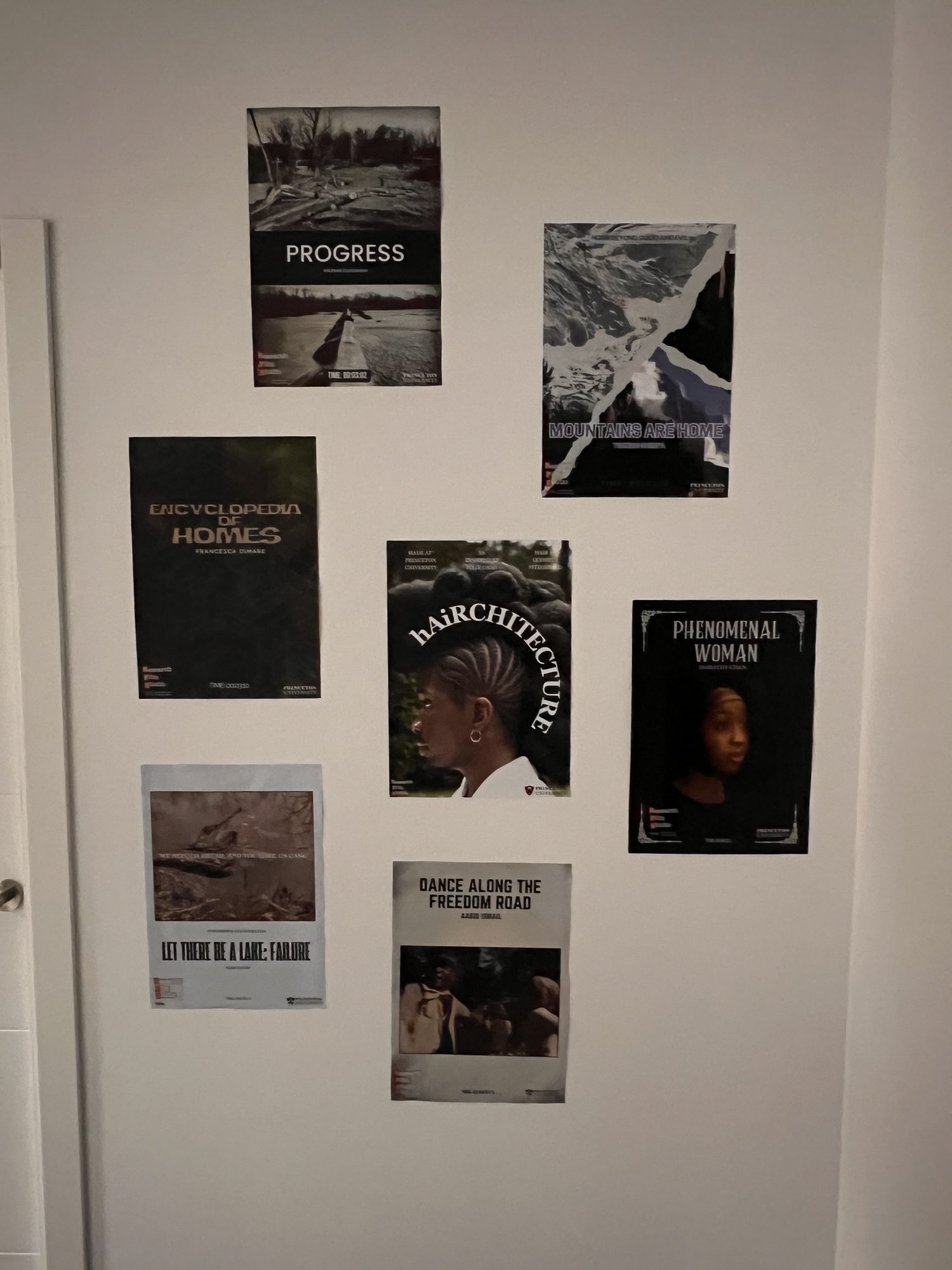
Film posters from the studio
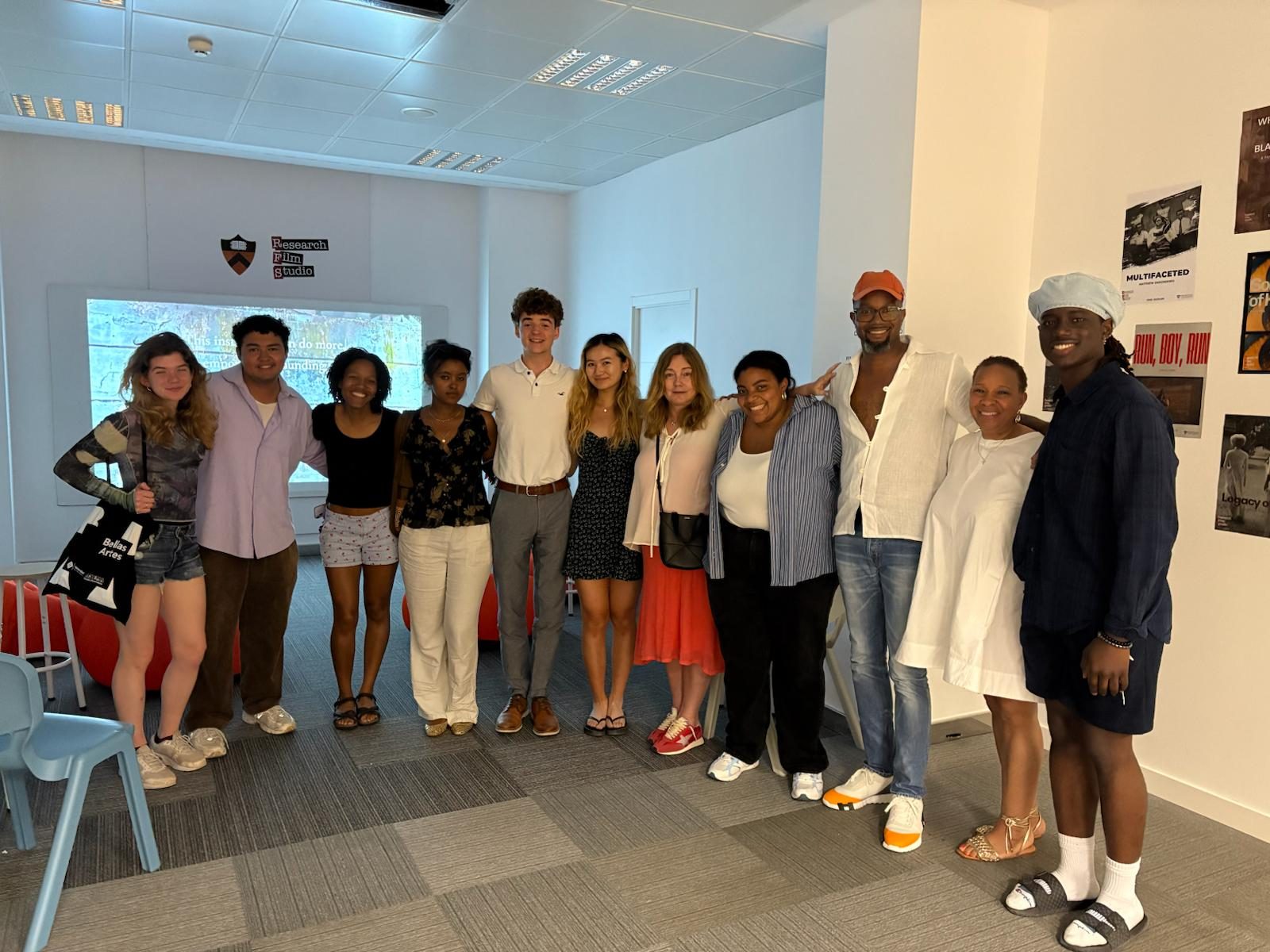
The Research Film Studio in Palma

Venice

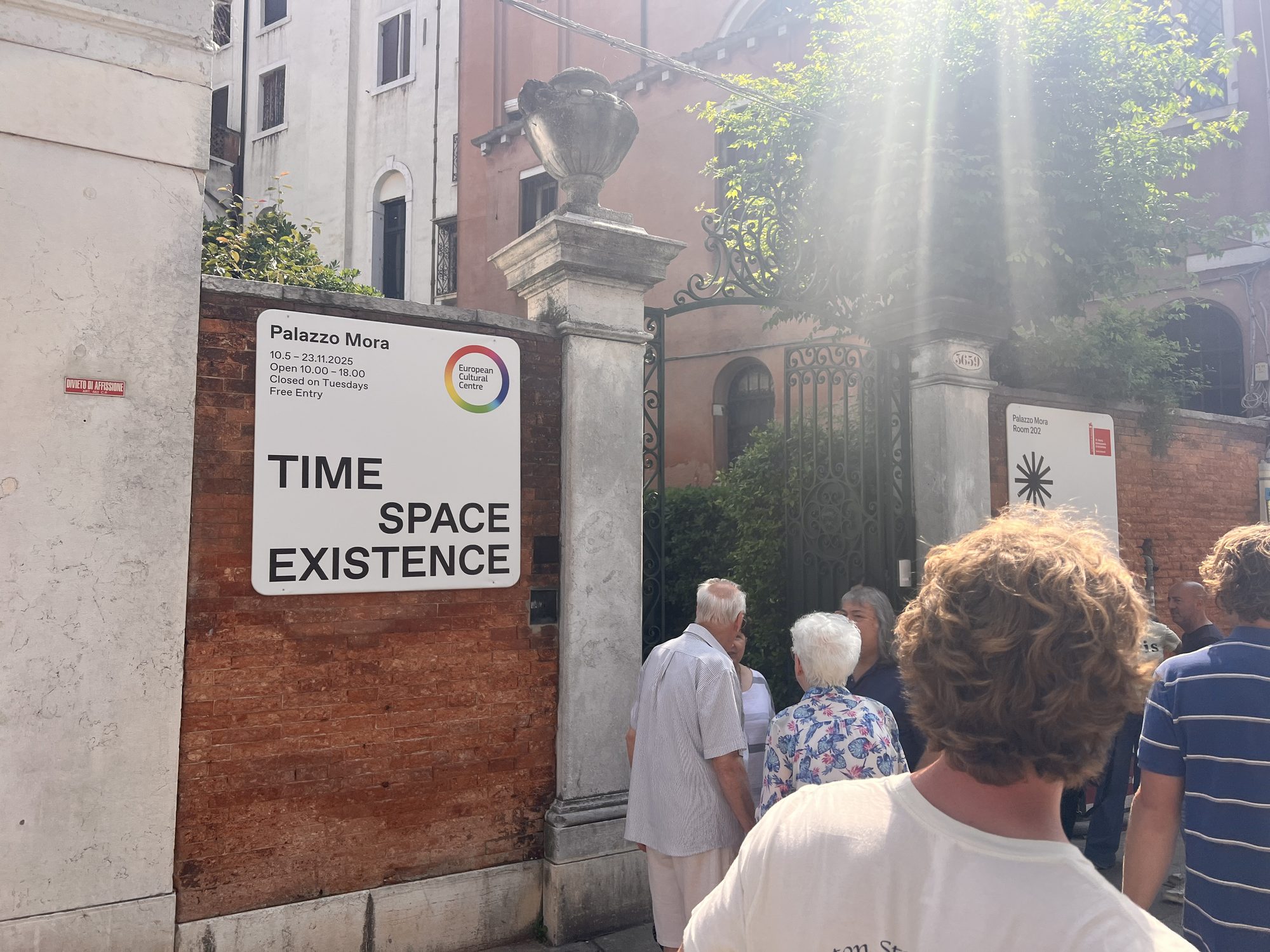
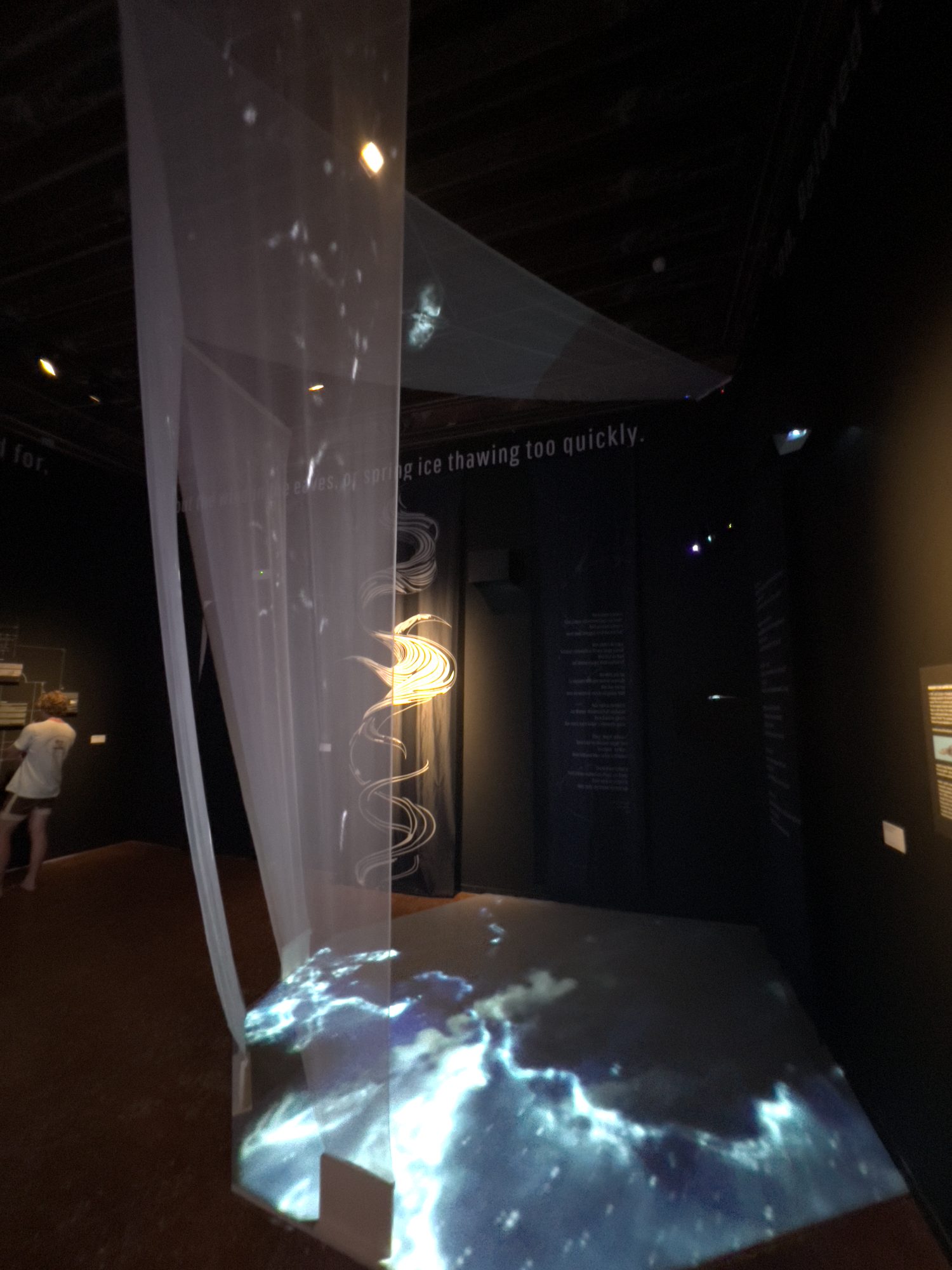
Genius Loci opened in the European Cultural Centre's exhibition at Palazzo Mora. Beyond the corridor, Ben and I cut the first demo for the studio's suspended holo-video, one of the other works in the room.

Palazzo Mora, Venice
The studio’s holo-video installation
Projection on suspended fabric
Genius Loci in the gallery
Production
Princeton Triangle Club
Year
Fall 2024
Work
Scenic electrics: build and wiring

Triangle's Pageant Pending needed vanity bulbs on rolling carts, glowing stairs, and a chase-light proscenium framing the stage. I built all three.

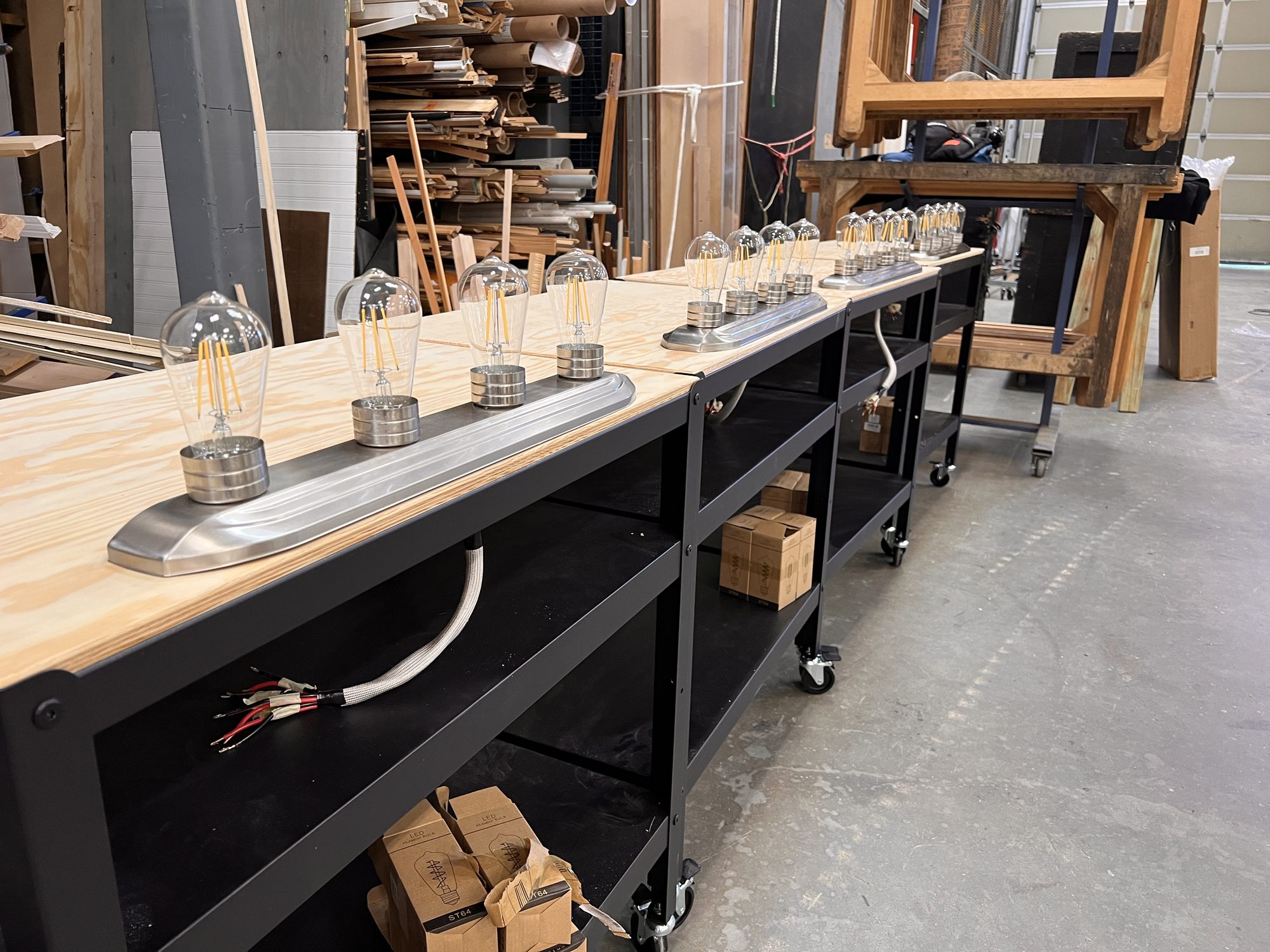
Battery-powered vanity carts

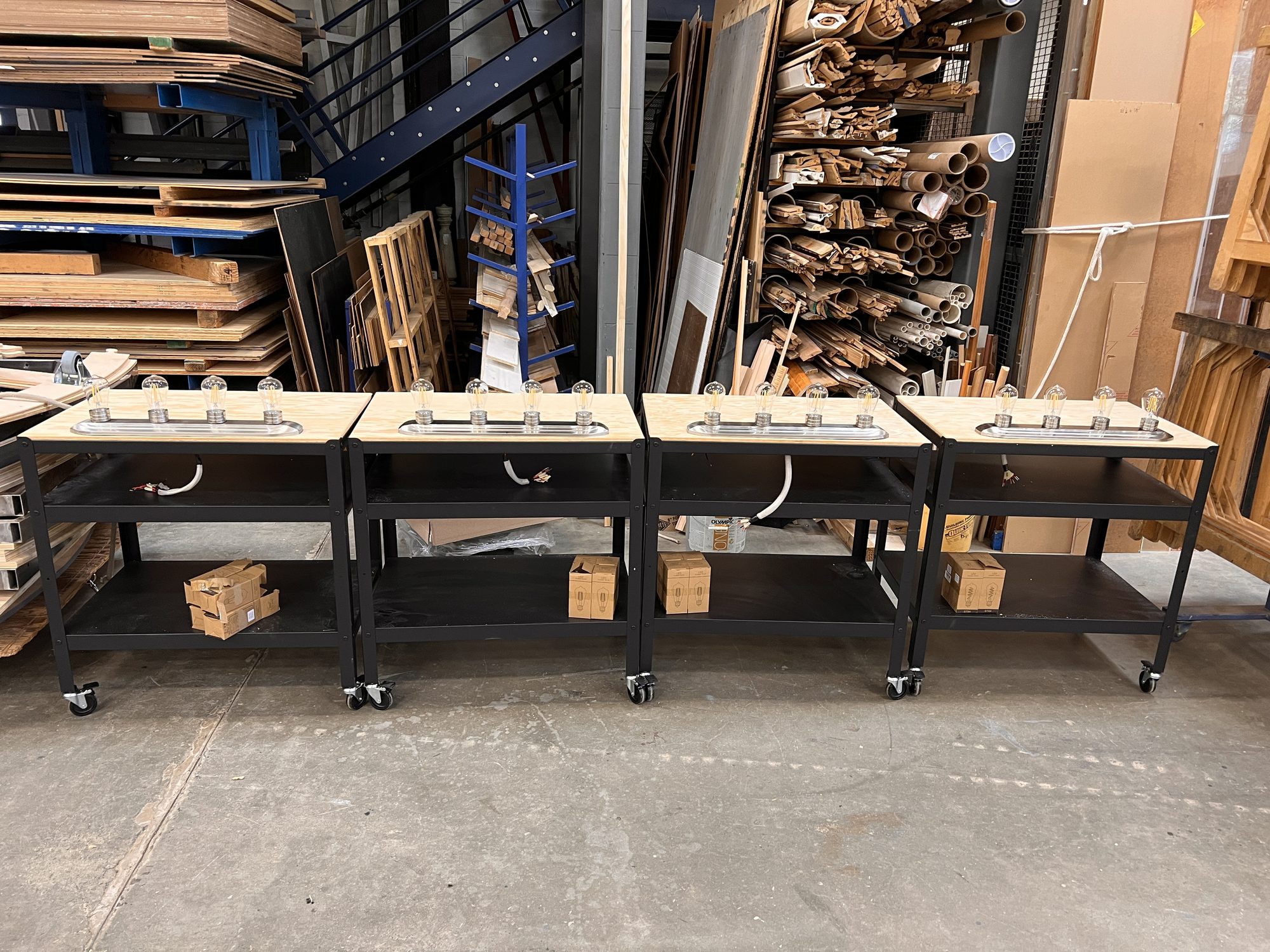
Each rolling cart carries a custom bar of four bulbs, wired from scratch at 12V with every bulb on its own channel. A DeWalt tool battery powers the bar and QolorFLEX dimmers handle the control, so the carts roll anywhere on stage with no cable trailing behind them.

Four vanity carts finished in the shop
Custom 12V four-bulb bars, wired to the battery and dimmers under the cart top

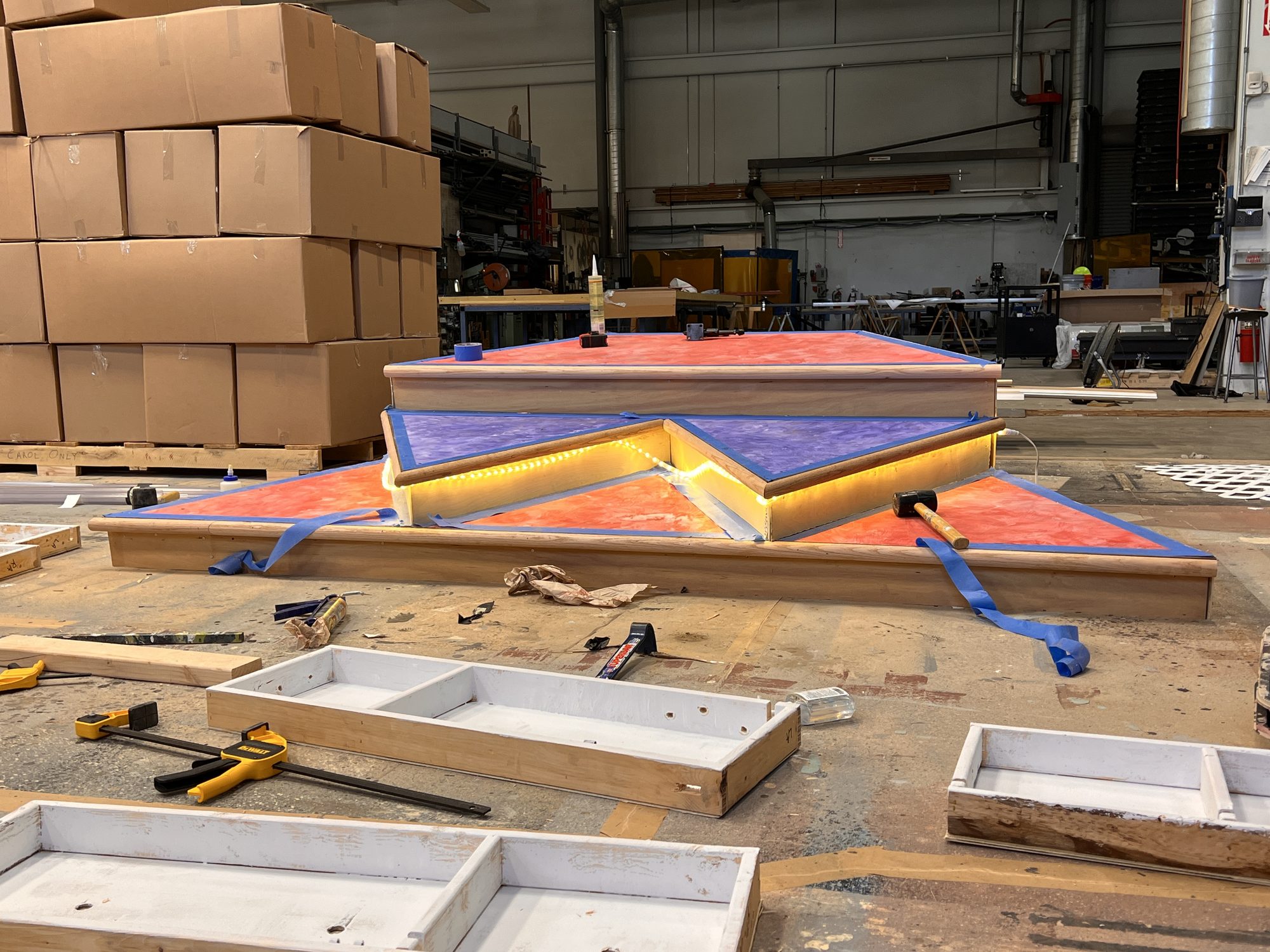
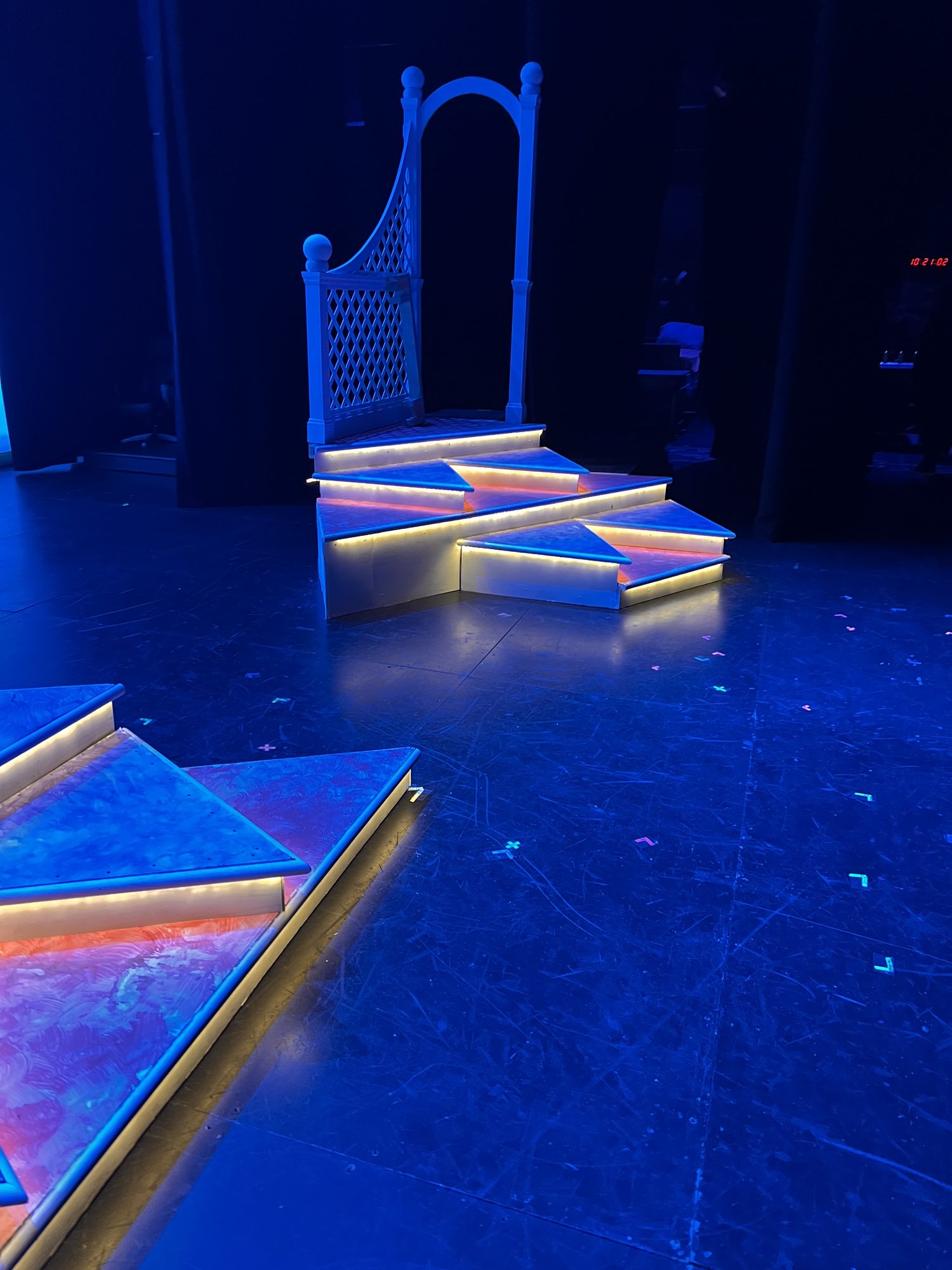
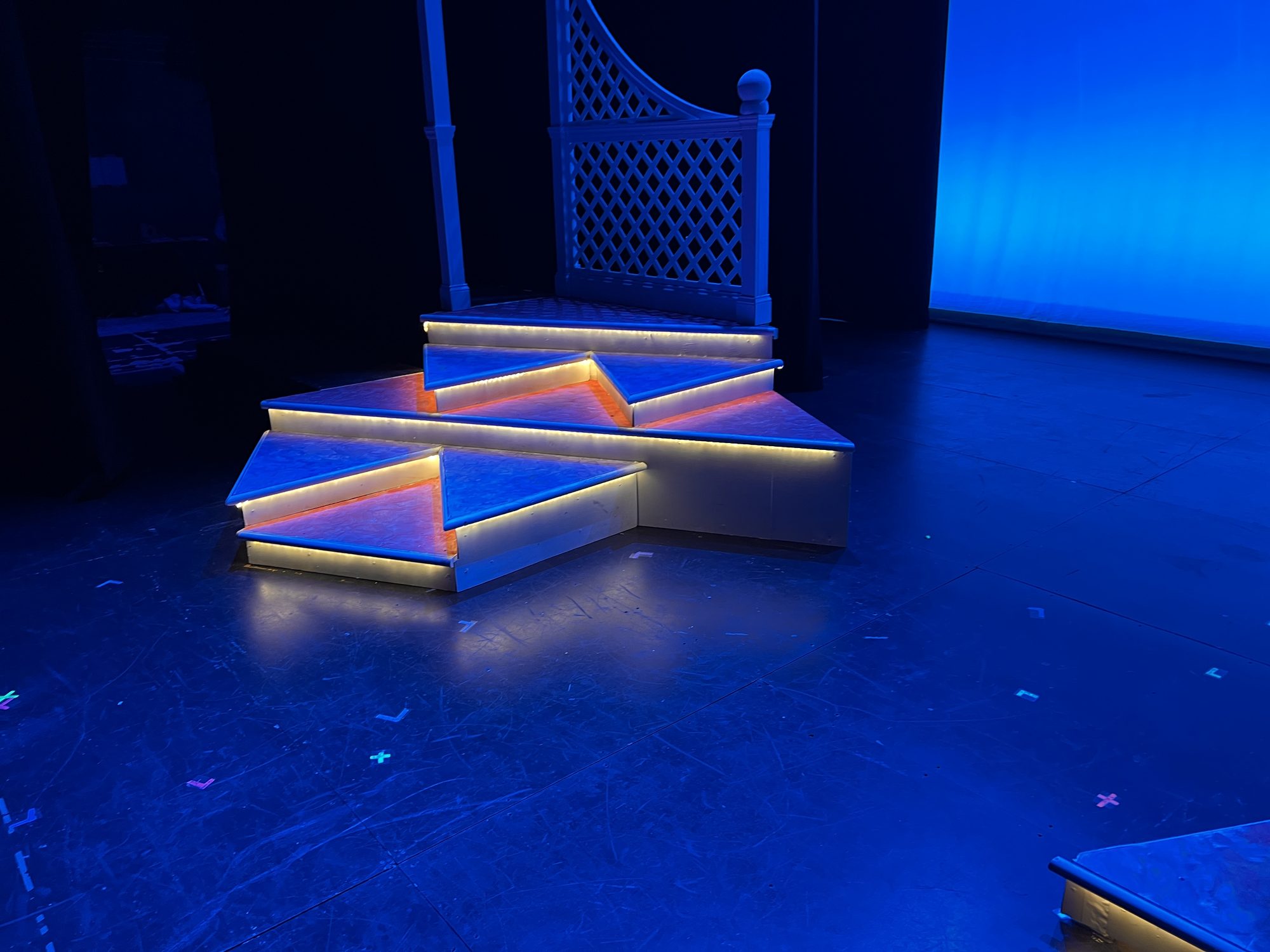
Lit stair unit

The stair unit's zigzag risers hide runs of 12V rope light. It uses the same power scheme as the carts, a DeWalt battery feeding QolorFLEX dimmers.

Rope light running under the nosings during the build
Onstage under show light
The zigzag risers lit
Stair unit in place below the arch

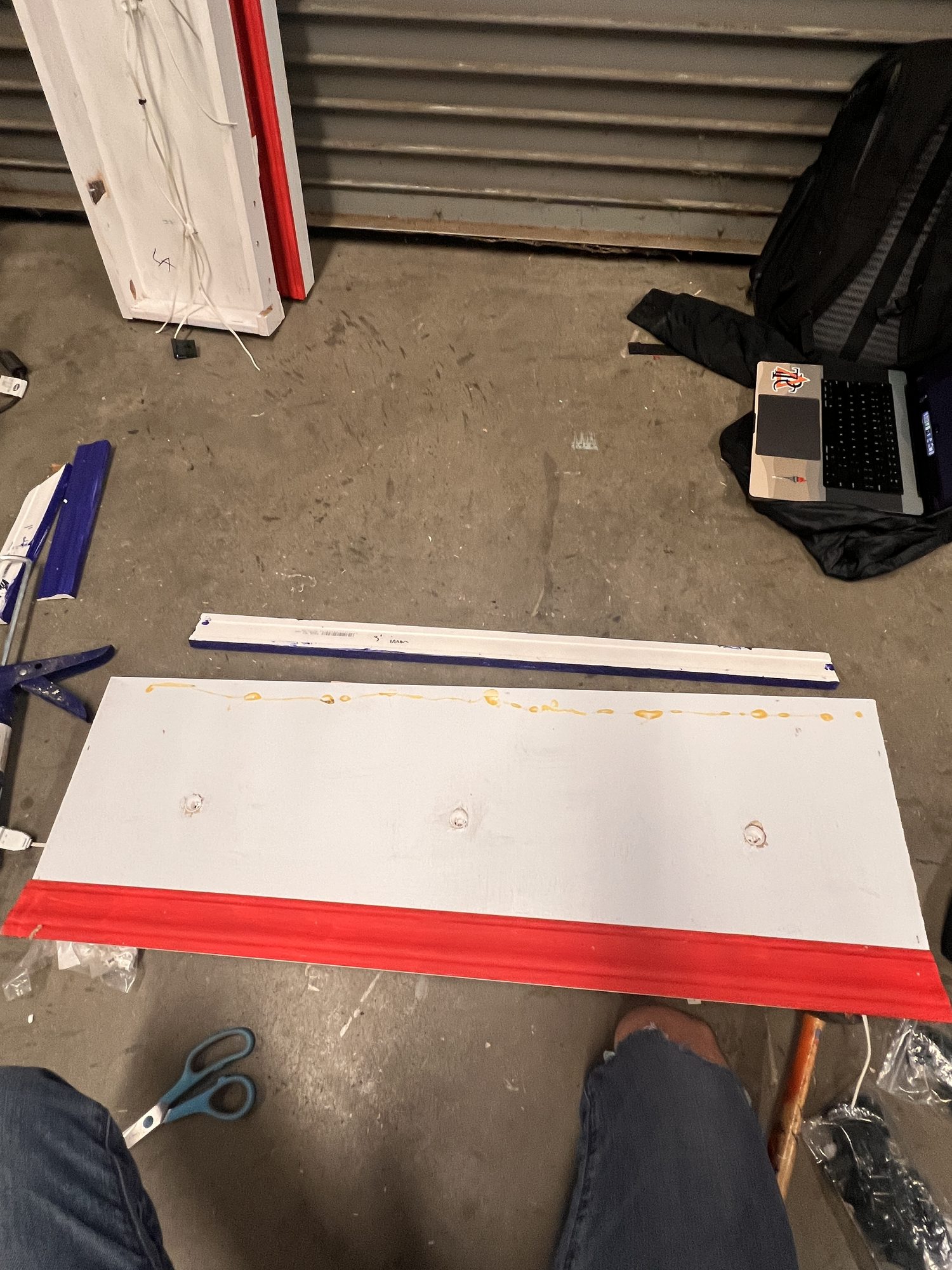
Three-chase proscenium

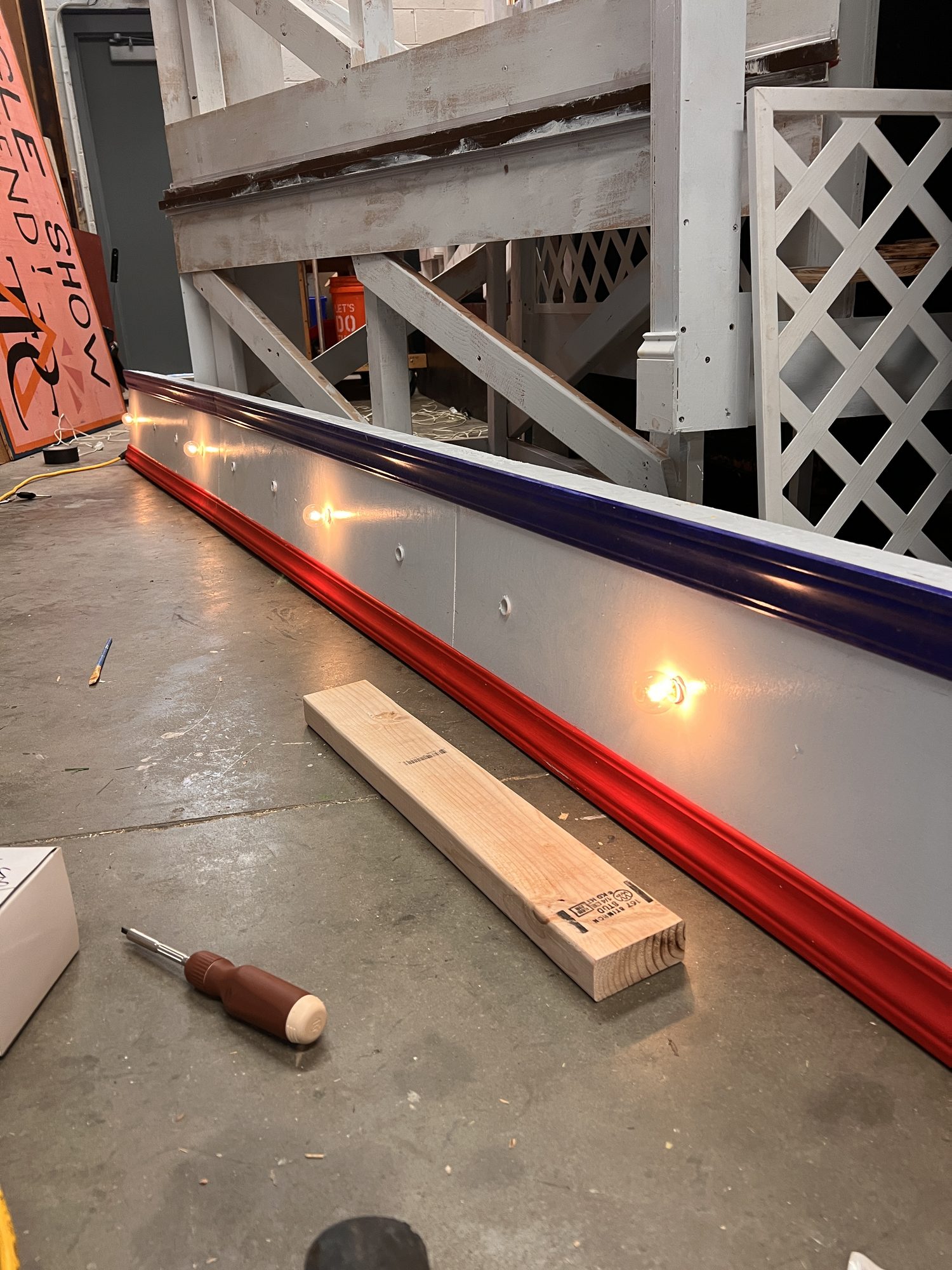
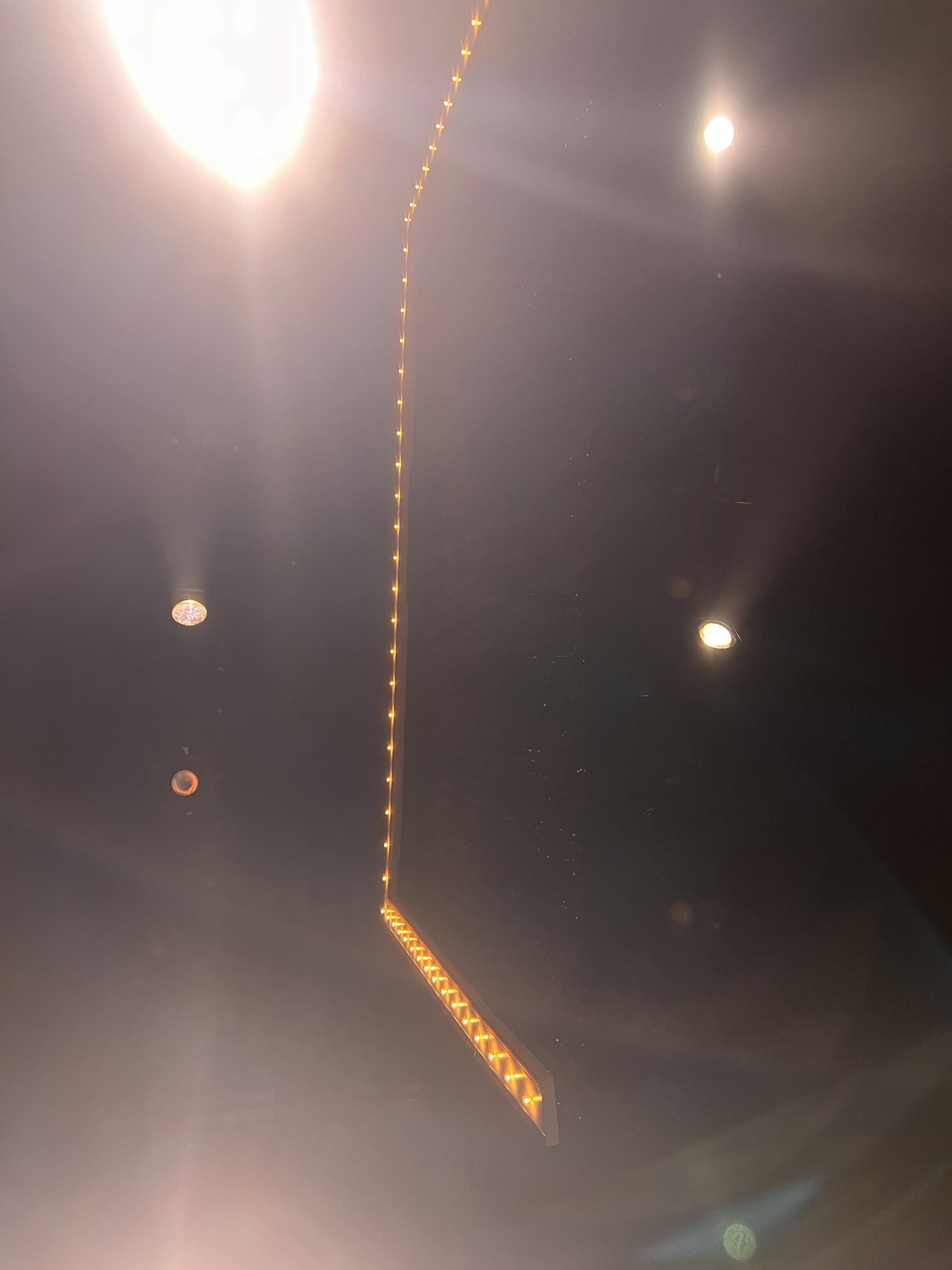
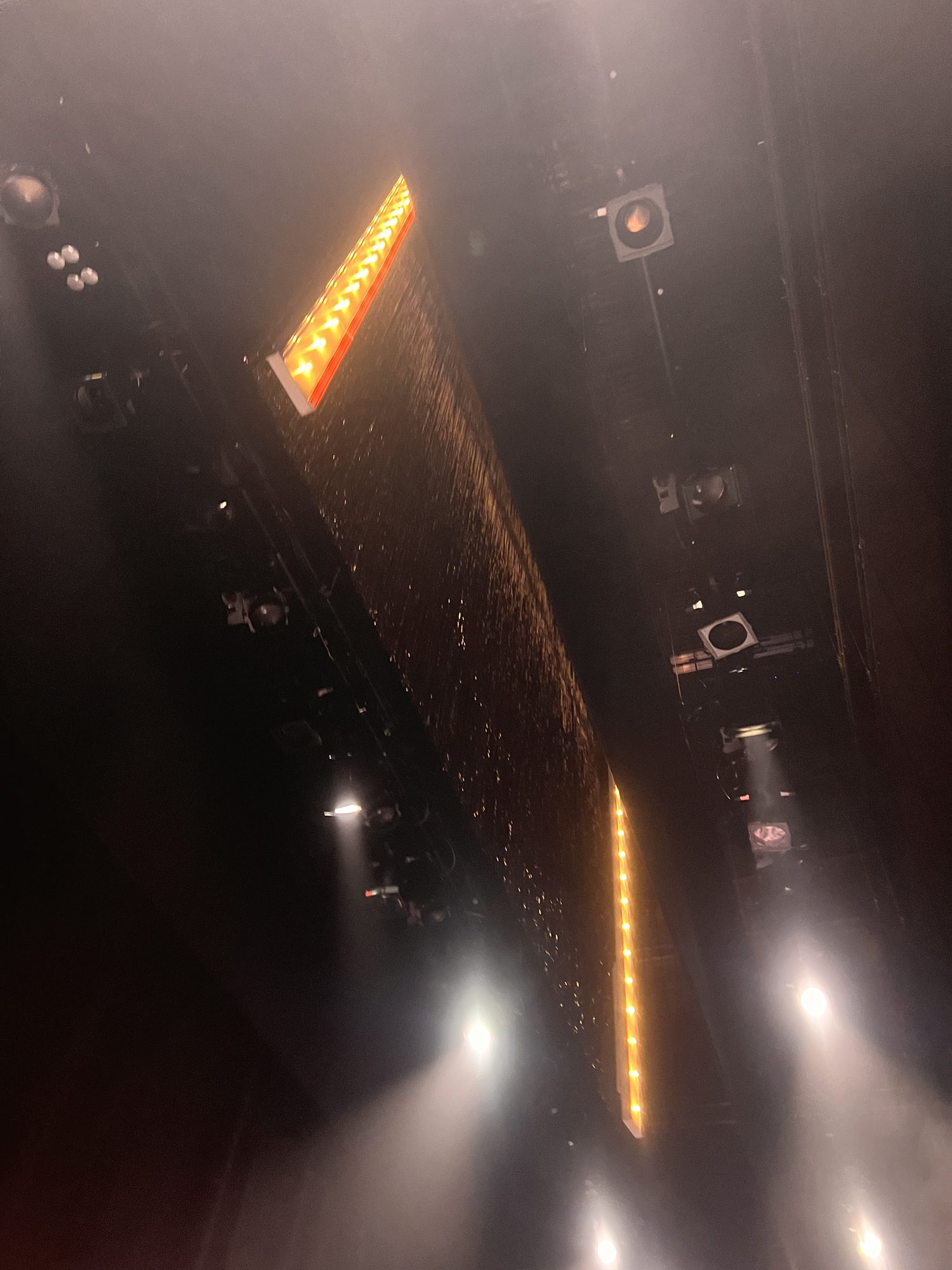
The largest build of the show: a full red, white and blue proscenium with lamps running its edges. I built and wired it as three chase circuits.

Proscenium sections in the shop
Sockets mounted and wired
Assembled section with lamps installed
The chase lit in the theatre
Lamps running the edge of the proscenium

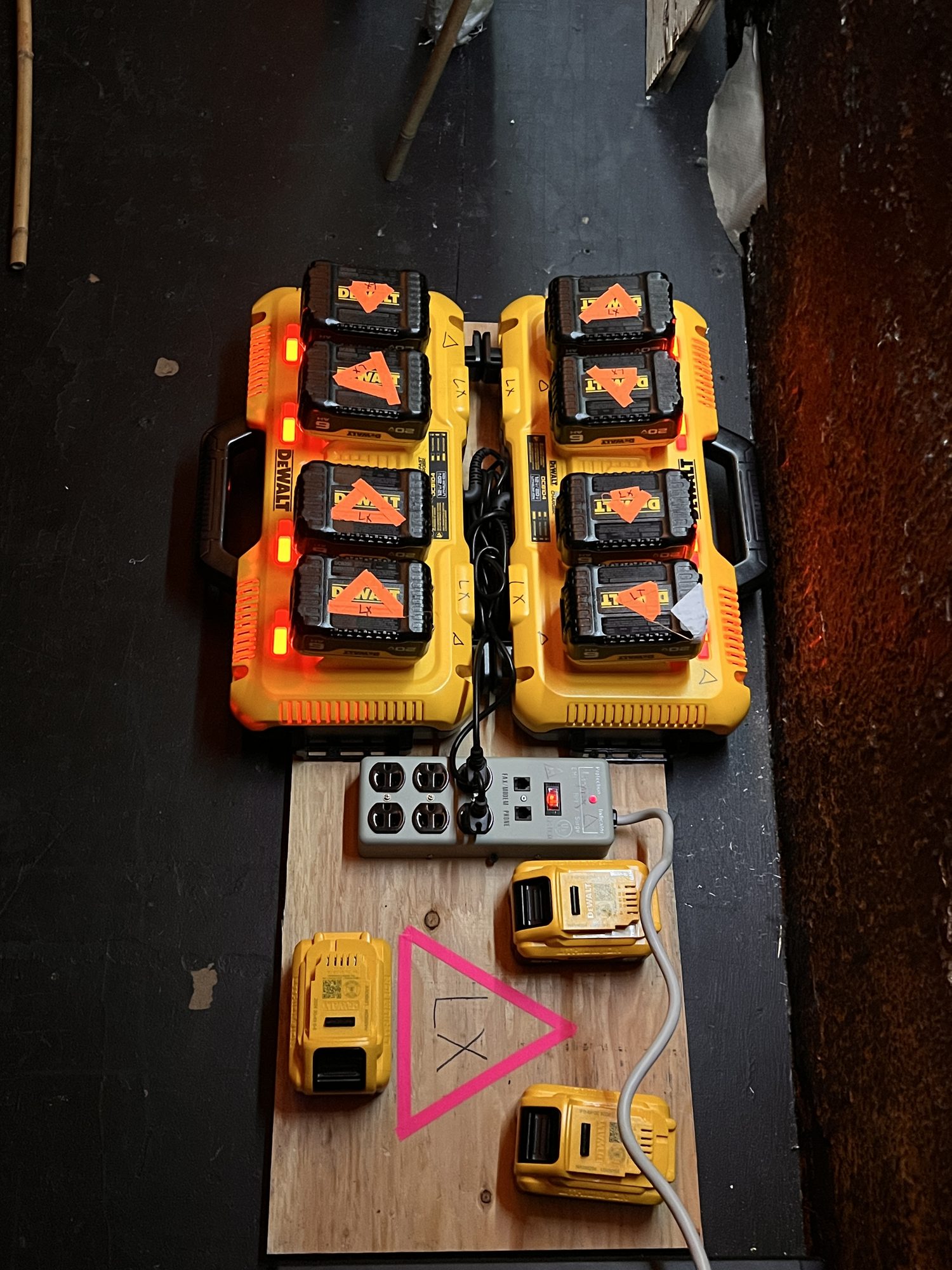
Charging backstage

I purchased sixteen 6Ah DeWalt batteries for all our future practical electrics projects.

Backstage charging station
Film
Enrosadira, feature documentary
Made with
Jansen Look, co-director
Shot
Trentino and South Tyrol, June 2025
Support
Princeton Office of Religious Life (Fred Fox Fund), Department of French and Italian, Canon U.S.A., Albolina Film
Status
In post-production

Enrosadira is a feature documentary I made with my friend Jansen Look in the Dolomites. It takes an old armchair idea, Kant's sublime, the claim that overwhelming nature turns us toward the moral good, and goes looking for it in the people who live with these mountains every day.

3 weeksIn the field
2Person crew
Canon C80Loaned by Canon U.S.A.

The question

The film started as a philosophy argument between roommates. If the sublime really does orient people toward the good, the place to find its traces is somewhere people have lived inside it for centuries. We spent six months planning, cut a video proposal, and pitched it to departments across Princeton.

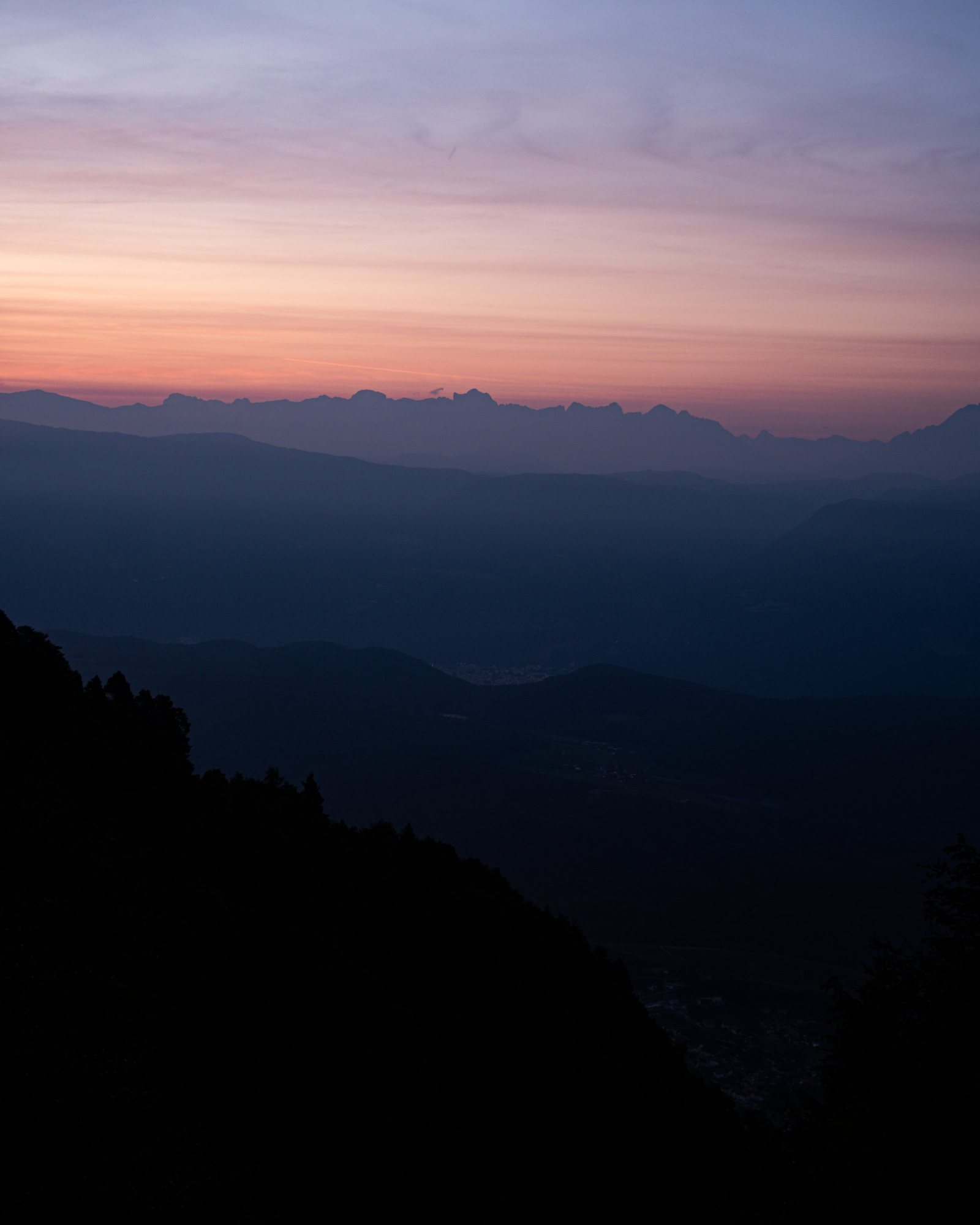
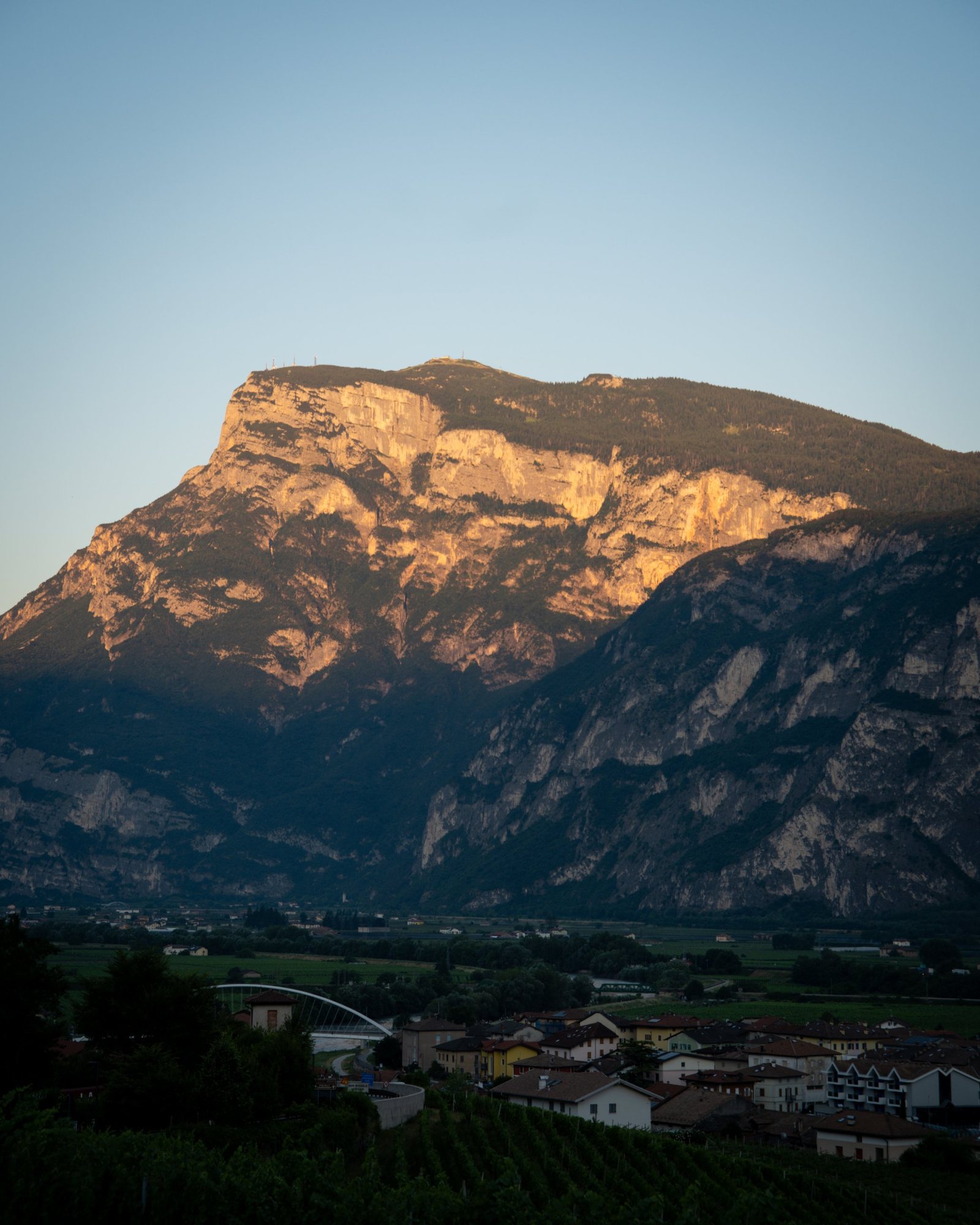
Dusk over the Dolomites
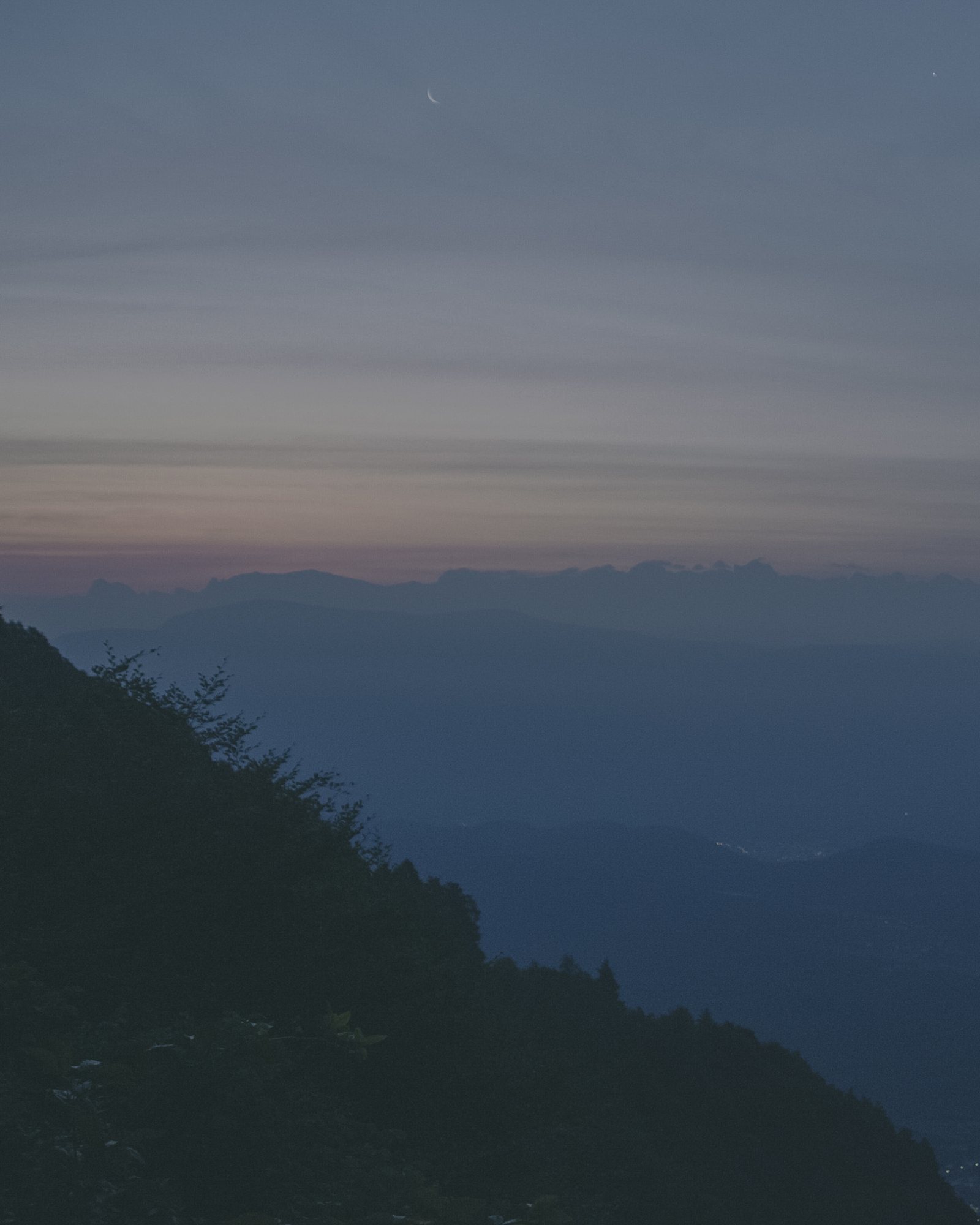
Moonrise above the valley

Getting there

We funded the shoot through Princeton's Fred Fox Fund and the Department of French and Italian, and Canon U.S.A. loaned us a C80 cinema camera. Before we landed we wrote, in Italian, German and English, to the Museum Ladin, Ladin scholars, the provincial parks office and Albolina Film in Bolzano. Albolina's Leonardo Pistolato became our producer on the ground, finding subjects and opening doors we could not have opened ourselves.

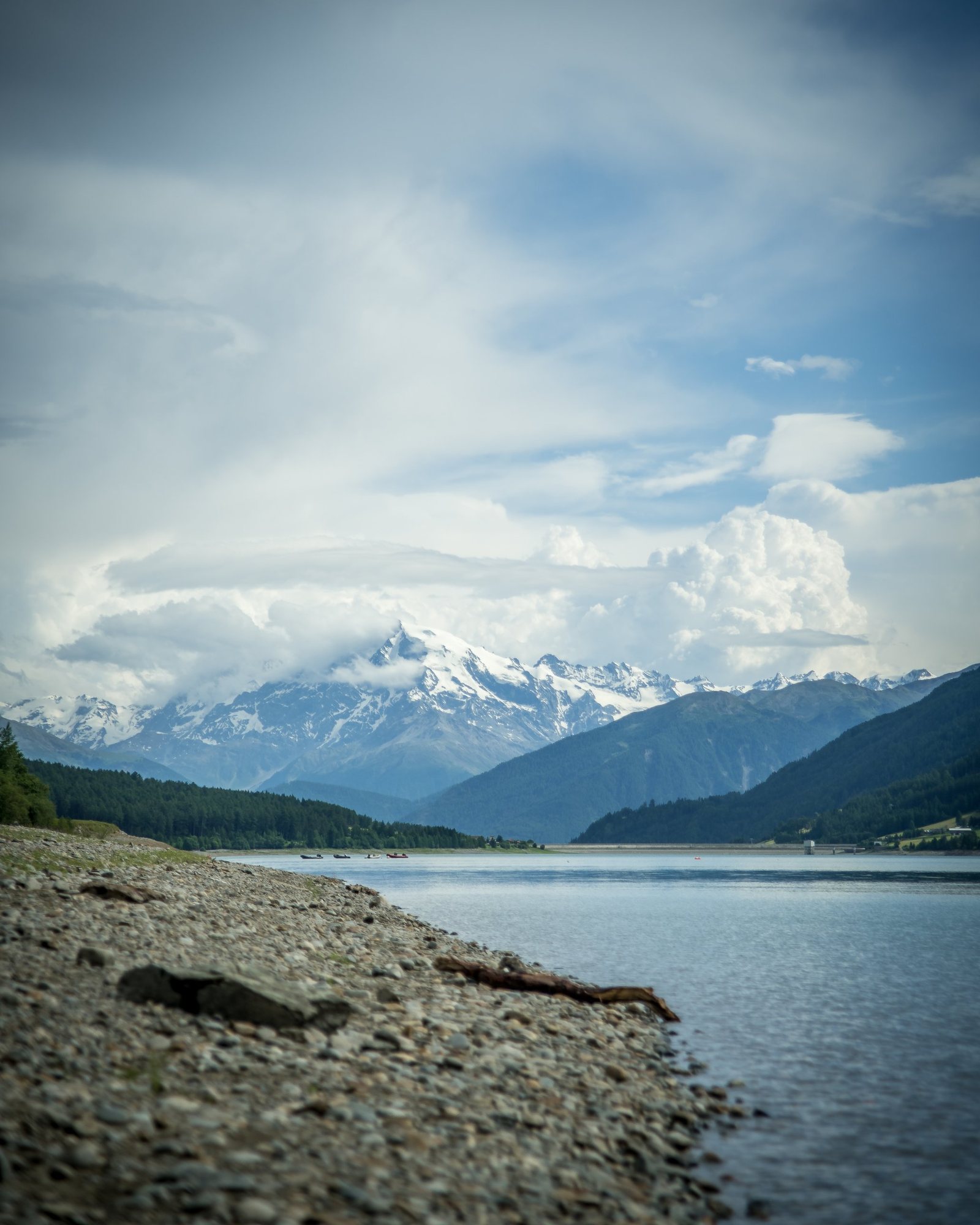
Alpine lake under the glaciers
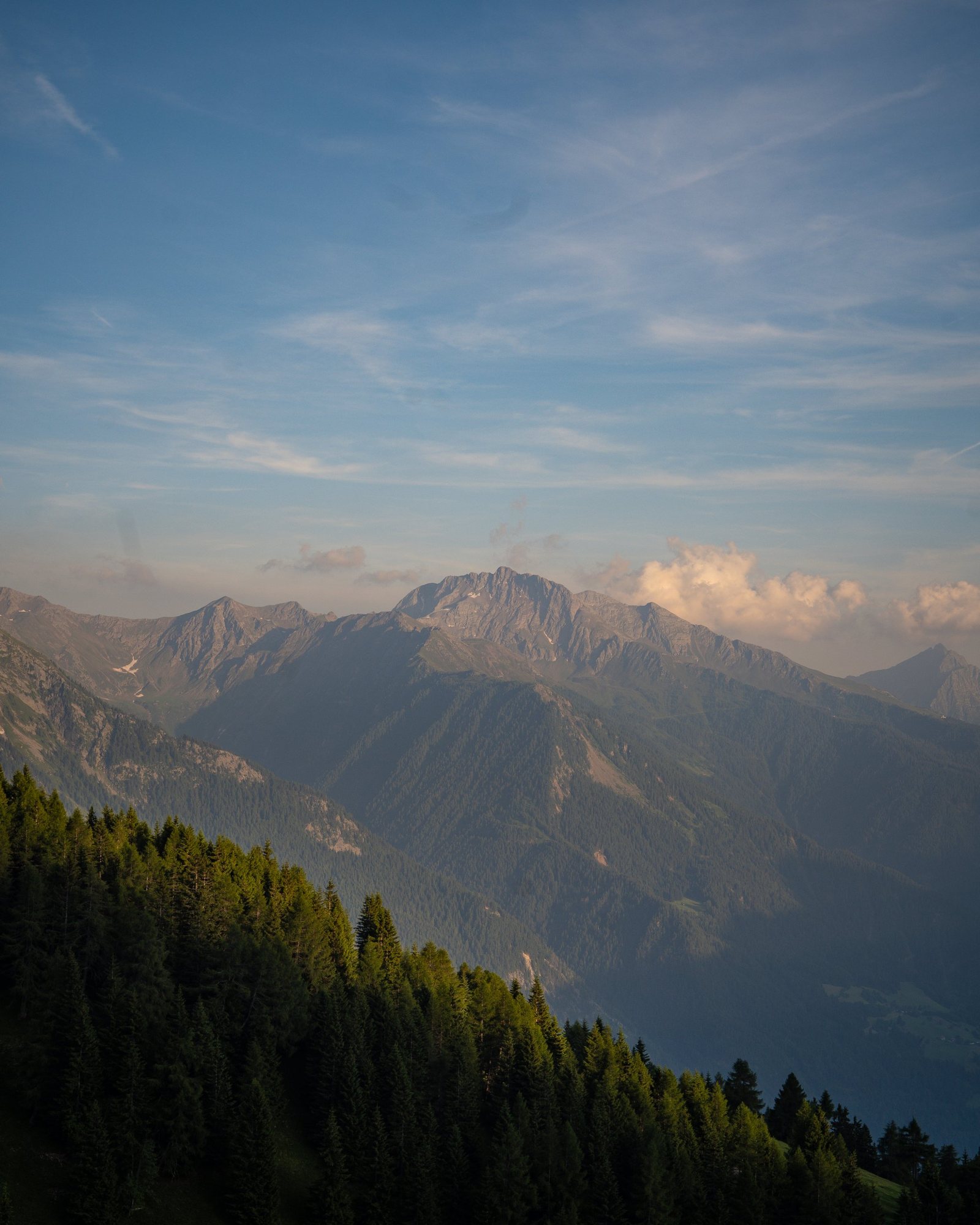
Evening light on the ridgeline
Last light on the cliffs above the valley

In the field

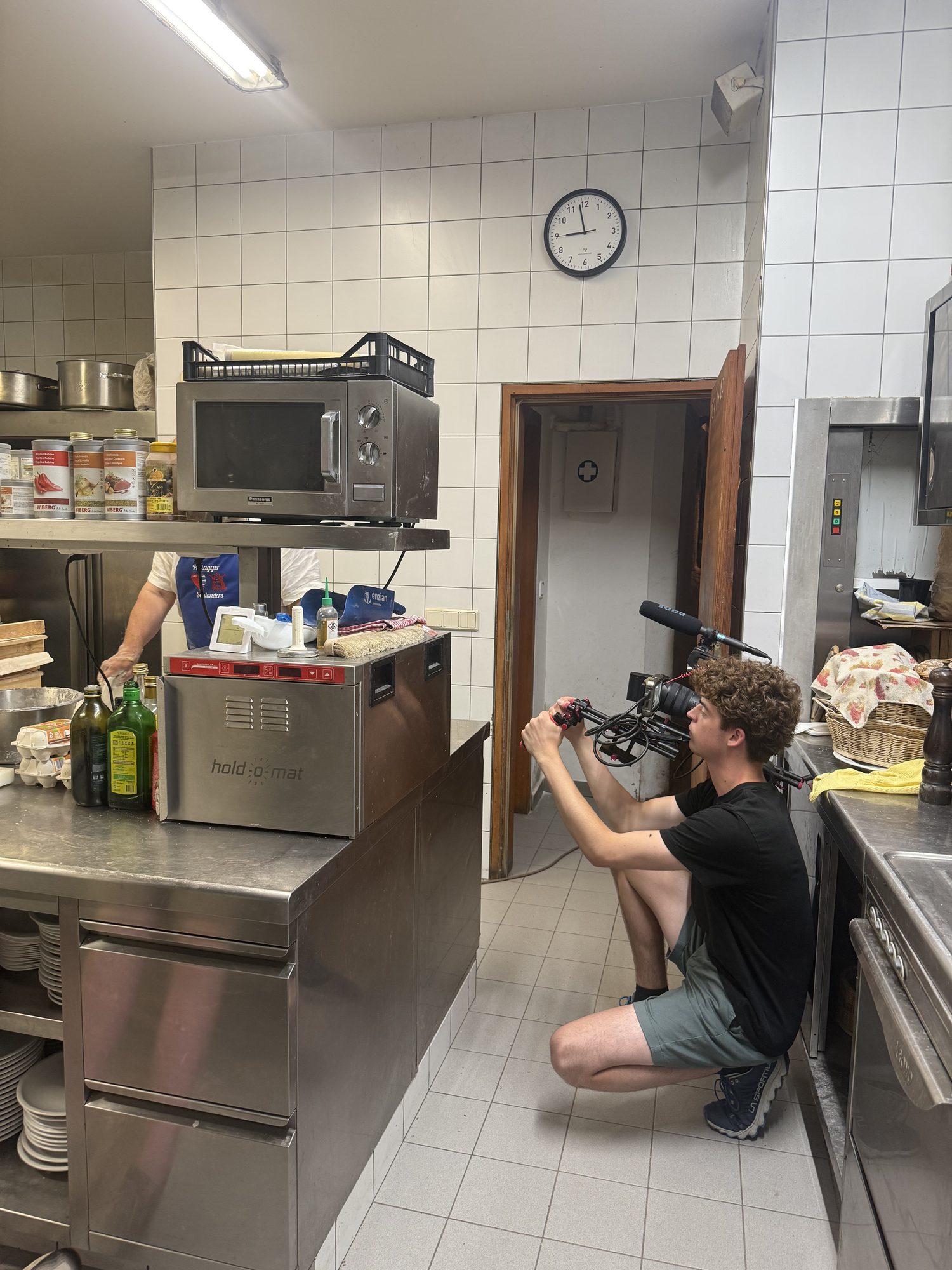
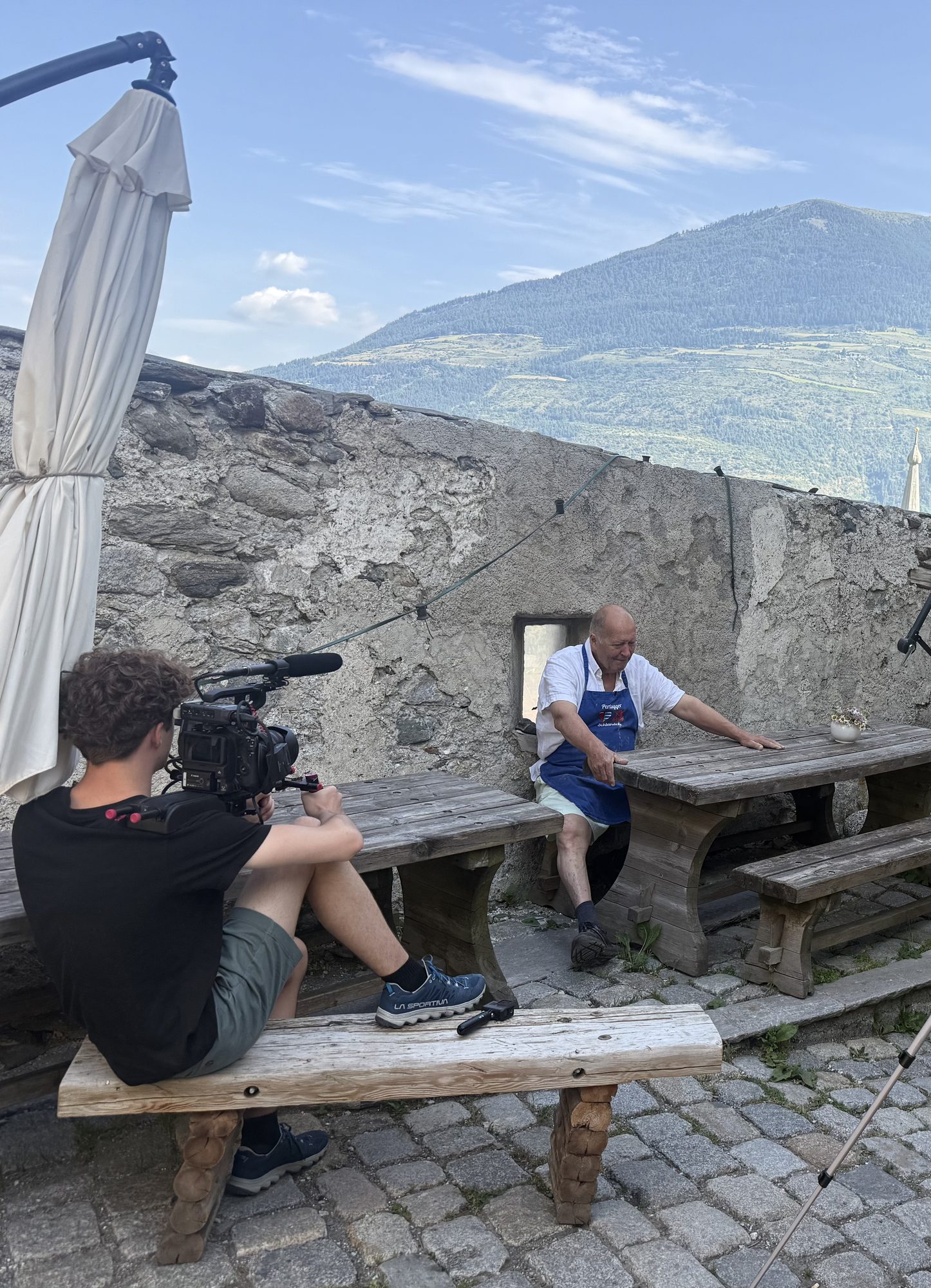
For three weeks we lived in Coredo in the Val di Non and worked as a two-person crew, on foot, carrying the C80 up jagged peaks and keeping it alive on solar panels. The plan changed as fast as the questions did. We set out looking for priests and sermons and ended up following bakers, hay farmers and artists: people whose relationship with the mountains is practical before it is spiritual.

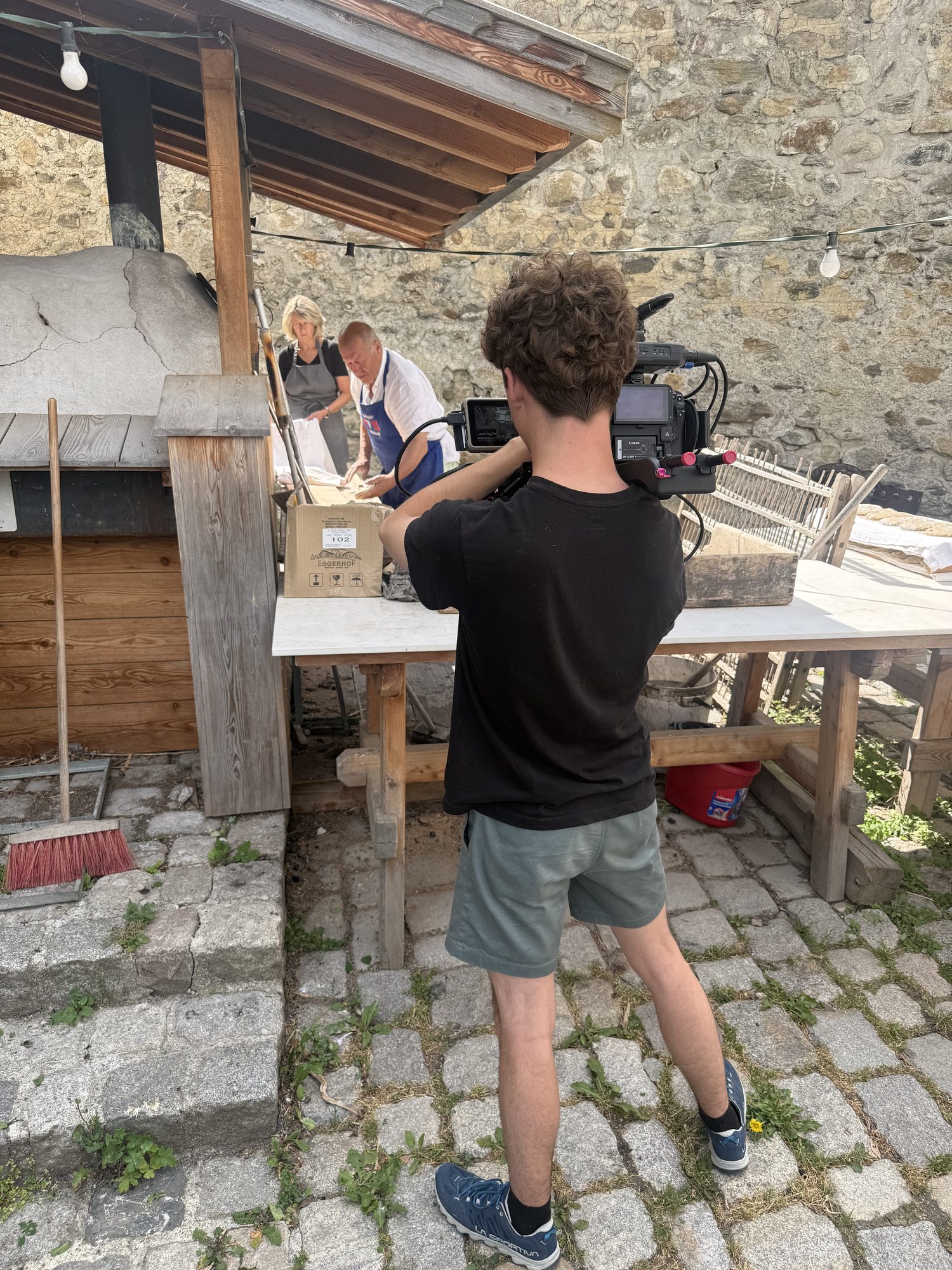
Shooting the bread sequence
Interview setup in the courtyard
Following the bake
Following the bake
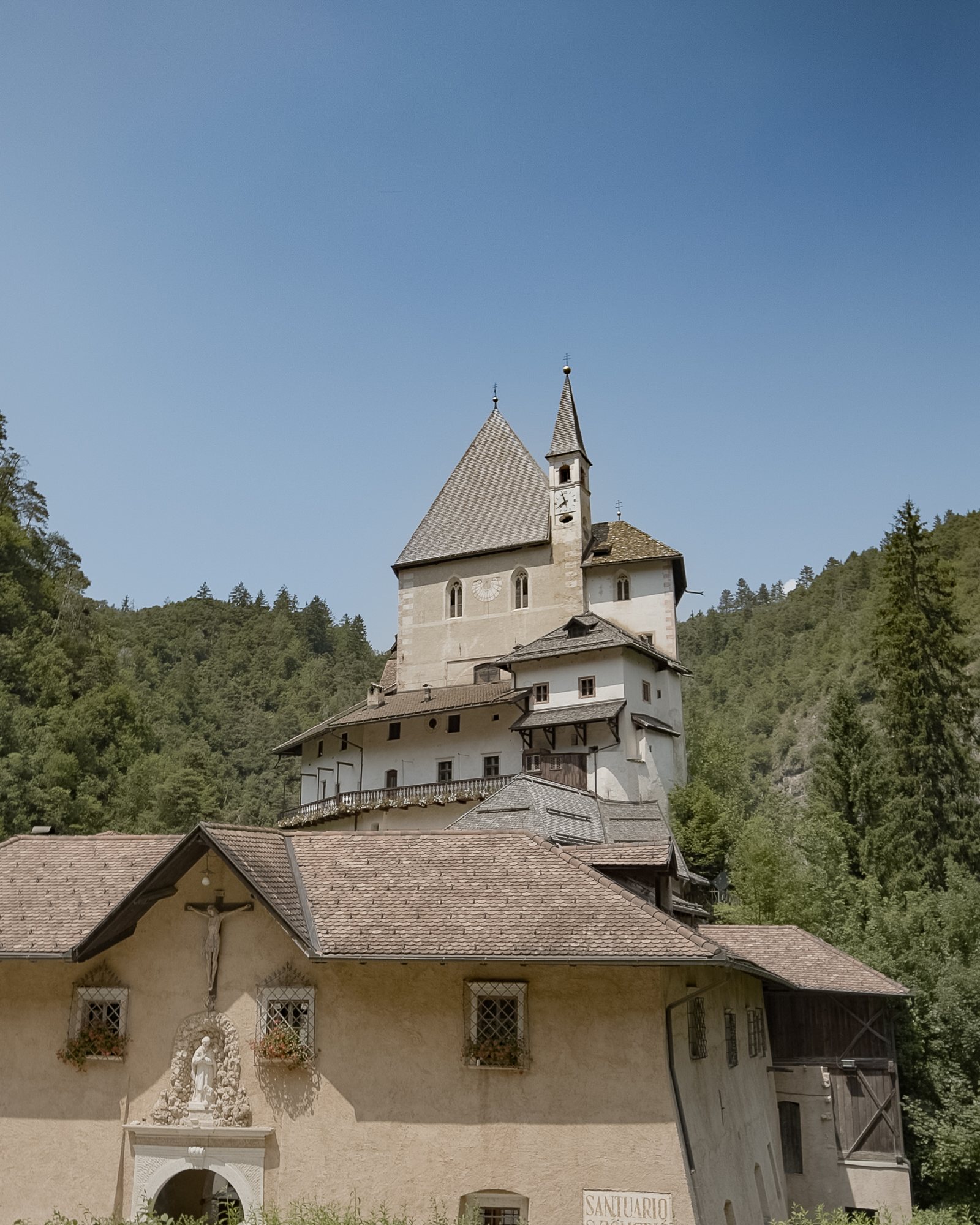
Santuario di San Romedio
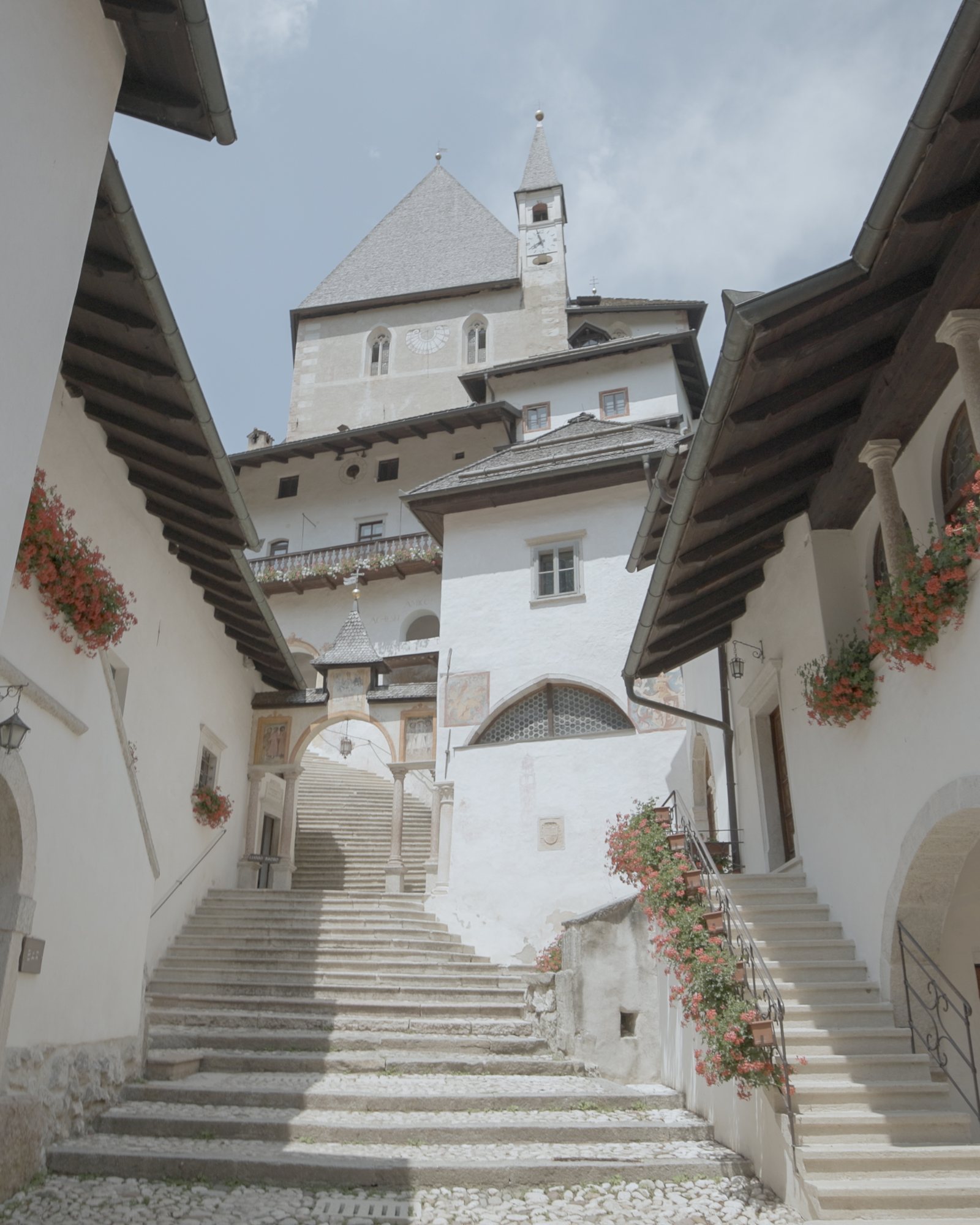
The stairs at San Romedio

The people

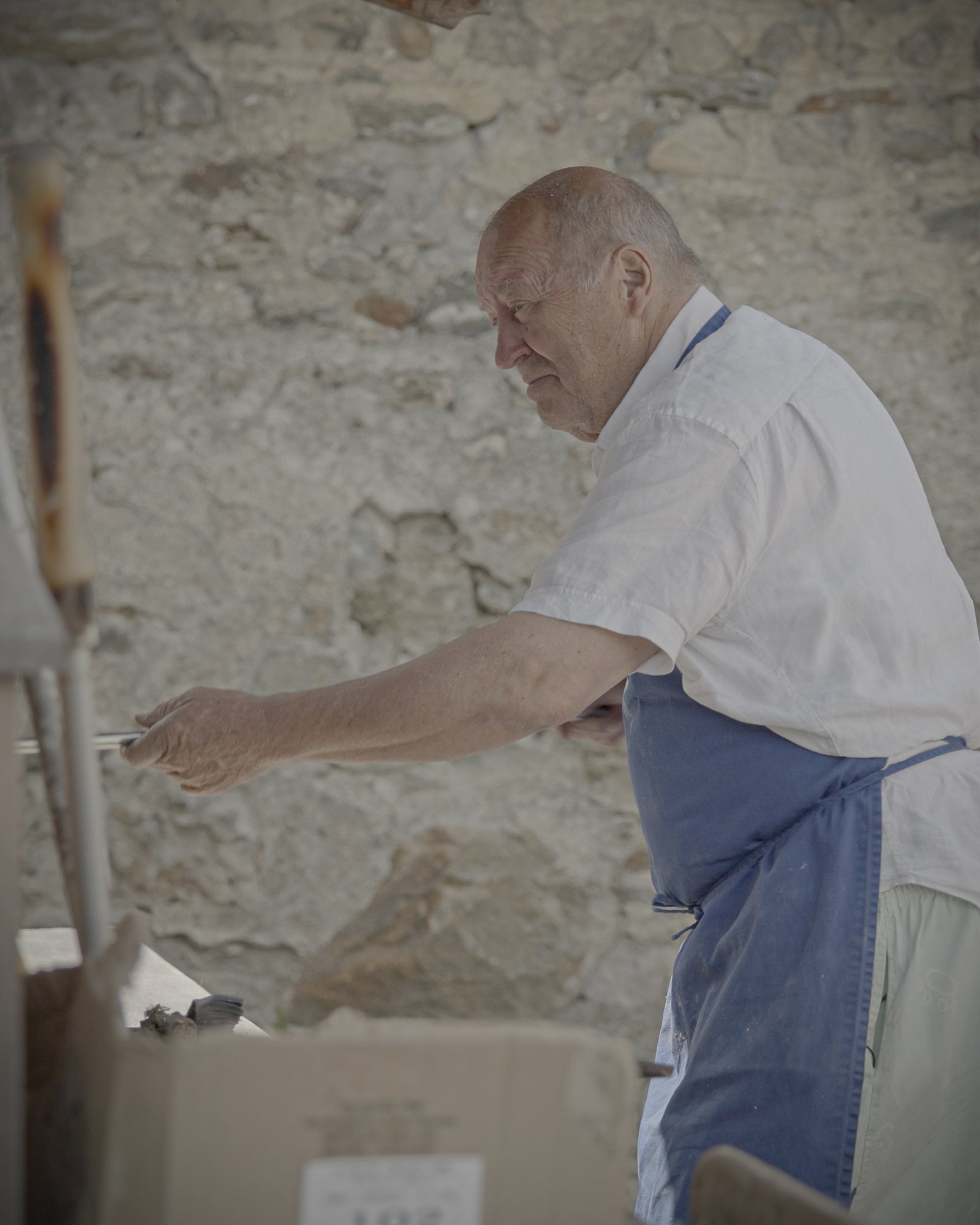
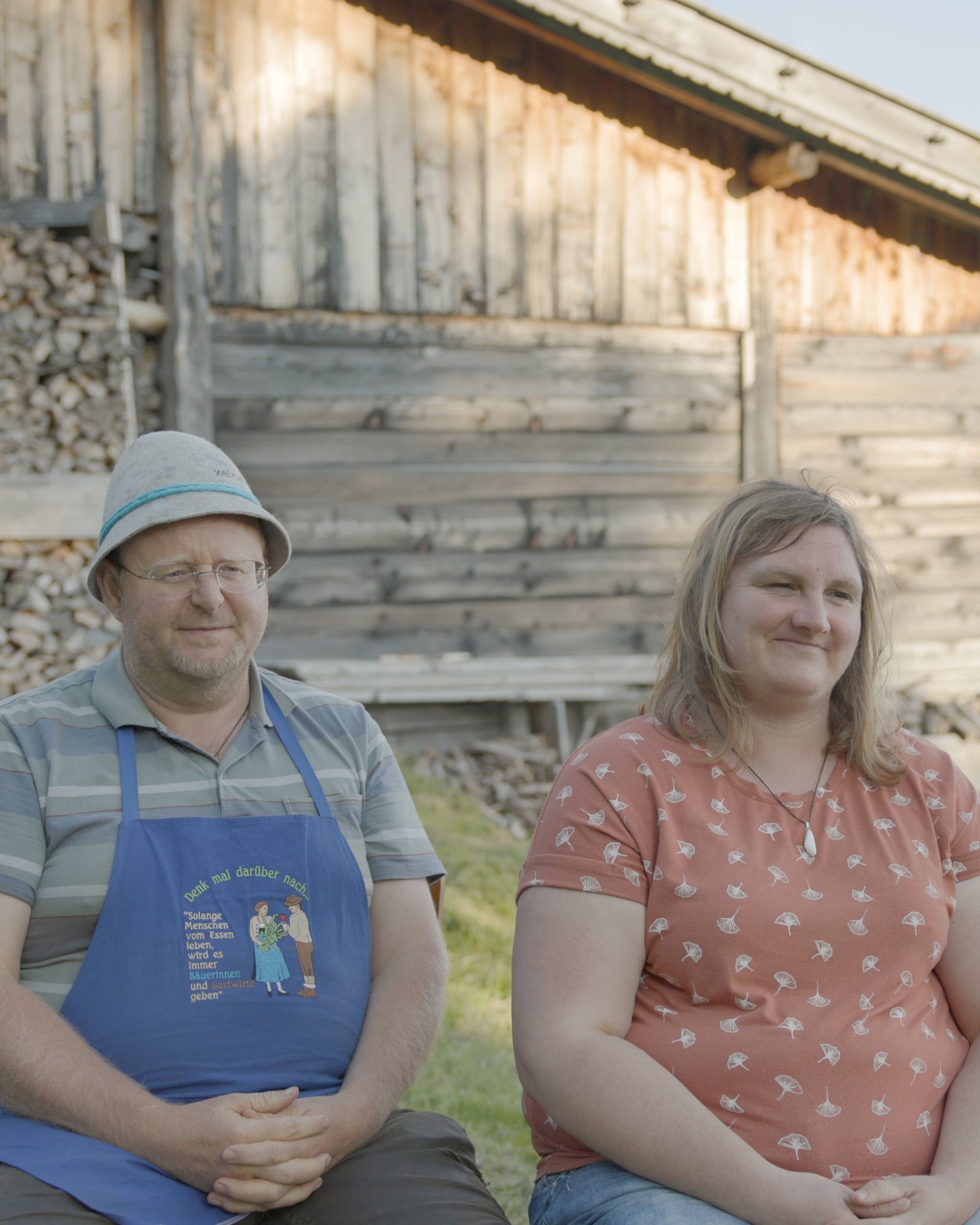
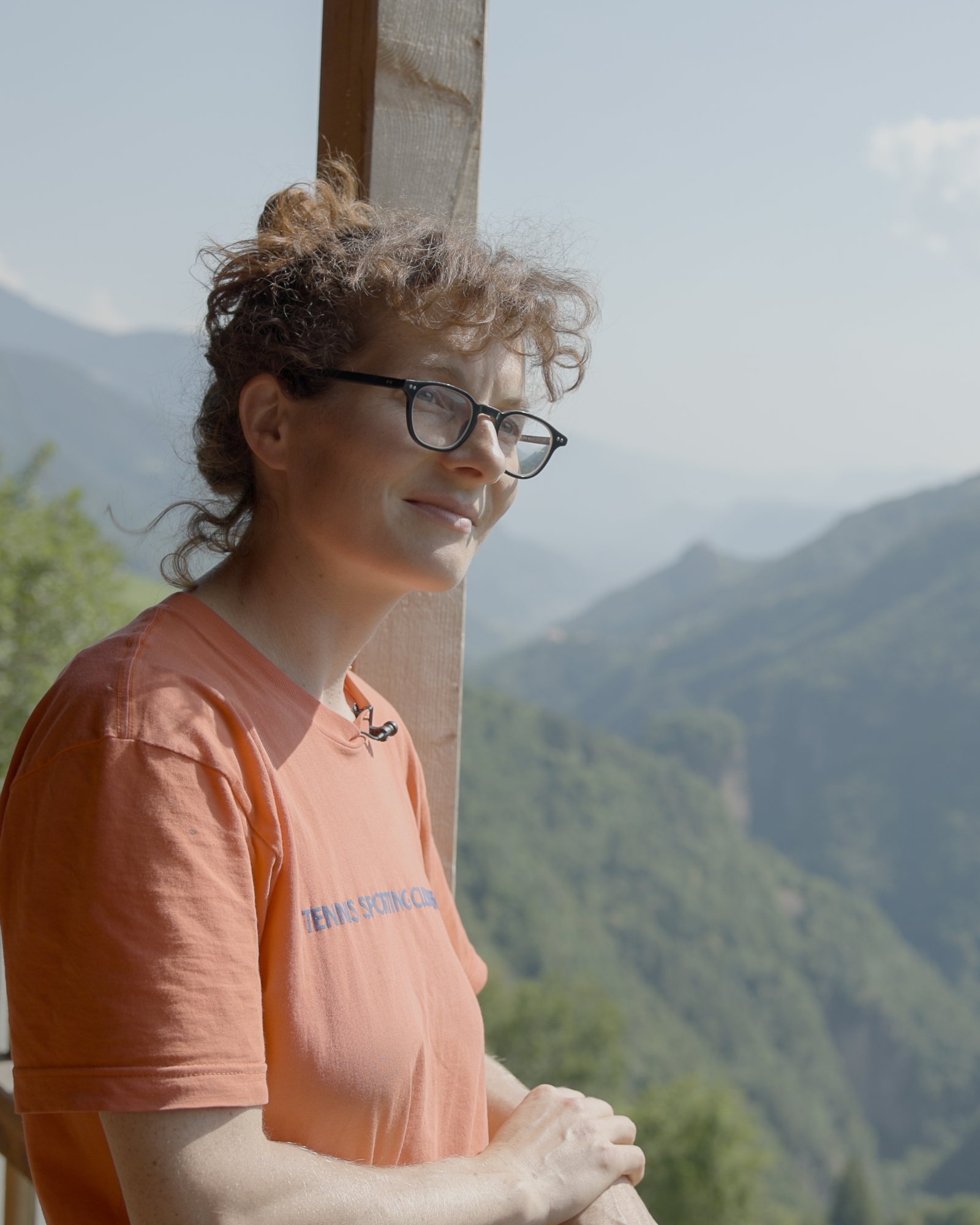
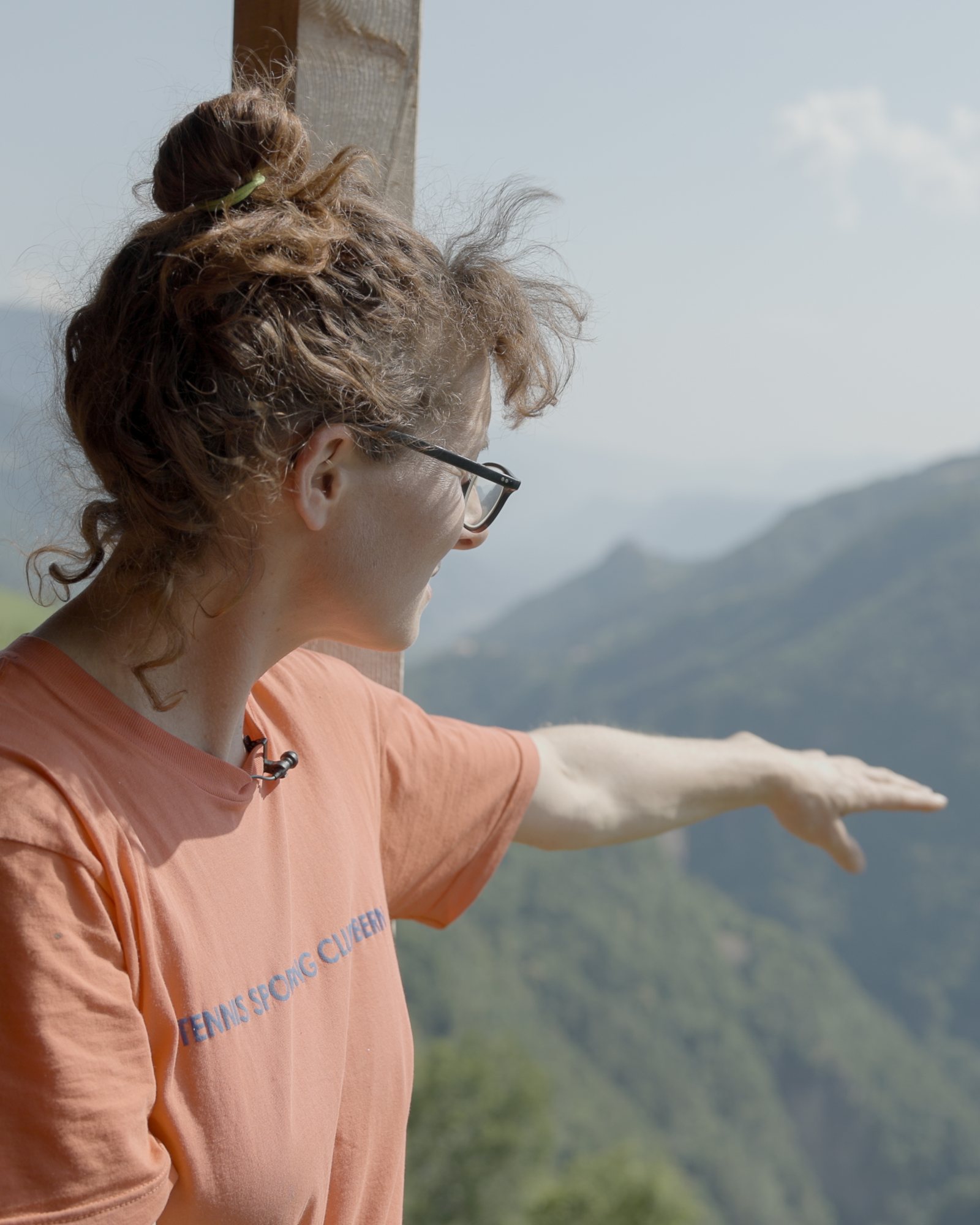
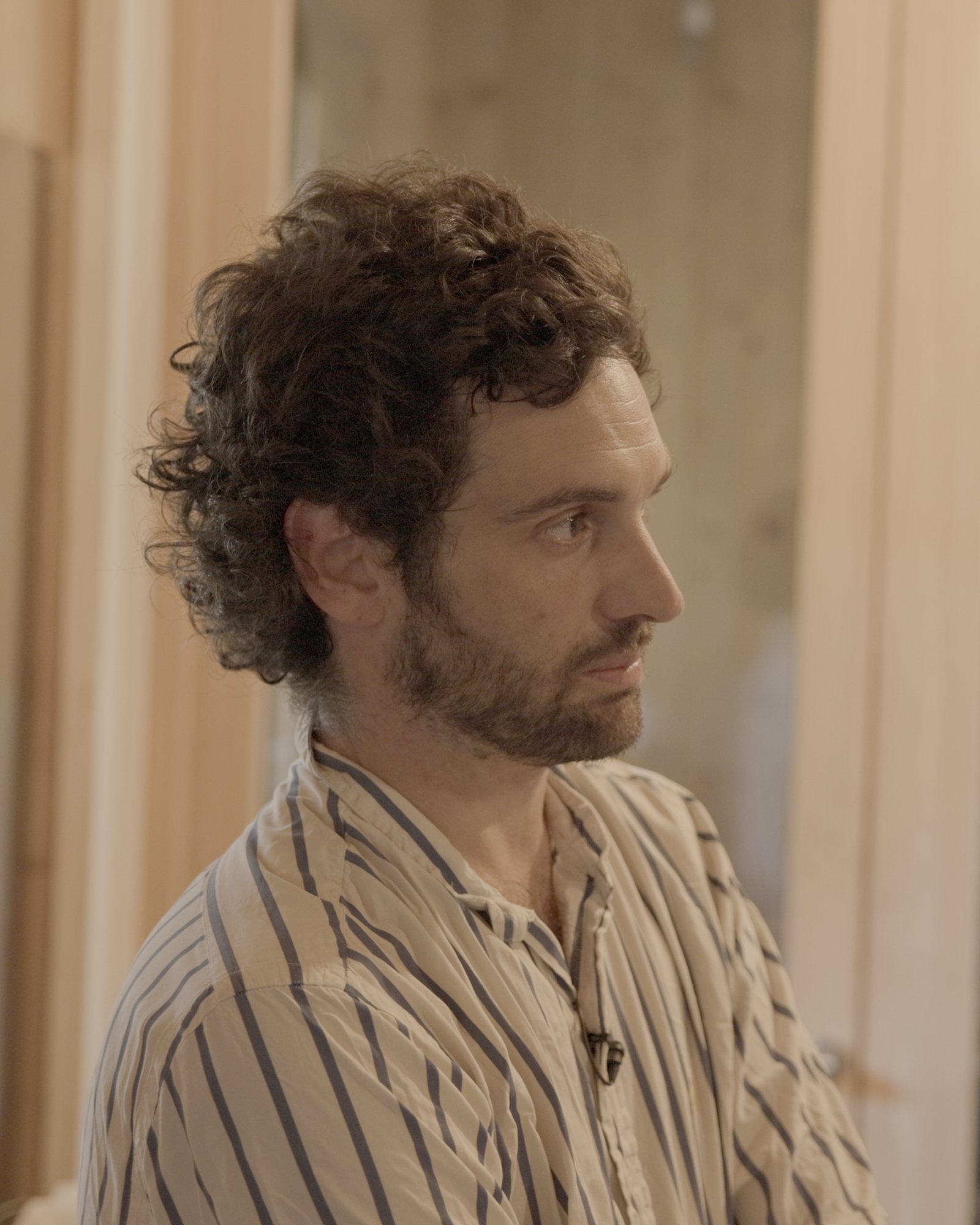
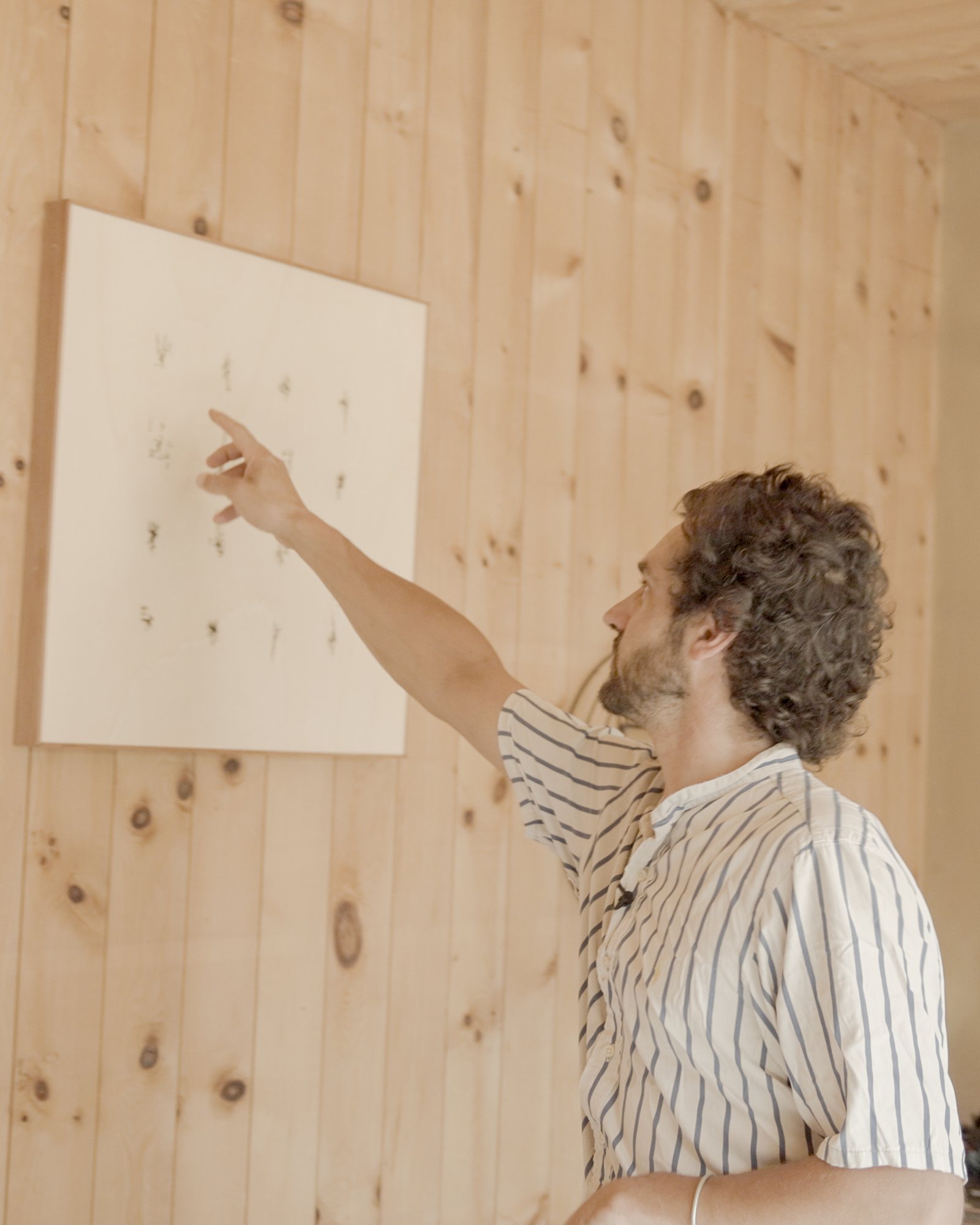
A man born in 1952 who still bakes bread every day in his small mountain castle and remembers South Tyrol under fascism. A family working a hay farm high on the mountainside. A woman who left the city and came home to her family's farm. An artist and grower who burns fractal Lichtenberg figures into wood, carves spoons, and grew up on the mountain farm his brother now runs.

Bread, baked every day
Hay farmers, interviewed at the farm
Interview on the balcony
Pointing out the valley
Interview in the studio
A Lichtenberg piece on the wall

The edit

Shooting is finished and the film is in the edit. We are building it as a polyphonic film with no single protagonist, translating every interview for subtitles, and leaving in the pauses and repetitions where people work their way toward what they mean instead of cutting to the cleanest version of a line.